Barbados is calling for clarity, precision and respect for national sovereignty as discussions that could see oversight of global tax matters shift from the Organisation for Economic Cooperation and Development (OECD) to the United Nations (UN) continue.
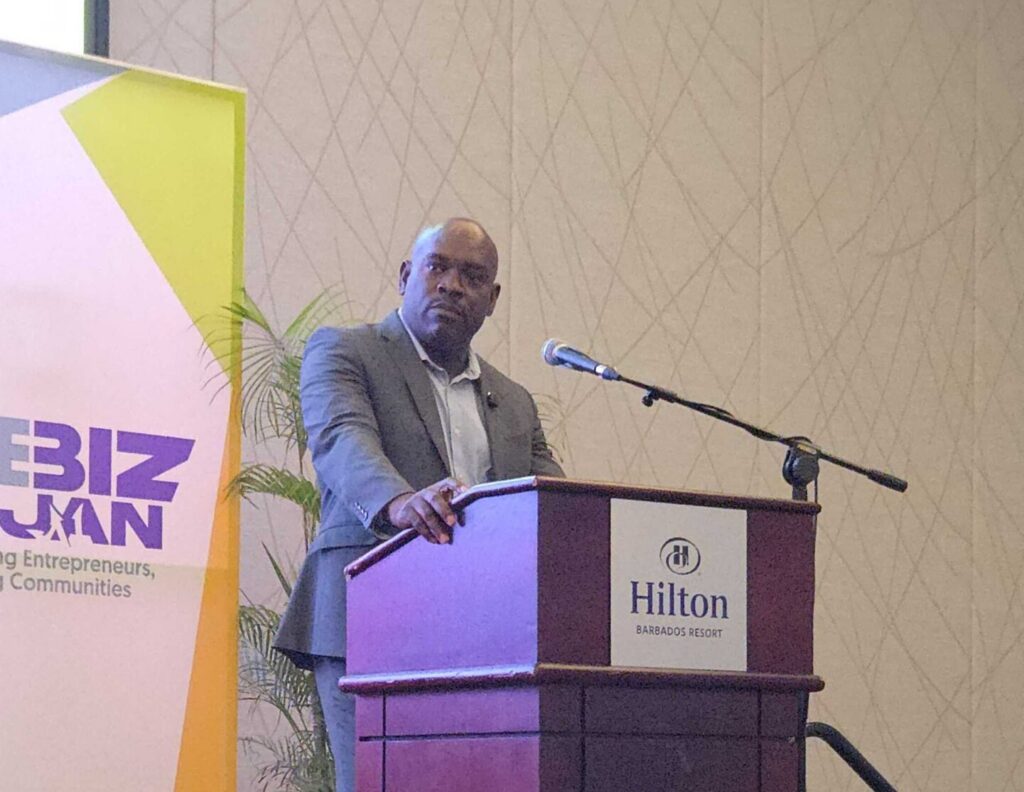
The country’s position was communicated to the chair of the Inter-governmental Negotiating Committee (INC) Framework for a UN Convention on International Tax Cooperation by Barbados Revenue Authority (BRA) Revenue Commissioner, Jason King.
The UN General Assembly established the INC to develop the convention between 2025 and 2027 and Barbados submitted comments via the BRA on draft articles four to nine.
“Overall, while Barbados supports the principles underlying these provisions, however, we emphasise the need for clarity, precision, and respect for national sovereignty to ensure that obligations are both actionable and consistent with domestic policy priorities,” King said in the communication.
The third INC session was held at the UN in Nairobi, Kenya, from November 10 to 19 and the discussion taking place included in relation to draft article four, which deals with fair allocation of taxing rights.
Right to tax
This article proposed that countries “parties agree that every jurisdiction where a taxpayer conducts business activities, including jurisdictions where value is created, markets are located and revenues are generated, have a right to tax the income generated from such business activities”.
King said that while Barbados agreed with this article in principle, “the language is loose because it uses overly broad terms and mixes different nexus concepts without clarification”.
“Saying that ‘every jurisdiction where a taxpayer conducts business activities’ has taxing rights is problematic, since ‘conducts business activities’ is undefined and could include minimal or purely digital interactions that are not normally sufficient to establish nexus under international tax norms, hence frustrating the concept of a permanent establishment,” he noted.
“The reference to jurisdictions ‘where value is created, markets are located, and revenues are generated’ combines distinct and often contested bases for taxation, value creation, market presence, and revenue generation-without indicating whether they are cumulative, alternative, or subject to specific thresholds.
“By stating that all such jurisdictions ‘have a right to tax the income’, the text implies overlapping and potentially unlimited taxing rights that conflict with the fundamental treaty objective of preventing double taxation.”
Avoid duplicating efforts
Article five concerns high network worth individuals. King said on behalf of Barbados that the country supports the consensus to consolidate the exchange-of-information provisions into a single dedicated article or protocol, but “we urge caution to avoid duplicating efforts already well advanced by the OECD Global Forum in the area of tax transparency”.
“We also note with concern that the text appears to single out tax avoidance. Conceptually, tax avoidance involves operating within the boundaries of the law to reduce tax liabilities, whereas tax evasion is an illegal activity,” he stated.
“If any reference to tax avoidance is to be included, it should be carefully qualified to avoid conflating lawful conduct with unlawful behaviour and to ensure that the scope of the provision remains clear and appropriately targeted. Failure to do such, the article may unintentionally broaden obligations or create inconsistent interpretations across member states.
“In addition, we believe that a protocol is necessary to further refine this article. For example, the reference to ‘coordinated approaches’ to ensure the effective taxation of high-net-worth individuals lacks specificity regarding the mechanisms, standards, and obligations that member states are expected to adopt.
“Greater detail will be essential to ensure consistent interpretation and meaningful implementation across jurisdictions,” King said.
The Revenue Commissioner restated Barbados’ concerns about the exchange of information provisions regarding draft article six (mutual administrative assistance) and article seven (illicit financial flows, tax avoidance and tax evasion).
“With respect to assistance in the collection of tax debts, while we support this objective in principle, we note that its implementation may be challenging for revenue authorities with limited capacity,” he said in the correspondence on article six.
“Without appropriate safeguards, resource support, and clearly defined procedures, such obligations could impose administrative burdens that some jurisdictions may be unable to meet effectively.”
Regarding article seven, he said Barbados urged caution “in grouping illicit financial flows together with tax avoidance, for the reasons outlined above”.
Creating ambiguity
“Tax avoidance, while sometimes aggressive, remains conduct within the law, whereas illicit financial flows and tax evasion constitute illegal activities. Conflating these concepts risks creating ambiguity in the scope of the article and undermines the clarity needed for effective implementation.”
King also commented on paragraph two of article eight, harmful tax practices, saying that Barbados “has no objection to tackling harmful tax practices and requiring substantial activity requirements”.
However, he said paragraph two of the article “appears to be attempting to limit member states’ fiscal autonomy by implying restrictions on the design of domestic tax incentives, and we cannot support such because it potentially infringes on Barbados’ sovereign right to design its own tax policy”.
“Simply put, the language cannot be supported because it risks undermining sovereignty, policy flexibility, and national development objectives,” King said.
There was no comment on article nine – sustainable development. (SC)
The post ‘Clarify’ UN tax plan appeared first on nationnews.com.