
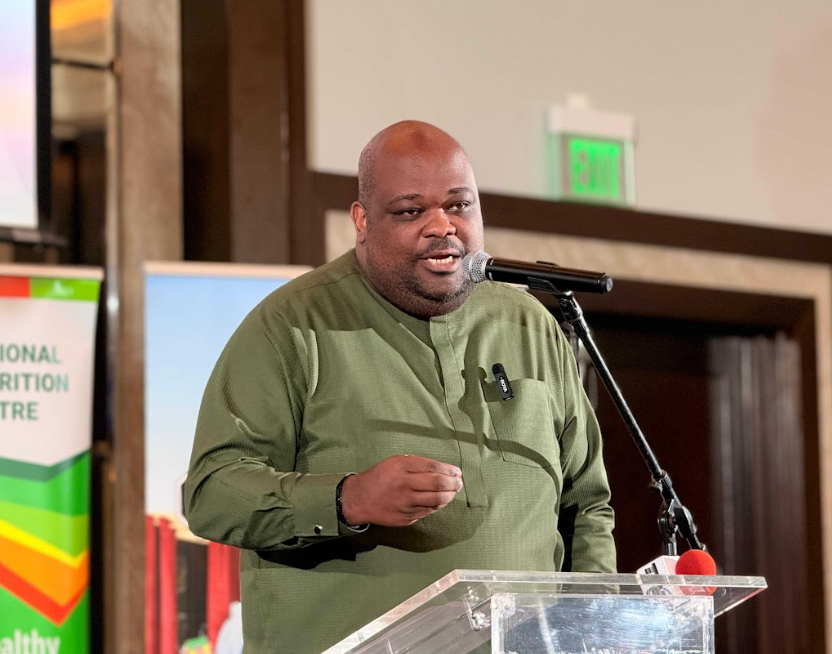
In a historic move for the nation’s education system, all primary school children will have access to free breakfast before the start of the school day from September 2026, Minister of Educational Transformation Chad Blackman has announced.
The initiative forms part of the government’s education transformation agenda aimed at improving student health, concentration and learning outcomes.
The decision comes as Barbados marks its 60th year of Independence and fifth year as a Republic, building on the long-standing legacy of the country’s School Meals programme.
“We have taken a very firm decision that we will ensure that even for breakfast, at primary schools all across the country, in September this year, all of our children will have breakfast at schools before they start their day,” he told the Childhood Obesity Prevention Youth Health Summit at the Sandals Royal Ballroom on Wednesday.
The decision followed repeated observations by teachers and behavioural specialists that some children arrive at school without eating, affecting their concentration and behaviour in the classroom, Blackman said.
Up to one in four students begin the school day without a meal, the minister told the summit, which formed part of activities marking the 40th anniversary of the Heart and Stroke Foundation of Barbados.
Visits to schools over the past year revealed that some students who appeared restless, tired or disengaged were simply hungry, he said.
“You would walk into a classroom, and sometimes you would see a child sitting in the corner with his head in his hand on the desk, or sometimes they’re acting up, and they’re restless in the classroom.
“And nine out of ten times when you speak to the teacher or to the child, you would have realised that it was as a result of that child simply not having something to eat before they came to school.”
Behavioural specialists and educators have long warned that hunger can contribute to disruptive classroom behaviour, reduced attention spans and poor academic performance among students.
Blackman said the government considered the issue significant enough to make universal school breakfasts a national policy.
In some cases, up to 25 per cent of students arrived at school without eating, said Blackman, a figure he said could not be ignored if the country hoped to transform its education system.
“That figure alone caused us to realise that if we’re talking about transforming our education system, if we’re talking about giving our children the best possible chance at success now and in the future, the foundational elements… are things that we have to do to ensure that we can succeed.”
According to Blackman, the breakfast feeding programme is a critical component of the wider education transformation agenda, which also seeks to improve health outcomes among young people.
“If we want our children to have the best opportunity, the best grades, the best focus on critical thinking, knowledge of things that we want them to do as in school, they can only do so and reach that optimal point… if they have nutrition and they have something in themselves.”
In the past, the Schools Meals Department provided primary school pupils with a mid-morning snack.
The minister also linked the initiative to the government’s broader health agenda, noting that childhood obesity and non-communicable diseases remained major national challenges.
He pointed to the 2023 School Nutrition Policy as another pillar of the strategy. The policy introduced a ban on sugar-sweetened beverages and restrictions on unhealthy foods in public schools.
Blackman reported that the measures were already producing measurable results: “Eighty-five per cent of our schools are now fully compliant with removal of added sugar beverages.”
He also revealed that students had filled more than 4.2 million bottles of water from school water stations since the policy was introduced: “These are not just statistics. These represent true change in behaviour.”
Blackman urged students attending the summit to play a leadership role in promoting healthier lifestyles among their peers, encouraging them to use social media and other platforms to influence behaviour.
“There’s nothing stopping you, the young people of Barbados, to change the behaviour of this generation.”
He added that improving student health and nutrition remained central to national development: “If we are to transform our country into being fully competitive… we need to have a healthy population. There’s no doubt about it.”
Publicly funded school feeding dates back to the mid-1930s when a nutrition scheme provided each child in elementary schools with three-eighths of a pint of milk and two biscuits as a mid-morning snack.
In March 1963, a national school meals service introduced cooked mid-day lunches for all primary school pupils as part of wider social and educational reforms.
Typical meals have included combinations of grains or cereals, roots and tubers, legumes, vegetables, fruit and animal protein (meat, poultry or fish), along with dairy.
The original snack scheme continued in nursery schools as lunches became a permanent feature of the primary education system.
But publicly funded feeding was not extended to secondary schools, where individual tenders are issued by boards of management to contractors to run campus canteens and tuck shops.
The post Free primary school breakfast programme from September – minister appeared first on Barbados Today.