After nearly three decades of uncertainty and public concern, the government said on Friday it is finally making headway on the long-delayed remediation of the former Mobil Oil Refinery at Aquatic Gap, St Michael.
Officials confirmed to lawmakers that a full environmental characterisation of the site is now under way, a crucial step towards restoring the prime coastal land for safe and productive use.
The Mobil refinery on Aquatic Gap, which operated in the Needhams Point area for several decades, closed down in the late 1990s. When the company exited the island, it left behind a site contaminated by years of industrial activity.
For a generation, the abandoned facility has served as a stark reminder of industrial mismanagement and a potential threat to the surrounding environment – particularly given its proximity to popular beaches and major tourism infrastructure.
The site has remained a subject of intense debate regarding public health and environmental safety. During today’s estimates, government officials acknowledged the prolonged delay in resolving the issue, issuing a sharp rebuke over the lack of proper decommissioning protocols in place when the refinery originally closed.
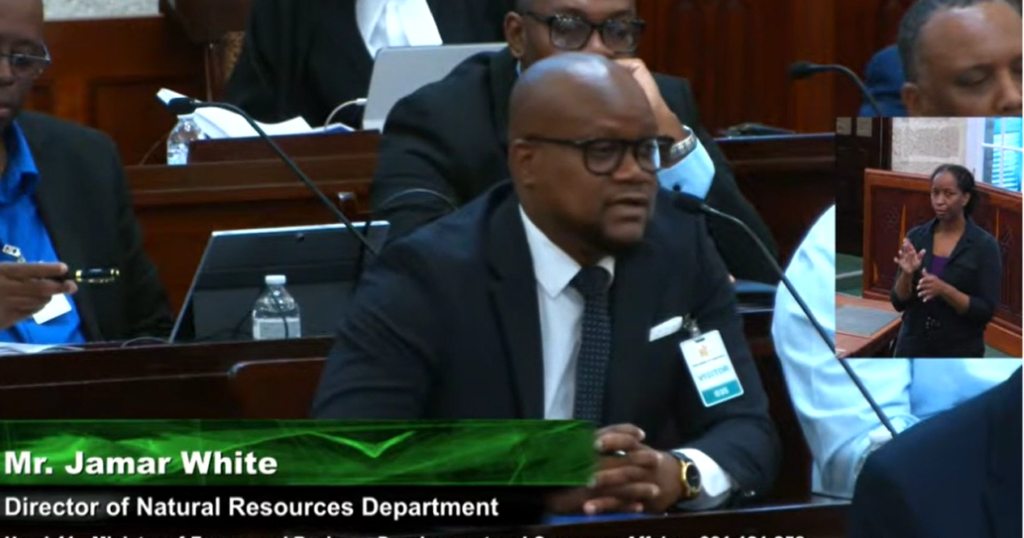
Jamar White, Director of Natural Resources within the Ministry of Energy, Business Development and Consumer Affairs, emphasised that previous studies, including one dating back to 1998, are now obsolete.
“It was important to understand the current-day level of contamination present at the site and how it could impact surrounding areas,” White explained.
To that end, the government commissioned a new international environmental firm to undertake a modern site characterisation. The process, which began in November 2025, has included extensive stakeholder consultations and the installation of specialised monitoring wells and borings.
These technical tools are essential for collecting soil and groundwater samples to map the precise volume and concentration of contaminants across the property.
The government’s current timeline anticipates the completion of the site characterisation report by this coming summer, between June and July 2026. This report will serve as the definitive roadmap for remediation, identifying “hotspots” and recommending the most effective international standards for cleaning the land.
Beyond environmental safety, the government has begun to outline a vision for the future of the Aquatic Gap area. Highlighting the land’s prime location, officials noted significant interest from the tourism and hospitality industries.
The government has underscored that this project is a pivotal lesson in governance. Energy minister Kerri Symmonds pledged that the mistakes of the past will not be repeated. Moving forward, he said, stringent decommissioning requirements are being embedded in all new investment agreements – as evidenced by recent licences granted to the Barbados Light and Power Company for battery storage initiatives.
Symmonds said: “It is a crying shame that between the 1980s and today, we have been forced to endure that situation,” Symmonds said. “The ideal of having decommissioning being written into all of our agreements is something this ministry will be enforcing as we go forward.”
As the technical analysis continues over the coming months, the public remains hopeful that the Aquatic Gap site will finally be transformed from a long-standing environmental liability into a safe, sustainable space for future generations.
The post Gov’t moving to clean up former Mobil refinery site appeared first on Barbados Today.