The fishing industry is embarking on an ambitious modernisation drive aimed at transforming one of the island’s oldest trades into a high‑tech, inclusive and climate‑resilient sector within a decade, according to Director of Fisheries Dr Shelly‑Ann Cox.
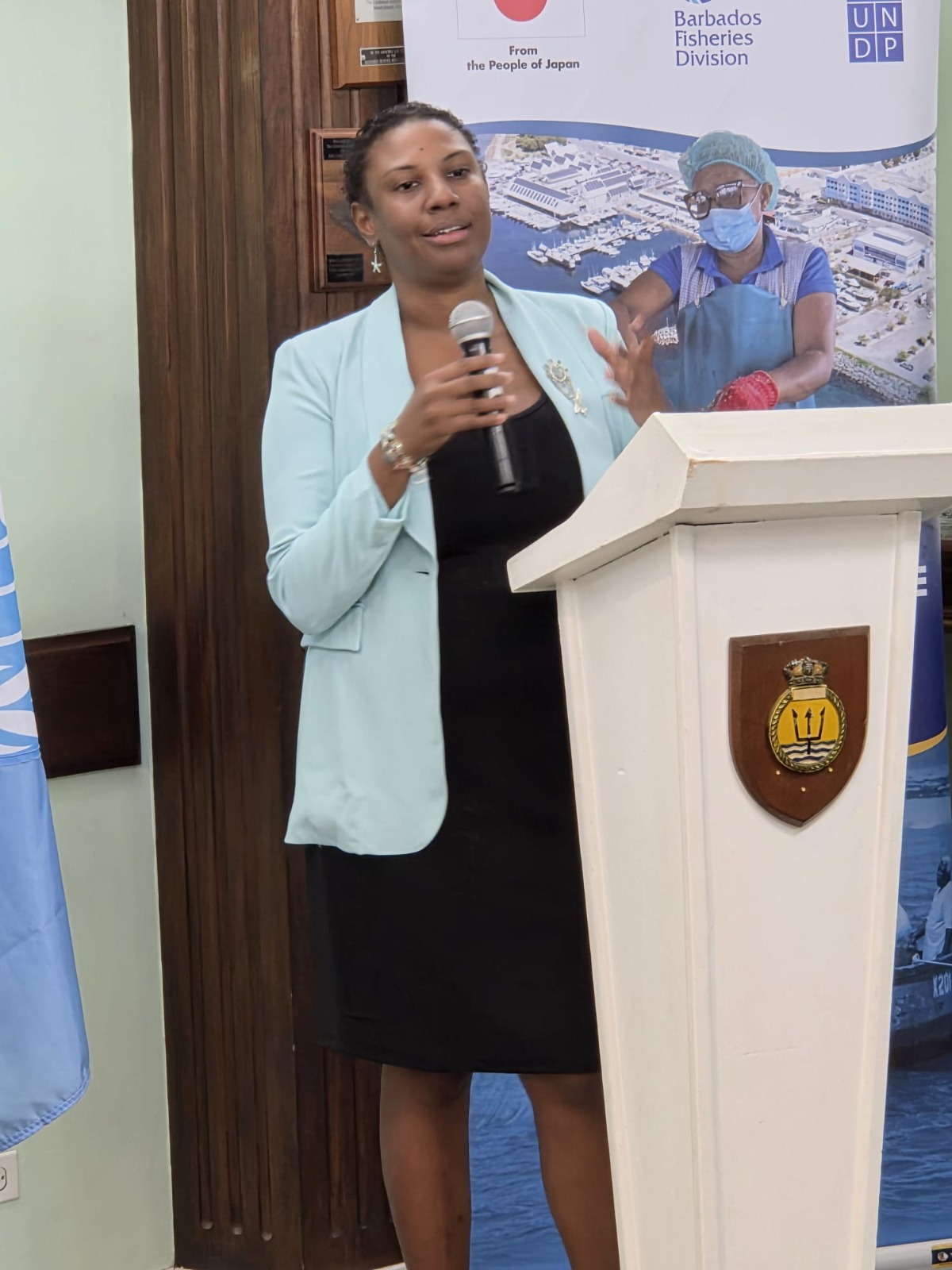
Chief Fisheries Officer Dr. Shelly Cox
In a comprehensive update marking three years and three months since taking up her post, Dr Cox outlined a new five‑point strategy to steer the industry’s next phase of development.
The plan seeks to move the fishing industry away from traditional imagery towards a professionalised, data‑driven future.
Dr Cox’s five‑point vision focuses on modernisation, inclusion and sustainability:
First, changing public perceptions by shifting the view of fishing from a low‑esteem job to a respected professional career, highlighting opportunities in boat‑building, marine mechanics and fish processing.
Second, a digital transformation through technologies such as vessel‑monitoring systems, electronic logbooks and satellite imagery to improve efficiency and generate data‑based solutions.
Third, the strategy focuses on preserving heritage and engaging young people by documenting traditional skills such as net‑knitting for inclusion in school curricula while recruiting younger boat captains to revitalise the workforce.
Fourth, inclusion and climate resilience by boosting the participation of women across the industry and developing responses to challenges such as the sargassum seaweed influx.
Finally, her vision includes legislative reform and quality standards to update the 1993 Fisheries Act, improving “hook‑to‑cook” traceability and allowing Barbados access to premium export markets in the UK, Canada and West Africa. The goal is to grow the sector’s contribution to national GDP from 0.07 per cent to five per cent within ten years.
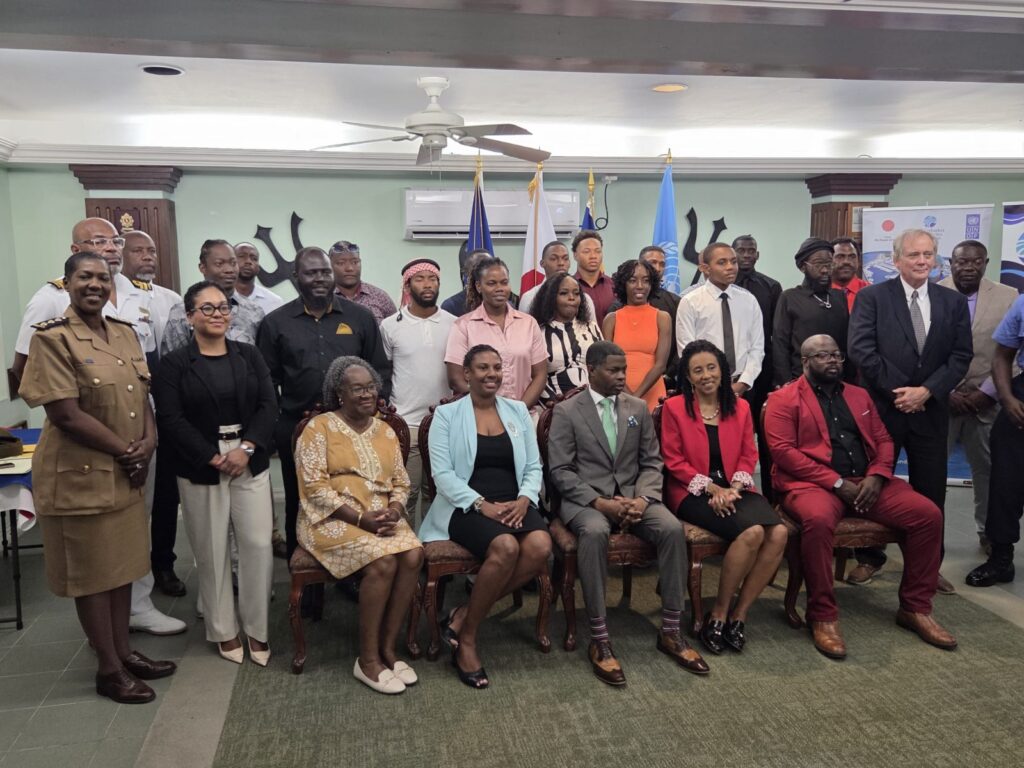
Dr Cox said the bedrock of this evolution is empowering the next generation. She spoke to Barbados TODAY while celebrating the successful completion of the second cohort of the Fishing Vessel Operations Level 3 course, in which 22 individuals gained the certifications needed to professionalise their craft.
“When I first articulated that five‑point strategy, one of the key main pillars was youth and female empowerment,” Dr Cox said. “The strategies for sustaining the industry today are a demonstration of such. We can’t deliver these programmes without strategic partnerships — not only in the public sector but the private sector as well.”
The programme’s success was credited to a coalition of international and local partners, including Japan, the United Nations Development Programme (UNDP), the TVET Council, the Barbados Defence Force Training and Development Institute and the Barbados Coast Guard.
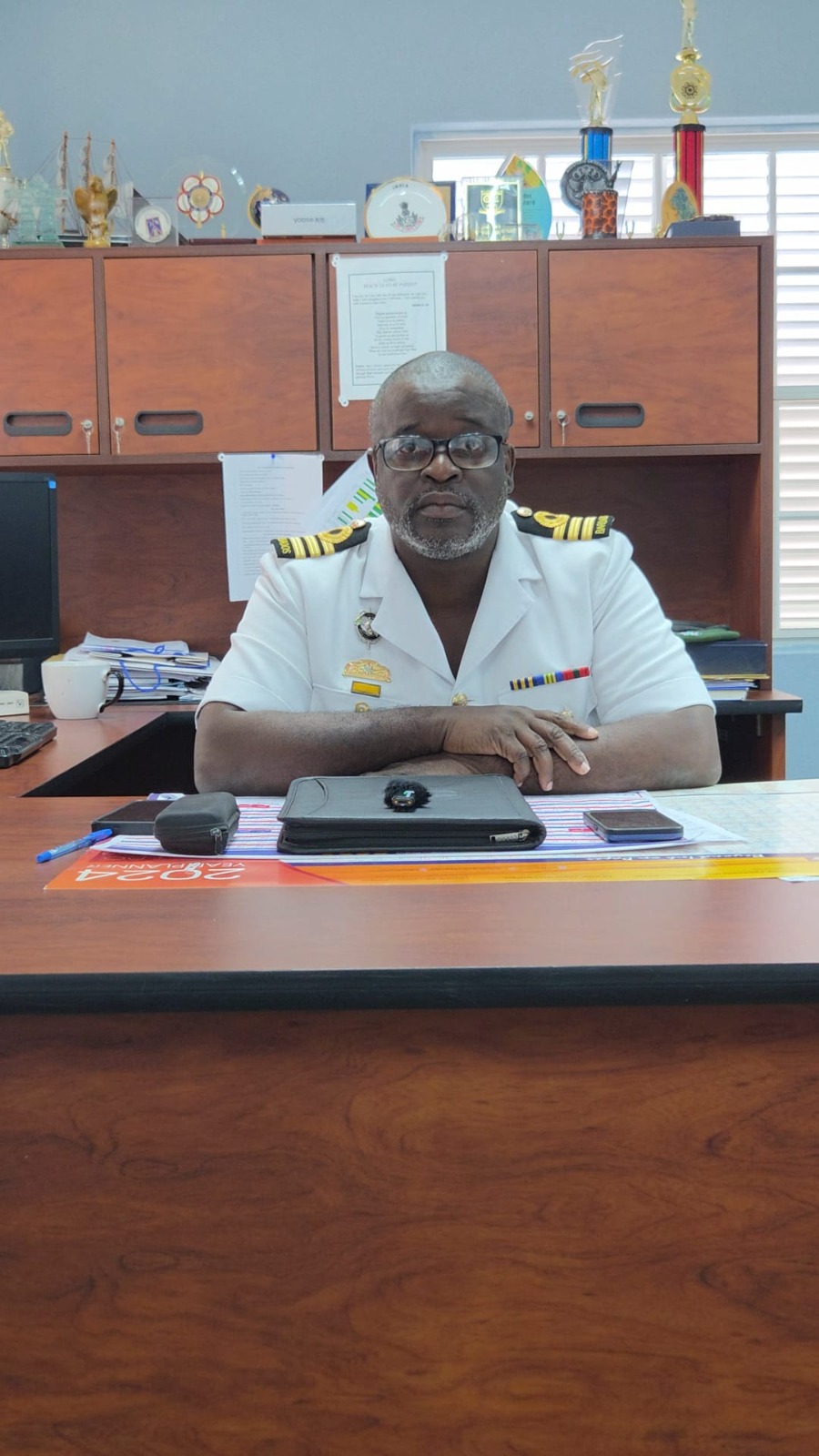
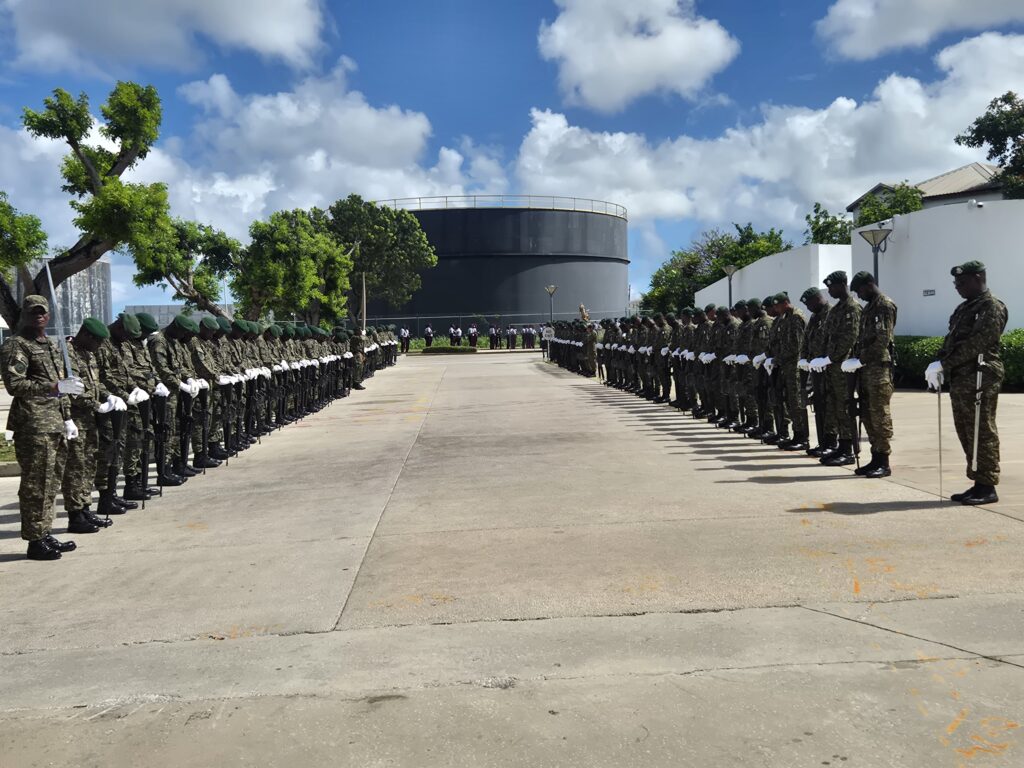
Commander Derrick Brathwaite, Barbados Coast Guard
A major hurdle in rolling out some aspects of the plan has been the ageing demographic of the workforce. To address this, the Fisheries Division is leveraging “DigiFish”, a project aimed at integrating digital technologies into daily operations. Dr Cox believes that modernising the tools of the trade can attract younger, tech‑savvy Barbadians.
“These types of initiatives can engage young people to feel fishing is more than just an old guy on a small boat,” she explained. “There is more to the industry — state‑of‑the‑art electronics, modelling and prediction. We are using evidence‑based decision‑making to streamline the sustainable transformation of the sector.”
The path to transformation has not been without shocks. Dr Cox identified Hurricane Beryl — which struck 18 months into her tenure — as a pivotal “test of character” for the division and the wider fishing community.
The disaster forced the department to pivot quickly, focusing on disaster response and climate adaptation with limited resources.
“A test of character is put to see if you’re willing for something greater,” Dr Cox reflected. “It challenged us to look at how we take limited resources and still build comprehensive response plans. We are now relying heavily on private‑sector partners to help us do our jobs when public‑sector resources are stretched.”
Perhaps the greatest challenge, she acknowledged, has been human: the natural resistance to change in a traditional industry. New sustainability measures, including minimum size requirements for certain species and tighter post‑harvest dress codes for sanitation, have met with “pushback and hesitancy”.
To counter this, the division is focusing on participatory research — involving fishers directly in the science rather than imposing regulations from above. This includes tagging programmes for dolphin fish (mahi‑mahi) and measuring reproductive organs in markets to verify sexual maturity scientifically.
“Transformative change takes time; people take five to ten years to change,” Dr Cox said. “We don’t want to implement measures without their support because that makes monitoring and enforcement difficult. If we put the energy into public awareness and stakeholder engagement, it helps in the long term so there is ‘community policing’. People will say: ‘I understand the reason we are doing this because I understand fisheries management.’”
Looking ahead, the next phase of the five‑point strategy involves new legislation and safety standards. Drawing lessons from Hurricane Beryl, the division is prioritising disaster‑resilient vessel regulations, including mandatory life rafts for all boats.
The reach of the fishing fleet is often underestimated. Dr Cox revealed that some Barbadian vessels travel up to 200 nautical miles offshore — the limit of the island’s exclusive economic zone — with one record‑breaking trip of 800 nm.
“We want to make sure we have vessels that can stand up to the test of time,” she said. “They must be equipped to bring the highest‑quality seafood to Barbadians while we simultaneously explore our export potential to the US and other international markets.”
(RR)
The post ‘High-tech’ fishing: Fisheries agency plots digital, inclusive transformation appeared first on Barbados Today.