
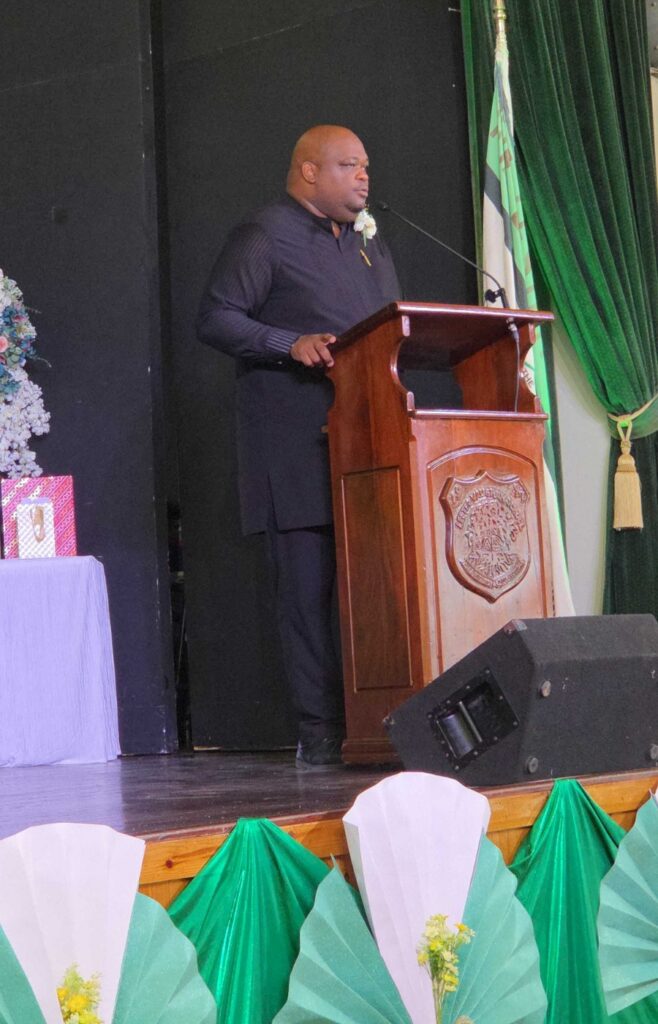
The Ministry of Education Transformation is set to end the grace period for its national grooming and discipline rules, with schools across Barbados ordered to strictly enforce the policy from the start of the new term, minister Chad Blackman has announced.
Speaking at the Lester Vaughan School’s annual speech day and prize-giving ceremony on Monday, the minister emphasised that the grace period for non-compliance is ending as the ministry seeks to anchor its education transformation in personal character.
The policy grants school leadership a direct mandate to uphold high standards of presentation. Blackman warned that starting in Term 3, and moving into the new academic year, there would be a zero-tolerance approach to lapses in student appearance.
“I am saying this to the parents across the country … be on notice: the principals have the authority to ensure that these standards are maintained,” the minister declared, urging guardians to “look at your children before they go out of the house” to ensure they are ready for the school environment.
Addressing the scope of the policy, Blackman clarified that the conversation extends far beyond hairstyles, which have often been the primary focus of public debate. He noted that the policy is a comprehensive standard designed to prepare students for the professional world.
In January 2023, the Mia Mottley administration officially introduced a National Grooming Policy, a move designed to modernise school standards while maintaining a firm grip on campus discipline.
Drawing on the evolving discourse surrounding student identity, the Ministry of Education Transformation is framing the policy as a way to respect a child’s right to self-expression — particularly regarding natural hairstyles — while strictly curbing trends deemed distracting or inappropriate for a learning environment.
Under the new framework, the ministry has established clear boundaries that prohibit students from wearing makeup, artificial eyelashes and long acrylic nails. Furthermore, the policy reinforces traditional dress codes by banning sagging trousers and tight or short skirts, while requiring all tattoos to be concealed.
The Barbados Union of Teachers (BUT) responded with a call for even greater clarity to avoid inconsistent enforcement across different schools.
While social commentators remain divided — some fearing a slide in discipline and others championing the move as long-overdue progress — the government maintains that these standards strike a necessary balance between 21st-century individuality and the preservation of order within the island’s education system.
The minister specifically highlighted concerns such as the use of vibrant hair colours, polished shoes and general hygiene, including clean fingernails.
“School is a place of discipline,” Blackman said. “It is not a place for young women in school to be wearing colours in their hair … these are things that we are helping you to prepare for the world.”
This push for discipline coincides with major investments in technical and vocational training, such as the new state-of-the-art cosmetology laboratory unveiled at the school on Monday.
He argued that without the “anchor” of discipline, students would remain at a disadvantage regardless of their academic or creative talents.
“Certifications will carry you so far and no further. Creativity will carry you so far and no further,” Blackman told the audience of students and parents. “But that one thing called discipline will unlock doors that money and qualifications cannot.”
He concluded by reminding students that if they do not master self-discipline within the school system, they will face a harsh reality in the global job market. “If you don’t master discipline here, you will realise that discipline is expected there, but you were not prepared here.”
(RR)
The post Schools to enforce grooming, discipline policy ‘next term’ appeared first on Barbados Today.