
Recent confirmations from Minister of Finance, Ryan Straughn that Barbados has successfully cleared all international financial watchlists, are being hailed by industry leaders as a monumental victory for the nation’s reputation.
While the government celebrates this “clean slate”, an economic expert and private sector leader believes the island will reap immediate tangible benefits after being removed from the “gray lists” of the Financial Action Task Force (FATF) and the European Union.
Director and Senior Research Fellow of the Sir Arthur Lewis Institute of Social and Economic Studies, Professor Dr Don Marshall, views the development as a critical boost to the island’s brand.
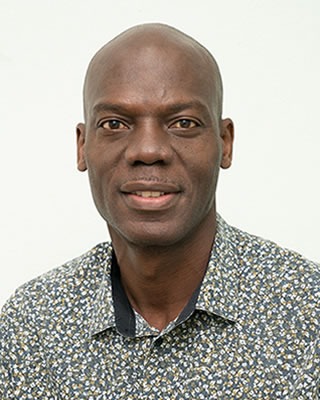
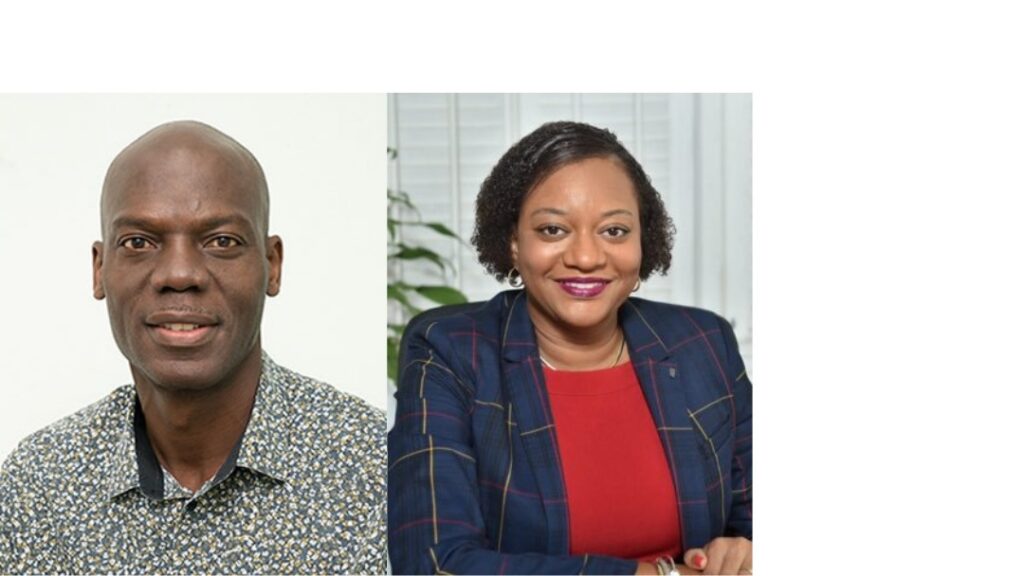
Dr Don D Marshall
He maintains that the benefits of this status are felt almost immediately within the economy, primarily through the stabilisation of existing business and the attraction of new foreign investment.
”The gains are all about reputation enhancement as a jurisdiction. Barbados is a jurisdiction with which one can engage in transparent financial business. All of this is fine and good because of the need for Barbados to continue to shore up its image as a place where one can avail oneself of the financial services on offer here.”
”There is an immediate benefit to Barbados every time we get companies renewing their licenses or fees here because those licenses or fees are paid in US dollars. That’s a boon to the economy because, as you know, we are still a society and an economy struggling to make good on diversifying our economy in a way in which we can attract more foreign exchange,” Professor Marshall said.
“Anytime we get good news about being able to successfully comply with international standards, the benefit is almost immediate because you get a vote of confidence from the existing business.”
For the private sector, the removal from these lists translates to a direct reduction in the cost and complexity of daily operations.
Carmel Haynes, executive director of the Barbados International Business Association (BIBA), noted that while the removal has been a progressive process since last year, the cumulative effect is a significant reduction in “friction” for cross-border trade.
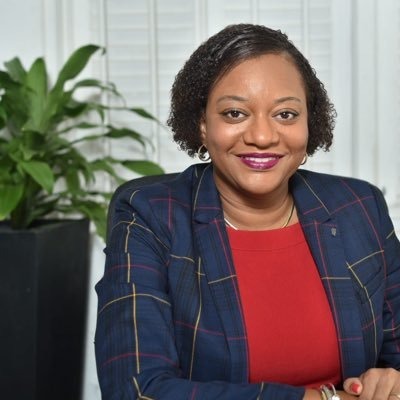
Executive Director of BIBA, the Association for Global Business – Carmel Hayes
”Obviously, BIBA is very pleased that we remain off these lists because it engenders more investor confidence in Barbados and it allows us to attract more business here,” Haynes said.
“These businesses, because they are regulated themselves, need to be able to ensure that they are set up in a jurisdiction that does not have any restrictions in terms of the way that their businesses operate. In the past, especially with the FATF gray list, there was enhanced due diligence by international financial institutions, and that increases the cost of doing business.”
Haynes highlighted that the removal of “red flags” allows Barbadian entities to move capital with greater ease, positioning the island as a more desirable hub for global firms.
”Without those sort of red flags going up when Barbados is identified as the jurisdiction that money is going to or coming from, it makes it easier to do business with us and it makes us more desirable and attractive for businesses who wish to transact business cross-border with Barbados,” she added.
Despite the optimism, both Professor Marshall and Haynes cautioned that the global regulatory landscape remains treacherous.
Professor Marshall was particularly vocal about the “uneven playing field” created by powerful nations in the Global North, which often impose strict standards on Caribbean jurisdictions while allowing their own financial centers to operate with less scrutiny.
”Compliance enforcement comes at a cost. Trying to comply with various standards from various bodies is a problem in international financial governance. There can’t be an EU standard, and an OECD standard… there should be a standard that all can agree to.”
“We see that certain countries are allowed certain exceptions. London privatises and anonymises financial business in a way that no other financial center in the world does, yet it escapes the classification of being blacklisted or described as a tax shelter,” Professor Marshall pointed out.
He urged the region to remain vigilant, noting that the goalposts for compliance are constantly shifting.
”While we applaud the good news, you always have to be looking back over your shoulder to ask yourself whether or not Barbados or any other Caribbean financial jurisdiction will remain off these classificatory schemes going forward, because it just keeps changing all the time,” he said.
Meanwhile, Haynes pointed to the captive insurance sector as a particular area of dynamism and noted that the Financial Services Commission (FSC) is taking a “progressive approach” to updating regimes for digital assets and investment funds.
However, she acknowledged that challenges remain in the fintech space due to the conservative nature of traditional banking partners.
To ensure Barbados does not find itself back on a watchlist in the coming years, Haynes stressed that the government has moved from simply passing laws to active, technology-driven enforcement.
”The government has really doubled down in terms of ensuring that they have enough monitors in terms of compliance officers.”
“They’ve brought in new technological systems for reporting and recording and they’ve increased penalties. There are all sorts of carrots and sticks that they’re using to ensure that the sector is better regulated and, therefore, there are not those fears that when we’re evaluated by these overseas super-regulators that they’re going to give us a black mark again,” Haynes said.
(RR)
The post Experts hail Barbados’ removal from global watchlists appeared first on Barbados Today.