
Senior law enforcement officers from across the region were yesterday reminded that the future of policing rests not only on operational skills, but on their ability to strategically manage political expectations, safeguard public trust and lead institutions through increasingly complex security challenges.
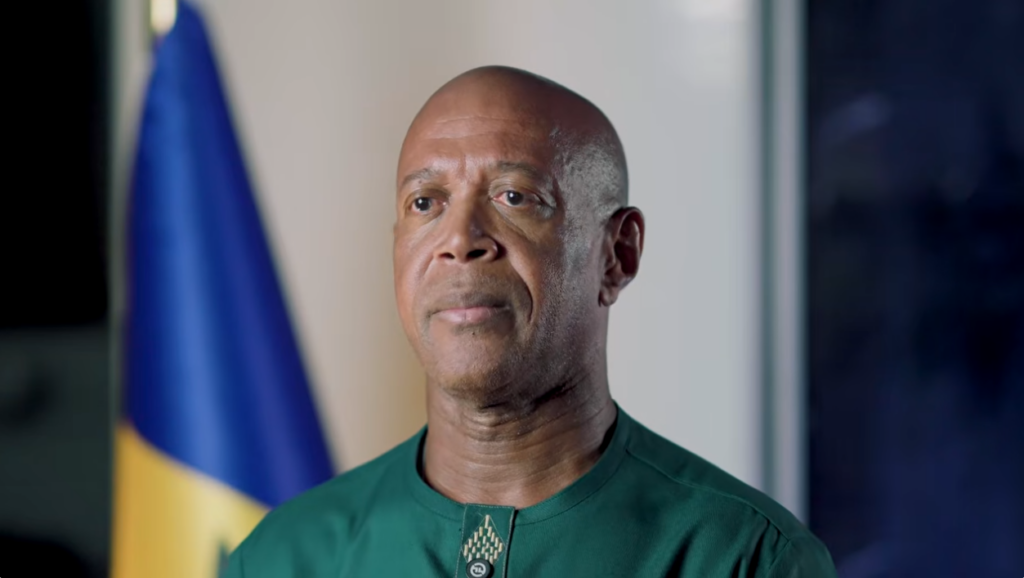
Delivering the feature address at the closing ceremony of the Regional Security System (RSS) Training Institute’s International Leadership and Management Gold Course 2026, Commissioner of Police of the Royal Grenada Police Force, Randy Connaught, told graduates that the course marked a deliberate shift into the highest tier of policing responsibility at the strategic command level where decisions intersect national security, public policy and public confidence.
For three intensive weeks at the RSS Training Institute at Paragon, Christ Church, participants, including assistant commissioners, division commanders and senior superintendents, completed the region’s most advanced leadership curriculum facilitated by the Durham Constabulary in the United Kingdom.
Connaught said the programme was designed to refine, not introduce, the leadership qualities of officers already carrying significant authority.
“For the past three weeks, you have immersed yourselves in the Durham difference. You have dissected your own leadership styles, grappled with the complexities of gold command and crafted strategies designed not just for today, but to futureproof your organisations. You did so not as aspiring leaders, but as established executives who already carry the weight of your offices,” he said.
He cautioned that gold commanders must now shift their focus away from frontline operations where their decisions must balance law, policy and national expectations.
“My charge to you as you leave this hall is to master what is perhaps the most delicate and critical skill of executive leadership managing the expectations of the political directorate. This is not about being political. It is not about partisanship. It is about managing a relationship that is constitutionally vital, operationally impactful and perpetually challenging.”
He added that leaders must be willing to challenge ministers respectfully and professionally, especially when political demands conflict with operational realities.
Create safety
“When a minister calls for a rapid crackdown on a complex issue, your job is not to simply salute and execute. You must have the courage to say, ‘Minister, your priority is my priority. Here is what we can achieve and here is the multi-agency, problemoriented plan that will create sustainable safety not just the appearance of it,” he said.
Connaught referenced two current issues facing regional security forces – accepting third-party refugees at the request of the United States, and the debate over marijuana use within disciplined services.
“In both cases, your role is not to oppose the political directorate, but to ensure decisions are informed by operational realities and ethical imperatives. Do not be a yes-person. Be a trusted strategic advisor,” he urged.
He also pressed officers to remain non-partisan, warning: “Politicians come and politicians go, but the police service is an enduring institution. Your loyalty is to the office, to the law and to the people you serve.”
Delivering the student perspective, Assistant Superintendent Theodore Horne of the Royal Antigua and Barbuda Police Force said the course represented “a decisive shift from operational competence to true strategic leadership”.
“This experience challenged not only what we know, but how we think, decide and lead at the highest level. The value of a shared doctrine and a unified leadership philosophy across the region cannot be overstated. This course is not just training; it is capacity building at the highest level,” he said.
Facilitator Chief Superintendent Ian Leach of the Durham Constabulary praised the officers for their commitment, humour and honesty throughout the programme. (TRY)
The post Cops urged to lead strategically appeared first on nationnews.com.