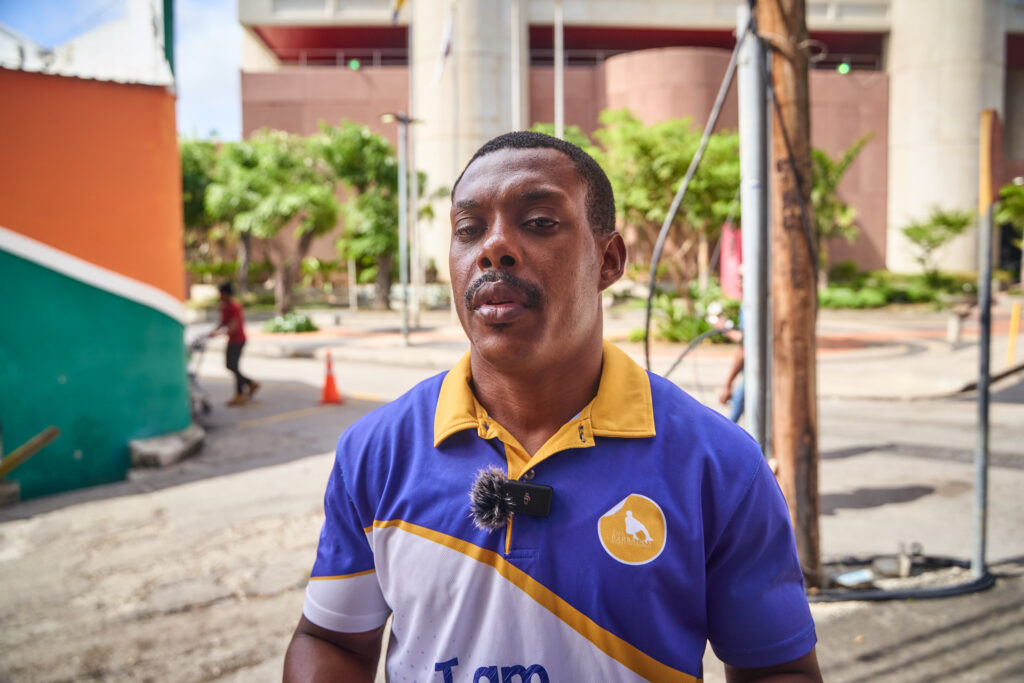

Opposition Senator Ryan Walters is calling for transparency and accountability in the wake of Government securing a US$80 million loan from the Inter-American Development Bank (IDB) to upgrade Barbados’ water infrastructure.
He acknowledged the urgency of addressing longstanding issues within the sector but cautioned that the financial implications must be clearly explained to the public.
“There is no question that the rehabilitation of our water infrastructure is both necessary and urgent,” he said in a statement, pointing to “ageing mains, significant water loss, reportedly as high as 40 to 50 per cent, and the growing pressures of climate change” as key concerns.
“Replacing pipelines, improving monitoring and strengthening the Barbados Water Authority are all steps in the right direction,” he said, describing the work as “foundational . . . that will directly impact households, businesses and national development”.
However, the Democratic Labour Party spokesman warned that the scale of borrowing required careful scrutiny.
‘Investments’
“We are looking at a substantial commitment of US$200 million under the broader facility, with an initial US$80 million loan . . . . These are not small sums and while they are framed as ‘investments’, they remain loans that must be repaid by the people of Barbados,” he said.
During the signing of the loan agreement with the IDB in Washington, DC, United States, last Thursday, Prime Minister Mia Amor Mottley, who was there heading this country’s delegation to the Annual Spring Meetings of the International Monetary Fund and World Bank, said Barbados continued to contend with a high degree of nonrevenue water. “We are one of the 15 most water-scarce countries in the world, and for every gallon that is pumped, 40 to 50 per cent can be lost before it reaches anybody’s house. Being able to resolve these issues with ageing infrastructure, and recognising that there are technological gains to be made as well, means that we need the investment. I do not call it loans, but rather an investment in water to make us resilient.”
However, Walters raised concerns about how the loan – structured over 25 years with a five-and-ahalf-year grace period – would ultimately be repaid. “That means that principal repayments will begin in just over five years’ time. The question then, becomes: how will these repayments be financed given the amount of debt the country is and will
be servicing at that time?” he asked.
Full accounting
He also called for a full accounting of previous investments in the water sector, arguing that transparency on past borrowing was critical before new debt was undertaken.
“In previous years, financing was also secured to assist with improving water supply to households. What has been the outcome of that investment?” he queried, adding that Government must provide updates on “how those funds were utilised, how many mains were replaced . . . and which communities benefited”.
It was announced that the largest share of the US$80 million investment, US$55 million, will facilitate mains replacement, while US$20 million will go towards non-revenue water management in a bid to reduce the high level of water losses within the system.
Beyond the financing, Walters said the success of the initiative will depend on execution.
“This is not just about securing funding, it is about ensuring that every dollar spent delivers real, measurable results for the people of Barbados.”
He also called for clarity on who will carry out the work and whether local expertise will be utilised.
While supporting investment in the sector, he insisted that it must be matched with openness.
“Good governance demands that alongside bold investment must come clear communication, full transparency and accountability.
“If this administration truly believes . . . that ‘water is transparent’, then the financing and the implementation and monitoring behind it must be as well,” he stressed. ( PR/NS)
The post Walters wants water loan transparency appeared first on nationnews.com.