
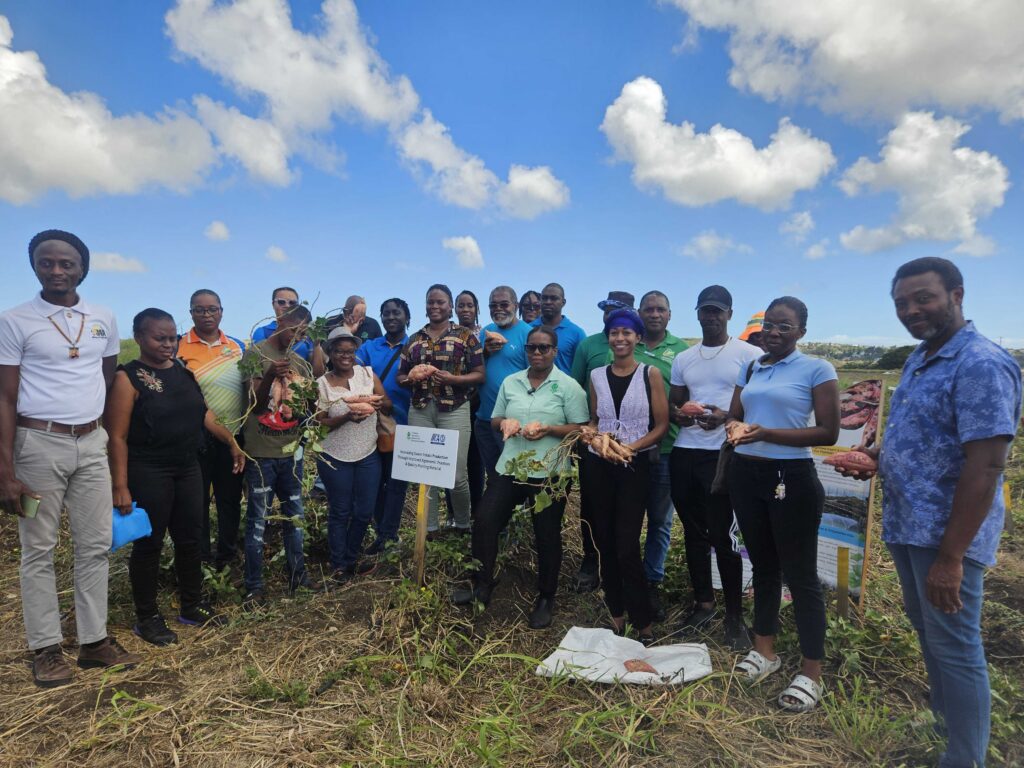
Major sweet potato producers are recovering yields after a crippling 2024 shortage that pushed prices as high as $7 and $8 per pound, far above the traditional $2 retail price, with farmers crediting improved planting practices and slip treatment for the turnaround.
Ron Hope, farm manager of Valley Island Farm in St George, told Barbados TODAY that targeted interventions helped to reverse declining output across key farms.
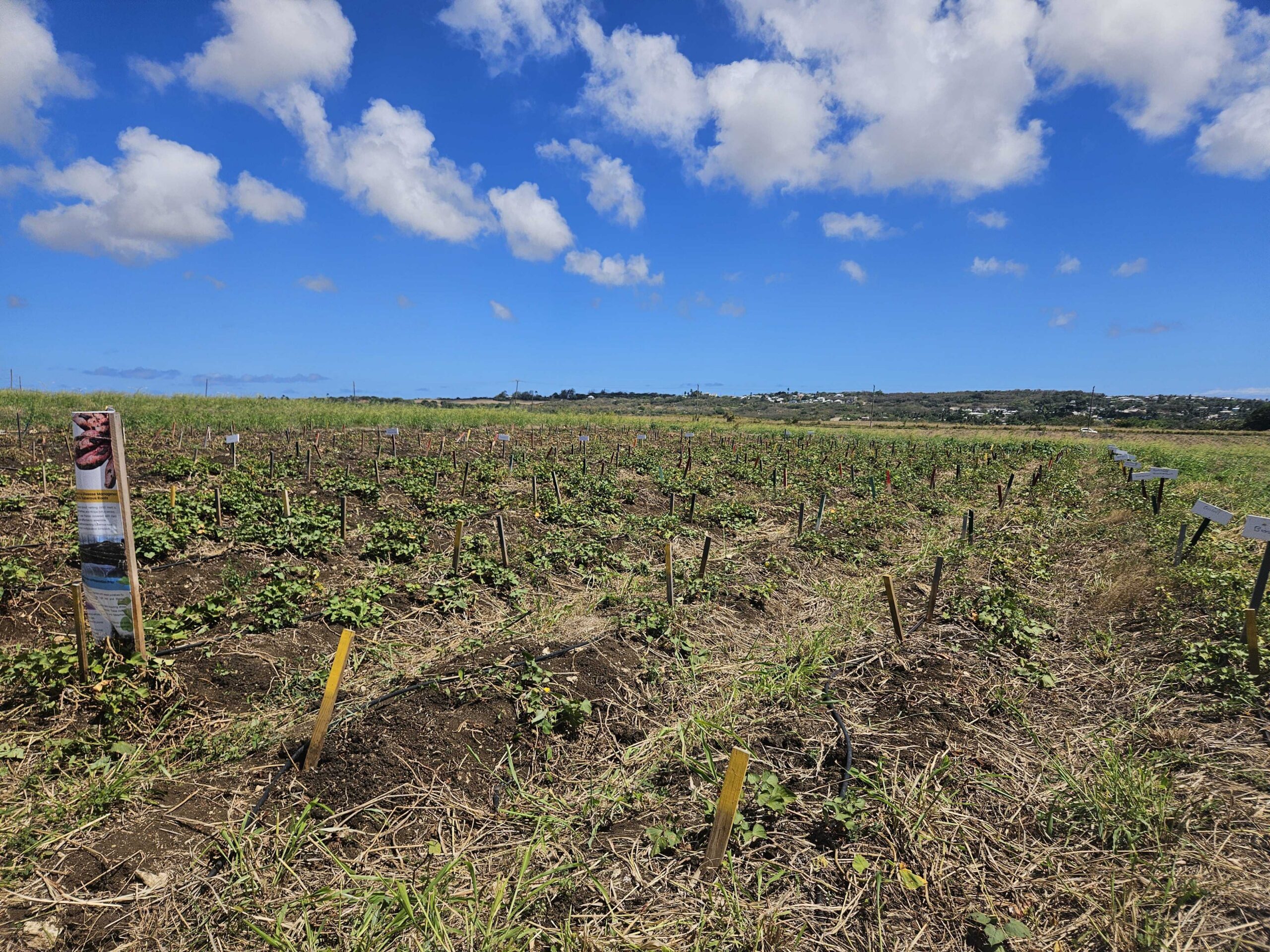
The CARDI sweet potato research field at The Valley Island Farm in St George. (Photo Credit: Sheria Brathwaite/Barbados TODAY)
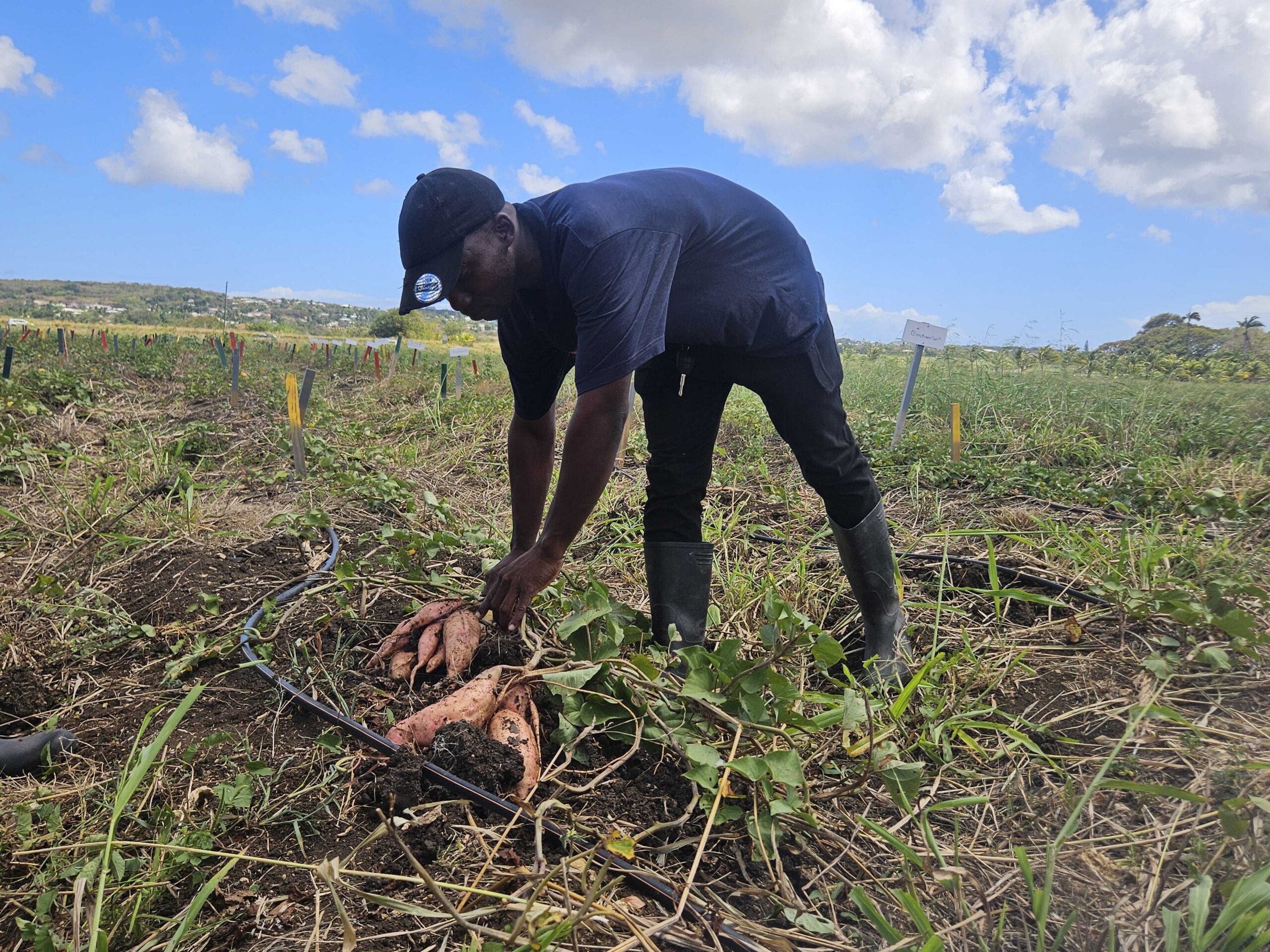
CARDI field assistant Dwayne Bellamy digging sweet potato from a CARDI research field in The Valley Island Farm. (Photo Credit: Sheria Brathwaite/Barbados TODAY)
As the Ministry of Agriculture hosted a sweet potato open day on Monday in partnership with the Caribbean Agricultural Research and Development Institute (CARDI) and the Inter-American Institute for Cooperation on Agriculture (IICA), Hope pointed to both the scale of the crisis and the adjustments made by farmers.
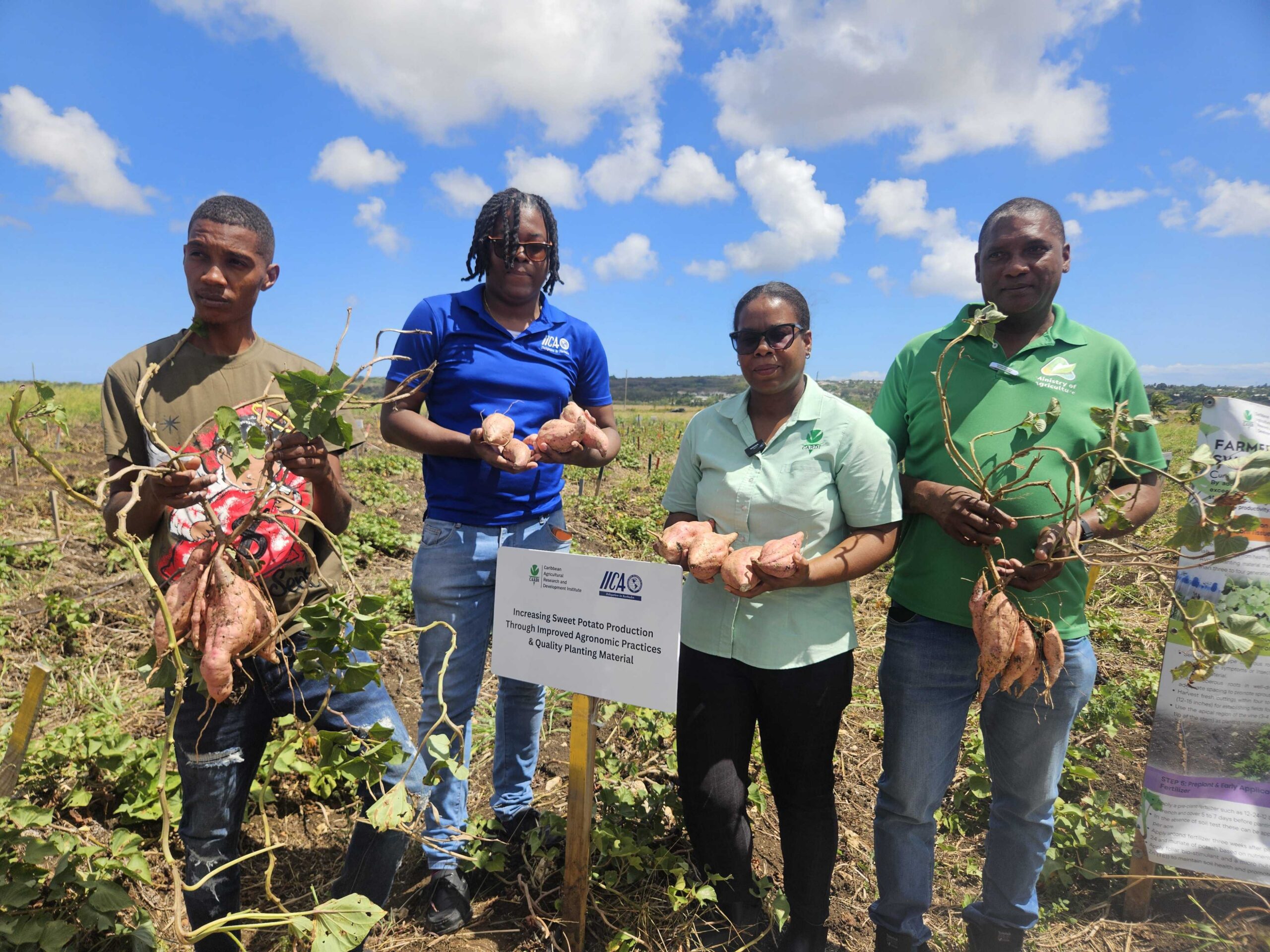
(From left) farmer Rico Dyall, technical assistant at IICA Zachary Benjamin, CARDI representative for Barbados and the Natural Resource Management Specialist at the Barbados Unit Christina Pooler and senior agriculture assistant Mark Chandler showing sweet potatoes grown from the CARDI research field. (Photo Credit: Sheria Brathwaite/Barbados TODAY)
The event was done in two segments- a workshop seminar and a field tour of a research field at Valley Island Farm.
The shortage followed a period of sharply reduced yields linked to a complex of viruses affecting the crop, particularly at major producers including Edgecumbe Plantation and Armag Farms. Hope said the impact had been severe for his operations, noting that fields which should yield tens of thousands of pounds had collapsed under disease pressure.
Against that backdrop, he explained that his operation adopted changes in planting and crop management practices, including treating slips before planting and adjusting fertilisation methods.
“I dipped my planting material. I just use a little bit of organic soil. Improve my rooting, and improve my tubers,” Hope said.
The intervention reduced visible signs of viral infection in the crop, he said.
“I saw a reduction in the virus-looking plants.”
Hope also shifted away from heavy chemical inputs: “I started to fertilise differently. I don’t use a lot of chemical fertilisers either way but I used more organic fertiliser basically.”
The changes translated into a sharp rebound in output. “Production would have increased last year, big time, big time, big time.”
Multiple fields delivered significant yields, Hope said, pointing to each roughly four-acre field yielded a combined total of 120 000 pounds, or approximately 25 000 pounds per acre, which he regarded as a strong level of productivity.
Addressing expectations for the current year, he said yields could always improve, but this depended on the level of investment required. He added that he would be comfortable achieving around 20 000 pounds per acre, as this would allow him to balance economies of scale.
Hope also said that the 2025 output was so good that in some instances he was harvesting about 1 500 pounds per row and could not complete digging in some areas.
This planting approach has been replicated across the farming community, with other top producers adopting similar measures and sourcing improved planting material, he said. “Guys came, got different planting material. Edgecumbe [plantation in St Philip] had a big, big problem up there. He got it sorted out,” he said.
He described the response as a collective effort among farmers.
During the workshop, chief agricultural officer Michael James confirmed that the sector remains under pressure from viruses and pests, although interventions are under way.
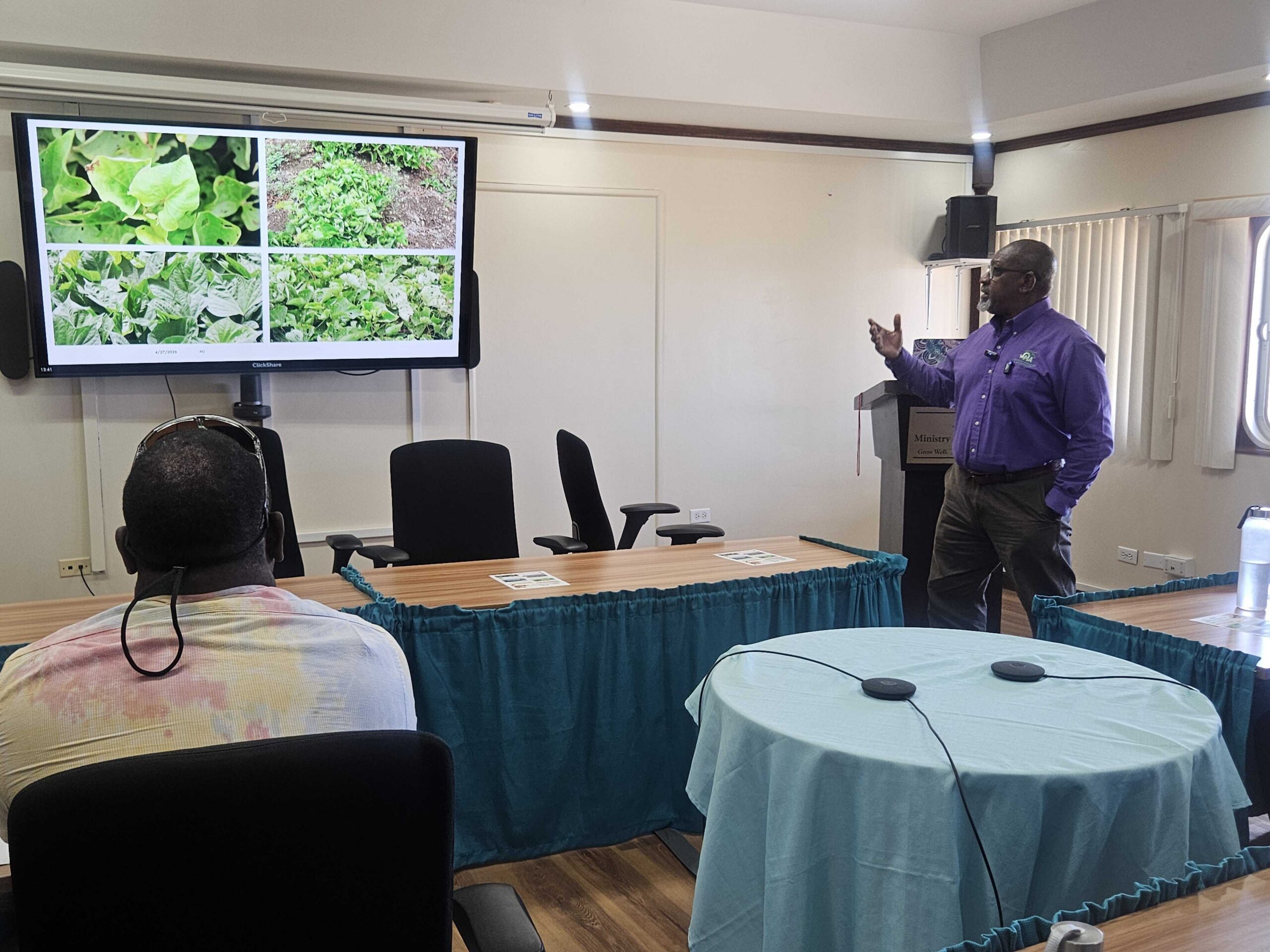
Chief Agriculture Officer Michael James giving a presentation. (Photo Credit: Sheria Brathwaite/Barbados TODAY)
“I wouldn’t say we are in a crisis,” James said, noting that pest and disease management remains central to stabilising production.
He explained that the primary route of viral spread lies in infected planting material and insect vectors, underscoring the importance of clean inputs.
“If most of the viruses spread through planting material as well as by vectors, how do you control this? By using clean planting material. And that’s where the tissue culture facility would assist.”
The ministry has also moved to strengthen the crop base through new varieties.
“We are also looking to bring in some new varieties out of the International Potato Centre, which will help augment what we currently have as well as to look at how we can improve the ability of some of these cultivars to withstand or tolerate some of the viruses that we have now,” he said.
Yield reductions vary across farms depending on management practices and planting material, said James. “You’re not going to get 100 per cent, but… it can be reduced 10, 15, 20 per cent, all depending on the type of material you have that you’re planting, as well as the type of pests that you’re dealing with.”
The expansion of the tissue culture lab will play a critical role in supplying farmers with clean planting stock, though initial quantities will be limited, he said. Farmers will be expected to multiply that material on their own farms.
In the meantime, James urged stricter adherence to best practice. “If you’re going to grow it, seek some advice from the ministry, CARDI or IICA. Check with the persons who you’re getting planting material from to make sure that the planting material is clean,” he said.
He also stressed the importance of field and post-harvest hygiene: “Make sure that you use proper sanitation practices both in your field as well as post-harvest because that helps with reducing most of the diseases as well as the pests that can harm your crop.”
(SZB)
The post Bajan sweet potato on rebound after 2024 crisis appeared first on Barbados Today.