
A heated clash has erupted over the reintroduction of the Barbados Citizenship Bill, 2026, and Immigration Bill, 2026, with Government dismissing Opposition criticism as “ridiculous” and ill-informed, but the Democratic Labour Party (DLP) warning the measures could undermine national sovereignty and the integrity of the Barbados passport.
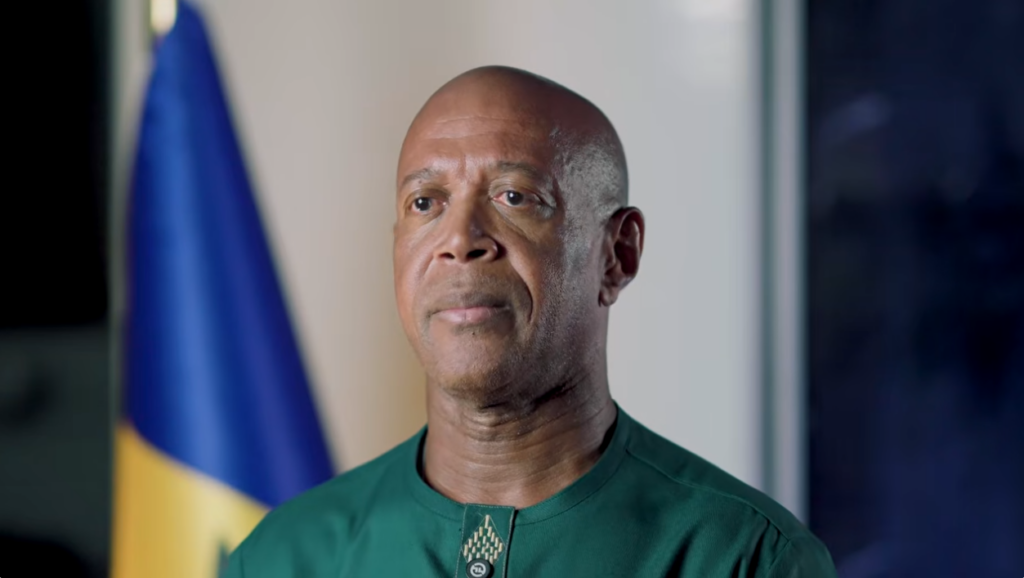
Minister of Home Affairs Gregory Nicholls fired back at DLP spokesperson Corey Greenidge within hours of the party’s statement yesterday, accusing him of showing “a lack of understanding of the parliamentary process”. He insisted that the legislation was properly returned to Parliament to continue unfinished work before a Joint Select Committee.
However, Greenidge is charging that the process is a “political buffer” and argued that despite public consultation, the core provisions of the bills were unchanged, raising serious concerns about fasttracked citizenship and its potential impact locally and internationally.
The bills, which seek to repeal and replace existing laws on citizenship and immigration, were reintroduced in the House of Assembly last Wednesday. They were initially proposed in October 2025, just months before the February 11 General Election, but referred to a Joint Select Committee following public outcry.
In a statement yesterday, Greenidge, DLP spokesperson on legal affairs, office of the Attorney General and Home Affairs, contended that the committee process was merely a “political buffer” used to quiet dissent during the election season. He noted that despite submissions from civil society and professionals regarding employment, social services and national security, the core provisions of the bills remained the same.
“The only reasonable conclusion is that the committee process was never intended to meaningfully reshape the bills,” he stated.
“It served as a way to diffuse public concern during the election period . . . . That is not consultation in any meaningful sense. It is political gamesmanship.”
Central to the DLP’s concerns is a proposed drastic reduction in the time required to obtain citizenship. Under the current Barbados Citizenship Act (Cap 186), naturalisation typically requires seven years of lawful residence, a process the DLP describes as one of “gradual and deliberate” integration.
Under the proposed new legislation, however, citizenship could be obtained after as little as 180 days (six months) of residence for CARICOM nationals, and 270 days (nine months) for others.
The opposition party warned that when read in conjunction with the proposed Immigration Bill, which introduces a points-based system for permanent residence favouring financial resources and property ownership, the laws create an accelerated pathway to citizenship.
“Individuals with sufficient financial means can strengthen their eligibility for permanent residence through their economic footprint alone,” Greenidge argued.
“This creates a system where financial capacity becomes a factor that can materially accelerate access to permanent residence, which in turn accelerates access to citizenship.”
He highlighted the potential international repercussions of the reforms, specifically citing recent actions by the United Kingdom and Canada to impose visa restrictions on Dominica, and St Kitts and Nevis, due to concerns over citizenship-byinvestment programmes. While the new bills do not technically constitute a citizenship-by-investment programme, Greenidge, an attorney, warned that the “fast-track” nature of the legislation could be perceived similarly by international partners.
“Barbados currently enjoys one of the strongest passports in the region . . . . That privilege is not automatic. It is based on trust. If citizenship becomes too accessible, particularly where financial pathways are involved, the passport itself becomes a potential back door into [international] borders.”
The party cautioned that the Mia Amor Mottley administration was engaging in a “calculated gamble” with the reputation of the Barbados passport, risking the withdrawal of visa-free access to major global destinations.
However, Nicholls, who reintroduced the bills, reiterated that submissions made to the Joint Select Committee would still be under review.
“Mr Greenidge has demonstrated a lack of understanding of the parliamentary process,” he said, pointing out that the committee never concluded its work before the election was called.
“So, therefore, this ridiculous statement from the Democratic Party shows that they don’t understand the political process when Parliament is dissolved. All bills and all the processes of Parliament are ongoing in respect to any legislation that has not been completed . . . . So, therefore, the bills were brought back by Government to continue that process before a joint parliamentary select committee,” he stated, adding that submissions previously made would be considered and new one could also be made.
“The Government signalled its intention once we had won the election to bring back the bills that were before the joint parliamentary select committee. All the pieces of legislation that were before the parliamentary process will come back in the same form that they were. It would be disingenuous for Government to change the bill when that process was not completed. I would hope that the Democratic Labour Party would not do what it did at the last joint select committee; that is, not attend any meetings.”
Regarding the DLP’s concerns about wealthy individuals being able to cement their eligibility for citizenship, Nicholls also dismissed them.
“There is no evidence that the provisions in the bill will allow Barbados immigration system to be overwhelmed with people of wealth. That is an alarming statement being made before any real tangible evidence of that happening or what provision in the bill will allow our system to be overwhelmed by people of wealth. Indeed, what is wrong with people who have means coming to invest in Barbados, invest in industry, invest in development of human capital and to invest in the development of the Barbados economy?
“Mr Greenidge’s statement again notes that he has a profound ignorance of the mechanics that will allow the Barbados economy to be able to sustain a level of growth and to maintain a quality of life and a standard of living that Barbadians have become accustomed to . . . .” the Minister stressed. (MB)
The post Govt dismisses DLP claims of threat to national sovereignty appeared first on nationnews.com.