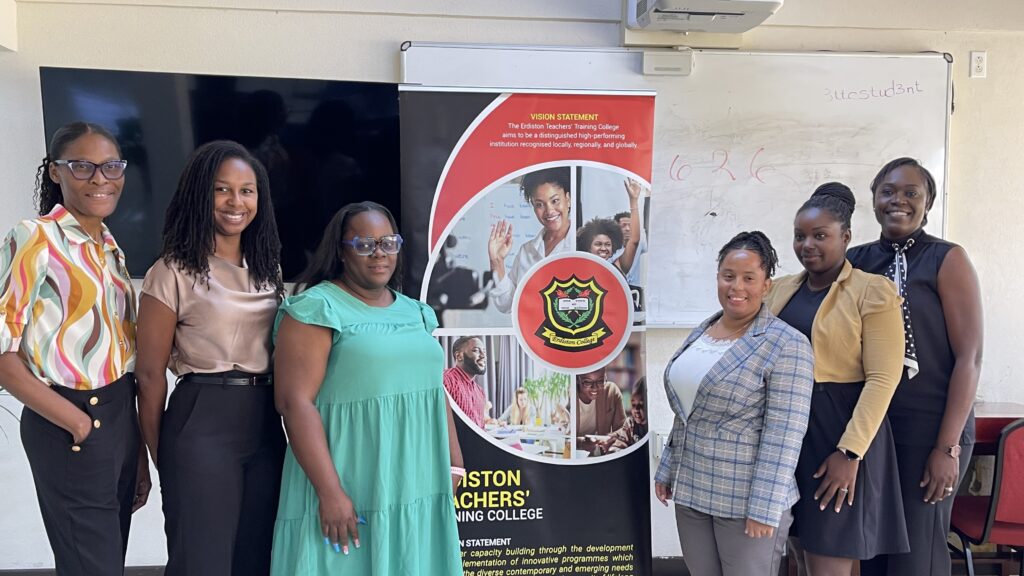
Six top graduates from Erdiston Teachers’ Training College said they were now equipped not just with qualifications, but with a renewed mission to transform classrooms into more inclusive, student-focused spaces.
Speaking ahead of its upcoming graduation ceremony, Deputy Principal Francis Thompson described the moment as part of a broader shift taking place within education.
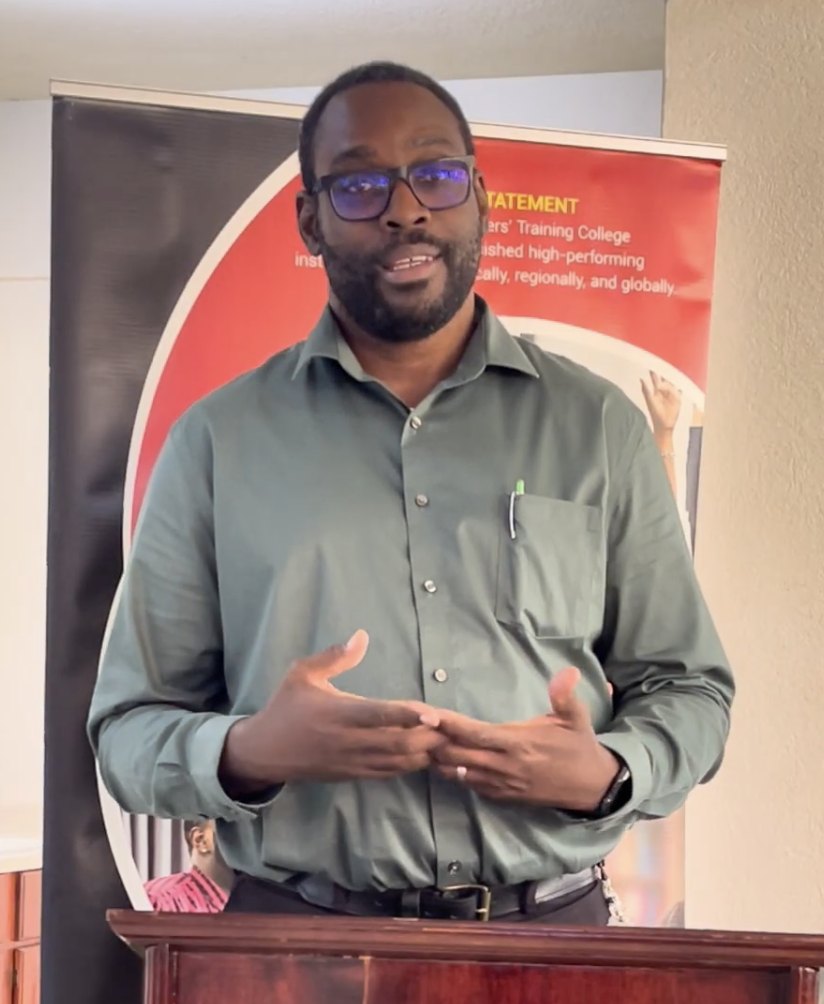
Deputy Principal of Erdiston Teachers’ Training College Francis Thompson. (Photo Credit: Lauryn Escamilla/Barbados TODAY)
“This morning is about these ladies and their achievement,” he told reporters, noting that the college is undergoing a change itself. “We know that education transformation is what the Ministry of Education Transformation is pursuing and we are excited to partner with them in ensuring that our teachers receive the skills and the competencies that are necessary.”
Among the changes highlighted was the transition of the Technical and Vocational Education course from a certificate to a diploma programme, reflecting what he described as a growing recognition of skills-based learning.
For Katrina Fergusson, the top student in that programme, the experience reshaped both her teaching philosophy and expectations of students. She explained that she has moved away from traditional methods and that her classroom is now more student-centred and interactive.
Working within technical education, she emphasised the importance of preparing students for real-world environments. “We prepare students for the world of work,” she said, explaining that peer-to-peer assessment is used to mirror workplace expectations where “a peer or supervisor might check their work.”
She also stressed that practical subjects must reinforce core academics. “Even in housekeeping… I encourage math for counting and distributing stock,” she said, adding that literacy and numeracy remain essential across all disciplines.
Fergusson challenged long-standing perceptions around education pathways. “Not every child is academic,” she said, arguing that students should be exposed to both academic and vocational opportunities from early on.
For valedictorian Thonya Joseph-Devonish, who completed the Postgraduate Diploma in Educational Leadership, the journey reinforced the importance of reflection and relationships in teaching.
“Reflective practice was central,” she said. “We spent many days talking about our experiences… it really gave us an opportunity to see what we are doing as teachers, what we can do in terms of improvement of self.”
That introspection, she noted, will directly shape how she continues her work. “One of the things that I have been working on is the development of learning communities… creating workshops… where teachers get an opportunity to be exposed to mental health workshops and physical health workshops so that they can build the skills to live well.”
At the primary level, Shakila Maynard, who completed the Diploma in Primary Education, said the programme sharpened her resilience and reshaped how she approaches young learners. It also helped her improve on strategies she now uses in the classroom.
Discarding “the teacher-centred approach”, her focus is now firmly on the students. Given that Maynard works with three and four-year-olds, her responsibility is even more critical.
She also stressed the importance of early literacy. “From a young age it is easier for them to be more exposed… reading from that young age encourages them to go forward.”
But she acknowledged ongoing resource challenges: “At times more resources are needed; personally, I’m not going to just stay there and wait around.”
Keziah Taylor, who completed the Bachelor of Primary Education, pointed to collaboration and adaptability as key lessons from her four-year journey.
“What I took away from the program is the need for a community,” she said. “Working together… we learn that we need to support each other in learning.”
She is also a strong advocate for differentiated instruction. “How can we tailor our lessons to every single student? We want to make sure that we don’t leave any child behind.”
Addressing concerns about literacy in a digital age, she added: “We have to meet students where they’re at… grab them by their interest first.”
Special education postgraduate Marva Cummins echoed the need for more inclusive practices, noting that classrooms have already evolved beyond traditional structures.
“Persons are still talking about mainstream, but the classrooms are already inclusive,” she said. “There are lots of students who need differentiated instruction.”
Her studies gave her deeper insight into student behaviour: “I really learned about how the brain works. I was able to understand more about what [students] are experiencing and how I can help them to reach their full potential.”
She has already begun applying those lessons and said patience is needed. “I have started smaller reading groups so that the students don’t feel overwhelmed. Everybody will not process information at the same time but gradually, they will get there.”
For Danielle Harris-Bridgeman, who completed the Postgraduate Diploma in Secondary Education, returning to formal study after years in the classroom offered a new perspective.
“Becoming a student again really helps me connect with my students,” she said. “I understand how it feels to be on the receiving end.”
She encouraged other teachers to follow suit: “Don’t let another year pass. You owe it to your students to be trained.”
(LE)
The post Top Erdiston grads ‘ready’ to reshape classrooms appeared first on Barbados Today.