
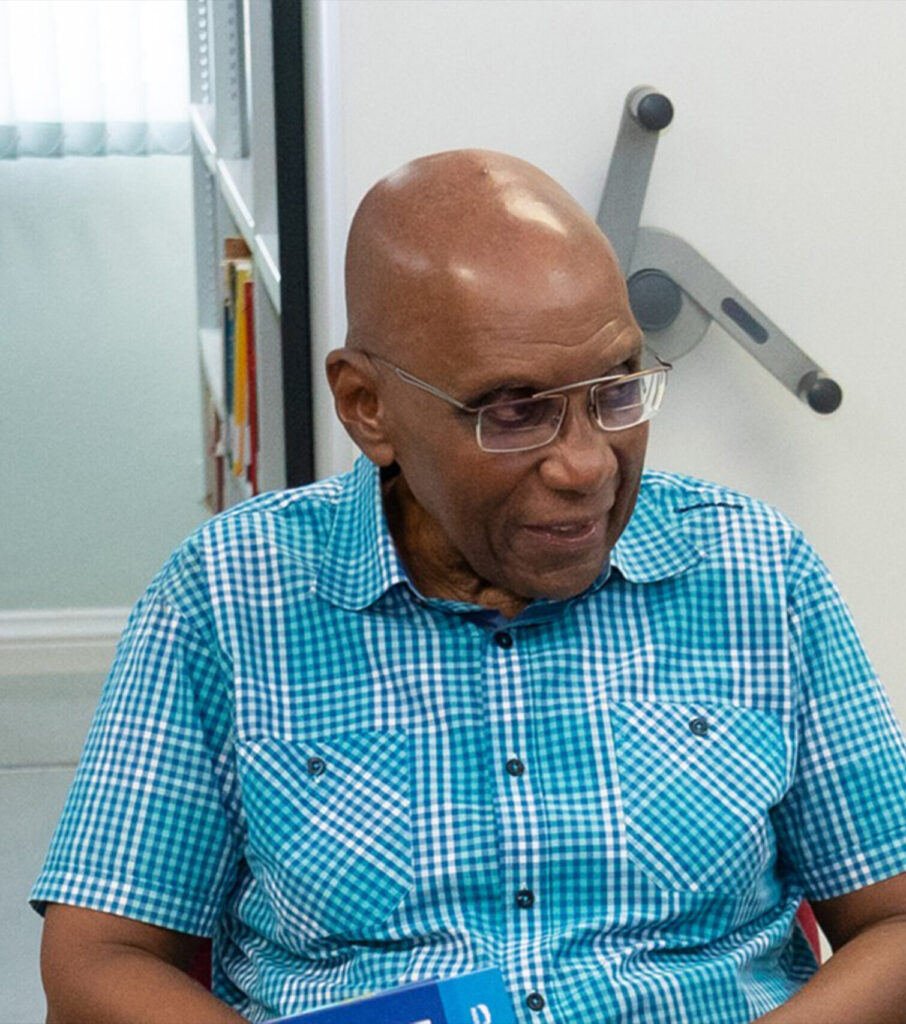
Former Central Bank of Barbados governor Dr Delisle Worrell has said the recent appreciation in the values of sterling, the Canadian dollar, the euro, the yen and the Chinese renminbi (RMB) will have no economic consequence for the Caribbean.
The US dollar remains the world’s standard of value, and Caribbean countries must accept this reality, he maintained.
“Our governments’ and central banks’ responsibility is to maintain a predictable value of domestic currency in terms of the dollar for as long as that currency remains the global standard,” the former International Monetary Fund (IMF) consultant wrote in the May edition of his Economic Letter, entitled The Dollar is the World’s Standard of Value.
“The prices of the region’s tourist services, exports, imports, foreign borrowing and other external transactions are all quoted in dollars, and settlements are cleared via dollar accounts with US banks and the US Federal Reserve Bank of New York.”
The main impact of current global instability on Caribbean economies is inflationary pressure transmitted to the region, he said.
“Countries where government enjoys a large surplus of revenue over current expenditure — in excess of two per cent of GDP — are in a position to offer subsidies to cap the prices of fuel and other essentials. In all other cases, there is little that may be done to alleviate the inflationary pressure.”
The noted economist, who founded the Central Bank’s research department, cautioned against attempts to adjust domestic currency values to offset imported inflation.
“If the central bank supplied foreign currency from its reserves in sufficient quantity to cause an appreciation of the exchange rate, banks, importers, exporters and tourist establishments would almost certainly hoard the excess rather than trade US dollars more cheaply.”
Dr Worrell noted that there are 180 currencies recognised as legal tender worldwide and that the values of the other 179 currencies are defined by the US dollar.
“This is a reality which has nothing to do with the policies of the US Government, with the circumstances of the US and world economies, or with the value of gold, oil, or any other commodity. It is also unaffected by the emergence of blockchain currencies or any other new technology. All economic values are based on the dollar.”
The dollar’s status as the world’s common standard of value is, like the use of Greenwich Mean Time, an historical artefact, he said.
He recounted 80 years of history to buttress his point: after the Second World War in 1945, the world was split into non-intersecting Western democratic and Eastern communist spheres, with the US dominant in trade and finance in the West, leading to the dollar becoming the reference currency outside the Soviet bloc. Following the collapse of the Soviet Union, the dollar’s use became universal.
The dominance of the dollar is the result of market practice rather than government decision-making, he suggested.
Individuals, companies and institutions engaged in trade, travel and financial transactions worldwide choose the dollar as the reference currency for settling payments. Dr Worrell cited the example of a Jamaican consumer calculating purchases from China in US dollars before converting into local currency.
“The international market has continued to use the dollar for the settlement of international payments despite the successive rise of Germany, then Japan and now China as the world’s second largest economy. The status of the dollar as the universal standard of value also remained unaffected by the global financial crisis of 2007/2008 and the subsequent deterioration in market perceptions of the credit-worthiness of US Government debt.
“In spite of the unpredictability of current US policies and the economic uncertainties this creates worldwide, there is nothing to suggest a global shift from the dollar to the euro, the Chinese renminbi (RMB) or any alternative currency, as the universal standard of value.”
(EJ)
The post Worrell: Currency shifts won’t affect Caribbean economies appeared first on Barbados Today.