Barbados is seeking to significantly expand its control over territorial waters, offshore resources and emerging maritime industries through new legislation that also anticipates future climate threats and even space-linked ocean activity.
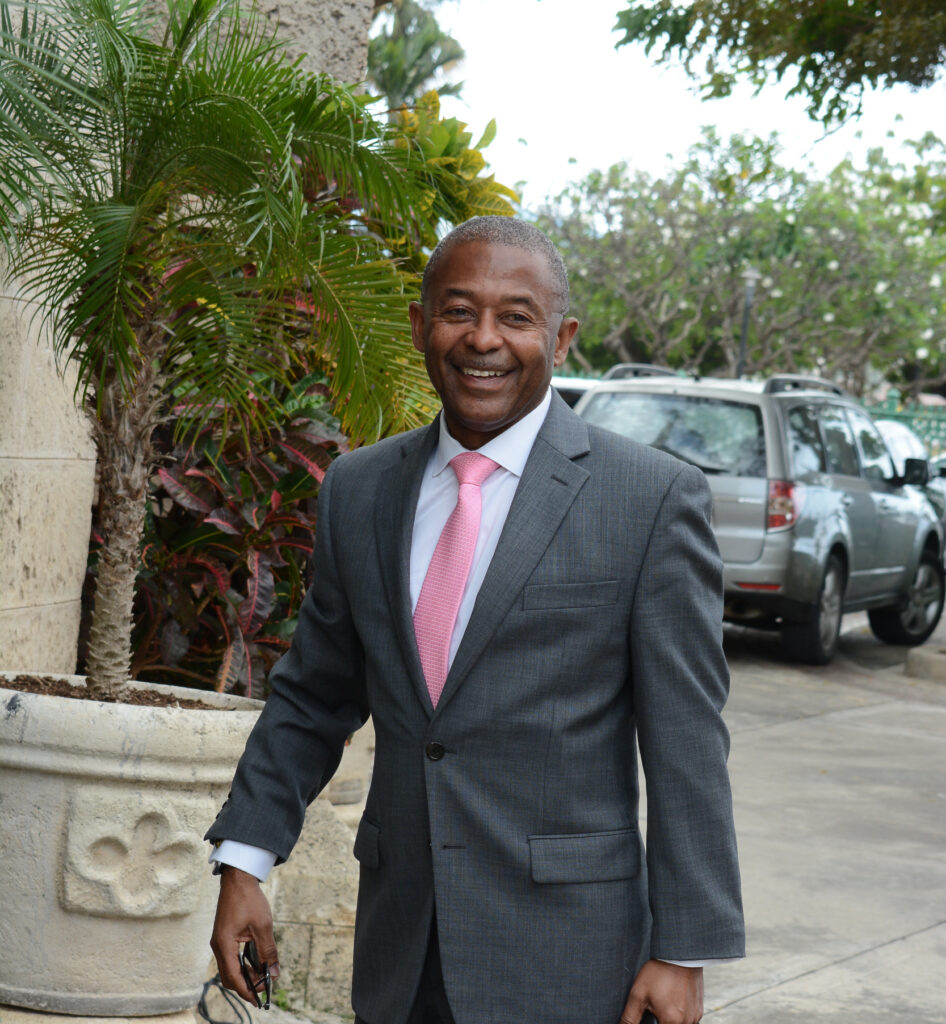
The Maritime Areas (Jurisdiction and Rights) Bill was introduced in the House of Assembly on Friday by Minister of Tourism and International Transport Ian Gooding-Edghill, who described the bill as a major step in aligning Barbados’s laws with the United Nations Convention on the Law of the Sea (UNCLOS).
“The primary objective is to establish a robust legal regime for the maritime areas of Barbados,” he told MPs. “It defines the extent of the state’s sovereignty and jurisdiction, facilitates the sustainable management of maritime resources, and incorporates international standards for the protection of marine biodiversity.”
The bill outlines Barbados’ legal authority over its territorial sea, exclusive economic zone (EEZ), continental shelf and maritime boundaries, while also granting broad enforcement powers to maritime law enforcement officers. Under the proposed law, officers could board, arrest and seize vessels without warrants in certain circumstances.
The legislation also expands Barbados’ legal posture regarding offshore resources, marine scientific research, environmental management and shipping oversight.
The bill also extends to outer space with “space-related ocean activities” and extraterrestrial oceans through a ministry responsible for space affairs. Gooding-Edghill noted that the bill’s language reflects emerging opportunities between the maritime and space sectors.
“My ministry is currently working on exploring such synergies between maritime and space sectors,” he said, adding that Barbadians should “stay tuned” for “interesting and exciting opportunities” that could benefit education, tourism and young people.
The minister explained that the legislation formally establishes Barbados’ maritime zones under UNCLOS provisions, including internal waters and the country’s 12-nautical-mile territorial sea.
“Barbados has full sovereignty over airspace, the water column, the seabed [and] subsoil within the territorial sea,” he said.
The bill also formalises Barbados’ 200-nautical-mile EEZ, giving the country exclusive rights over economic activities and offshore resources within that area.
Gooding-Edghill stressed the importance of securing those rights as oil and mineral exploration increases across the Caribbean.
“There are people drilling for oil all over the globe and especially within the Caribbean Sea,” he said. “It is important for us to ensure that we have exclusive jurisdiction of our zones and that we maintain our sovereign rights.”
Under the legislation, Barbados would also have exclusive jurisdiction over offshore islands, installations and structures, including authority over customs, immigration, health and safety regulations.
Beyond security and resource protection, Gooding-Edghill argued the bill is critical to Barbados’ long-term economic development, particularly as the island’s maritime space far exceeds its land area.
“These zones are also important for large ocean states like Barbados, whose maritime space significantly exceeds our land territory,” he said, pointing to opportunities in shipping, coastal development and marine tourism.
The legislation is also intended to anticipate future climate change threats, establishing legal principles that would allow Barbados to maintain its sovereignty and maritime claims even in scenarios involving severe sea-level rise and partial submergence of territory.
(SB)
The post Sweeping new law to expand maritime powers appeared first on Barbados Today.