A surge in bushfires is destroying bee colonies, equipment and vital foraging habitats, prompting urgent warnings from industry leaders that the island’s food security could be at risk.
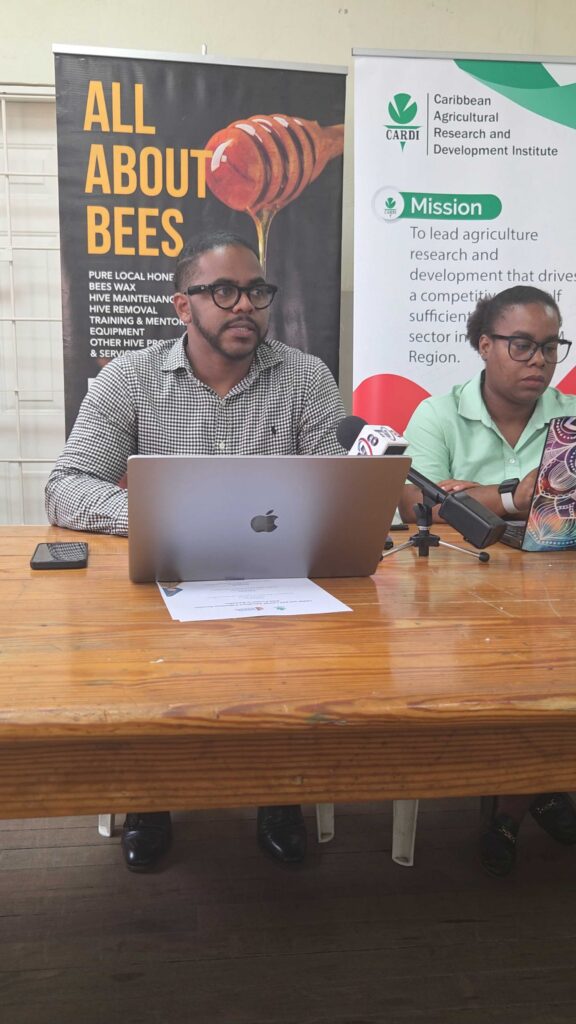
The escalating crisis took centre stage at the official launch of the Apiculture Pollination Services Pilot Project — a joint venture between the Caribbean Agricultural Research and Development Institute (CARDI) and the Barbados Apiculture Association (BAA).
While the project aims to introduce a scientific approach to boosting crop yields, officials used the platform to warn that the island’s bees, and by extension its food security, are under immediate threat from reckless fire-setting.

Christina Pooler CARDI representative in Barbados. (Photo Credit: Ricardo Roberts/Barbados TODAY)
Graham Belle, president of the Barbados Apiculture Association (BAA), revealed that the recent blazes have struck a heavy blow to an industry already struggling with economic pressures.
“More recently, beekeepers are being affected by wildfires across the island, destroying hive boxes, killing entire bee colonies, and damaging important foraging areas,” Belle warned.
The BAA is currently gathering data from its membership to present a comprehensive report to the Ministry of Agriculture, Food and Nutritional Security. Belle emphasised that the impact of these fires goes far beyond environmental damage.
“We have received reports from a number of beekeepers where they’ve lost hives, where they’ve lost entire colonies, where they’ve lost the actual equipment, they’ve lost foraging area for their bees due to the wildfires… there have been tangible losses, financial losses as a result of the wildfires,” Belle stated, confirming that the association will urgently seek government interventions.
James Paul, CEO of the Barbados Agricultural Society (BAS), strongly condemned those responsible for triggering the blazes, urging a cultural shift and better strategic planning to shield local apiaries.

Chief Executive Officer, Barbados Agricultural Society James Paul. (Photo Credit: Ricardo Roberts/Barbados TODAY)
Paul proposed creating a national map of bee colonies so that emergency containment efforts by the Barbados Fire Service do not inadvertently destroy hives.
“One of the things I’m hoping that we can do as we proceed is to actually map the existence of the colonies in the island so that when these things do happen, that we are aware of the threats, the likely threats, and what are actually jeopardised because that is extremely important, in terms of trying to ensure that we do not damage our existing colonies,” Paul explained.
The BAS chief also issued a stern appeal to the public regarding the economic consequences of property damage:
“I want to make a special appeal to those persons who seem to have a penchant for starting fires. I don’t believe sometimes they understand the damage, the economic damage that is done as a result of the activities. It is not something that we want to support in this country where people go about spreading fires recklessly.”
The wildfire crisis compounds a long list of grievances currently plaguing Barbadian beekeepers.
Producers are also battling global supply chain disruptions that have driven up the cost of imported hive boxes and protective gear, alongside crop theft, cheap adulterated honey imports, and climate change altering flowering cycle, Belle noted.
(RR)
The post Bushfires ‘threaten bee colonies, food security’ appeared first on Barbados Today.