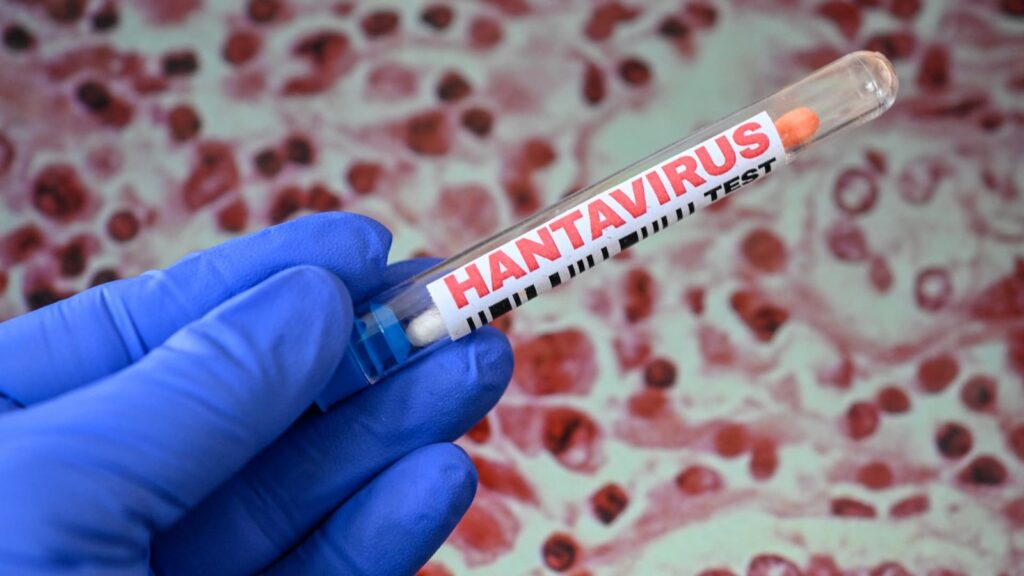
A biosecurity expert is urging heightened vigilance as scientists examine whether climate change is helping to drive the spread of the deadly rodent-borne disease known as hantavirus, raising concern over its emergence in new regions and the risk of misdiagnosis in the Caribbean.
He urged Barbadians to be prepared and to show greater respect for their environment.
Dr Kirk Douglas, director of the Centre for Biosecurity Studies at The University of the West Indies, Cave Hill campus, said while the pending El Niño weather phenomenon associated with high temperatures is not a guarantee of hantavirus outbreaks, it is a climate signal that should trigger preparedness, rodent surveillance and early warning systems, if possible.
Scientists are looking at the climate factors that may be driving the spread of the disease – which has already killed three people from 13 confirmed cases worldwide – into new areas.
In Argentina, where the outbreak is believed to have originated onboard the MV Hondius cruise ship and has captured the world’s attention over the past few weeks, hantavirus cases have more than doubled in the past year.
Dr Douglas cautioned Barbadians that the spread of diseases such as hantavirus into new spaces may be a warning sign that they now have to rethink their relationship with their natural surroundings.
“Outbreaks like this remind us that human health is not separate from ecological or environmental health. When we degrade forests because we want to exploit minerals, simplify eco-systems by removing some of the bio-diversity, mismanage waste, we expand into habitats because we want to get closer to nature, intensify agriculture without proper safeguards, ignore the climate signals, we increase the number of opportunities for pathogens to cross these species boundaries.”
“But this is not necessarily a fear of nature. Nature is not the enemy. The problem is unmanaged contact, ecological disruption, and weak preparedness, which all boils down to human behaviour. We need a more respectful, intelligent relationship with the natural world, one that recognises public health, climate resilience, biodiversity, agriculture, tourism, waste management and urban planning, as all part of the same system.”
“Hantavirus [is] an ancient virus; but the warning is modern. The health of people, animals and ecosystems…we can no longer govern them separately. We have to have transdisciplinary approaches to the way we tackle diseases; and I believe that human behaviour is by far the most critical factor that we need to target.”
Misdiagnosis of diseases has become a huge problem in Barbados and the rest of the Caribbean, Dr Douglas also said, raising the spectre of hantavirus being one of those diseases.
“We have a number of overlapping disease syndromes, whether this is dengue, zika, chikungunya, even Oropouche [virus]… all of them generate a febrile illness that is very similar. And diagnostic testing is very important.”
“So, clinicians should ask the exposure question. Recent travel, recent contact with rodents, cleaning of enclosed spaces, farming, camping; all of these signals that point to potential exposure. Secondly, within the laboratories, you have to have testing algorithms that should be based on the clinical severity, geography, season, and the exposure and history. Not only what is the most common disease.”
“In Barbados, for instance and in the Caribbean, you see dengue cases rising, the primary reaction or consultation by medical practitioners can often lead to a dengue diagnosis without even laboratory confirmatory testing, because it is simpler. However, that doesn’t give you the true perspective of what’s clinically circulating at that time.”
Referring to his doctoral research where he found co-infections of other illnesses with dengue and hantavirus, he continued: “The whole clinical outlook and disease scope within the Caribbean is changing. Every couple of years, we are seeing a new pathogen emerge, or at least we are discovering it. It may not necessarily have emerged, it might have always been there and we never knew because we never looked.”
“So, having multiple diagnostics and referral pathways will be very, very important.”
(EJ)
The post Scientist warns of possible climate link to hantavirus outbreaks appeared first on Barbados Today.