
A comprehensive overhaul of the prison system is being proposed, with a focus on rehabilitation, reducing reoffending and dismantling criminal networks within Dodds Prison as part of a broader national crime prevention strategy, Minister of Home Affairs Gregory Nicholls has said.
He said: “If you fail to reform prisons beyond just housing of inmates, then we will continue to perpetuate the cycles that bedevil us. Effective prison systems have to rehabilitate offenders, have to break the strength of the criminal networks inside the prisons and reinforce nonviolent norms and identities.”
Pointing out that crime was disproportionately affecting young men in society, the minister noted that, with the current system being “largely custodial, reinforcing criminal networks and failing to reduce recidivism”, the focus must shift to reforming and strengthening the national security apparatus to reduce violence. One way to do so, he said, was through the modernisation of penal institutions.
“One of the key objectives in this transformation of the prison to a correctional services system is to reduce recidivism, and we have actively looked at a target for that at 30 percent to transform prisons into rehabilitation centers, improve reintegration, reduce violence, and enhance institutional resilience.”
On the second day of the Barbados Probation Service ‘Modern Perspectives on Sentencing and Penal Reform’ symposium at the Lloyd Erskine Sandiford Centre, the home affairs minister revealed an action plan to transform the prison service into a correctional system over a six-year period.
One area, he said, was that of changing prisons into centres of behavioural change by introducing structured rehabilitation programmes, cognitive behaviour therapy, substance abuse treatment, violence interruption, and conflict resolution.
“Housing men in cells, and men who will walk out in the yard for an hour or two as a sole sum of what they are doing in the prison on a regular basis cannot work. We have to embed education and skills training, TVET certification in certain disciplines, construction, ICT, agriculture, even maritime skills, literacy and numeracy programs for those persons who have not attained any qualifications, and indeed we are actually actively engaging a proposal from the University of the West Indies to introduce the prison tertiary education pipeline into the system.
“We must also target the high-risk groups. There are gangs in the prisons, there are people in the prisons who are being influenced by factors outside of the prison. We need to focus on the young men involved in gangs, drugs, and firearms.”
Another step, Nicholls said, was establishing peer mentorship programmes and instituting a restorative justice framework to reduce prison violence.
Highlighting the reintegration and re-entry aspect for offenders, he declared that the aim must be to ensure that they return to society as productive citizens.
“The key actions here are to create a national reintegration program, pre-releasing, planning, housing, employment, family linkages. There’s a prison after care committee that has been put in place, and I’ve asked them to do more than just sitting down, and seeing how we can get a pants and shirt, or a little $20 for a fellow as he’s leaving prison to actually go out there, and engage the private sector, the NGO community, and government if necessary through the crime prevention budget to see how we can help these persons coming out and develop programmes.”
The minister also said there was a focus on expanding job placement partnerships within the private sector to create apprenticeship opportunities for ex-offenders, expanding second-chance frameworks, and removing cultural taboos and barriers limiting their access to employment. In addition, he said that the prison’s infrastructure would be upgraded, staffing levels improved, and smart technology implemented.
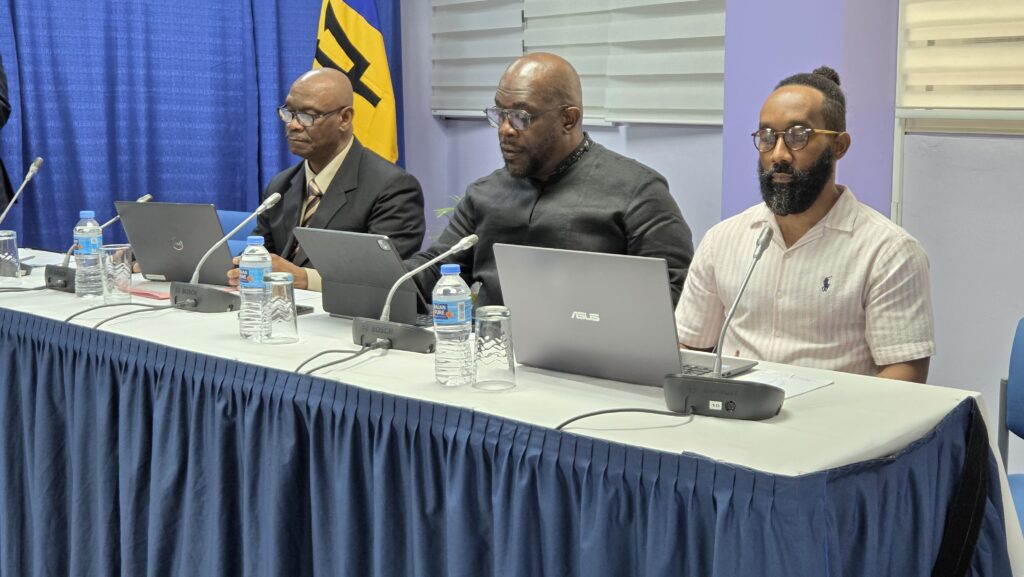
Nicholls was part of a panel addressing the ‘From Prison to Correctional Facility and the Department of Corrections’ workshop at the event, which included Superintendent of Prisons DeCarlo Payne, who said: “The goal is no longer to simply to contain people but to prepare them for successful reintegration.”
He outlined several of the behavioural programmes, as well as educational and vocational training already in place at Dodds to ensure that offenders were workforce-ready, and noted that some of these initiatives were already bearing fruit.
Calling the Prisons Act “archaic”, the prison chief said that legislative reform was necessary for this and other areas that would be coming on stream.
“We are going to be operating in an environment that speaks to ankle monitoring, parole, community services and transitional housing and all of these areas here would have a component of monitoring and hence the reason for a parole department.”
Payne said the road ahead in transitioning the prison service to a correctional system would require “infrastructural monetisation, formalisation and implementation of the Department of Corrections”.
“I’m aware that there’s an established order that already has a corrections headquarters stated in there, but we may need now to revisit it and try to get it put into place as quickly as possible. We’ll also have to look at policy reform, staff training, cultural transformation, technological integration, rehabilitation, and focused leadership as well.”
(JB)
The post Prison reform ‘to target recidivism, rehabilitation’ appeared first on Barbados Today.