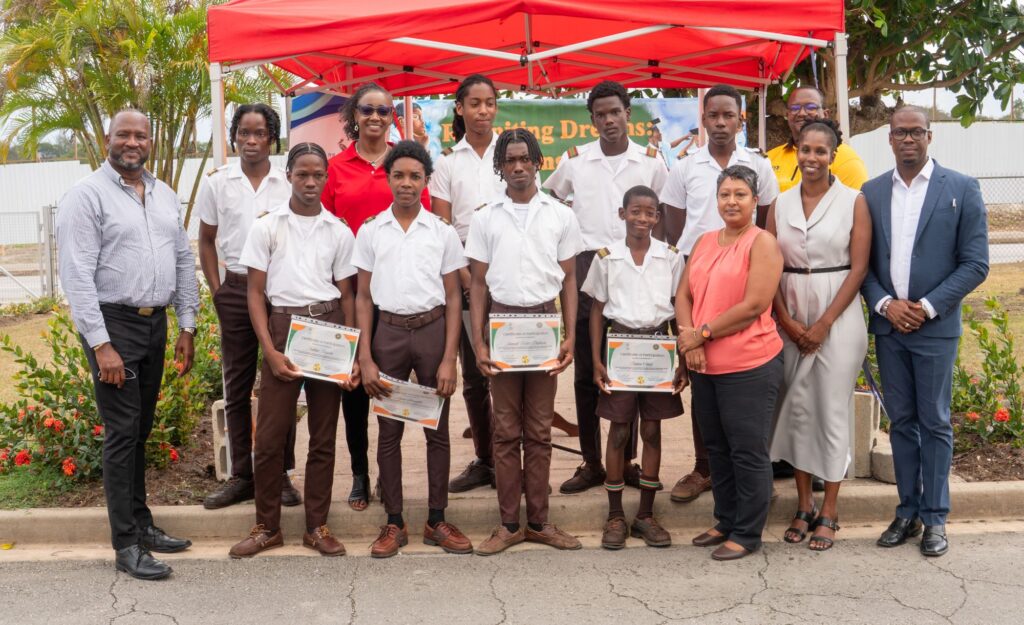
A seven-week, agriculture-based pilot at the Frederick Smith Secondary School has re-engaged 15 at-risk boys, showing measurable gains in attendance, teamwork and practical skills while generating saleable products from hydroponic farming, officials said.
The project ended on Monday with a closing ceremony for the “Learning Cooperative: Securing Futures, Saving Lives” initiative at the Trents, St James school.
The learning cooperative, co-organised with the University of the West Indies at Cave Hill, engaged students in practical agricultural and entrepreneurial activities, showing how combining academic theory with revenue-generating farming can improve engagement, develop leadership and strengthen socio-emotional skills.
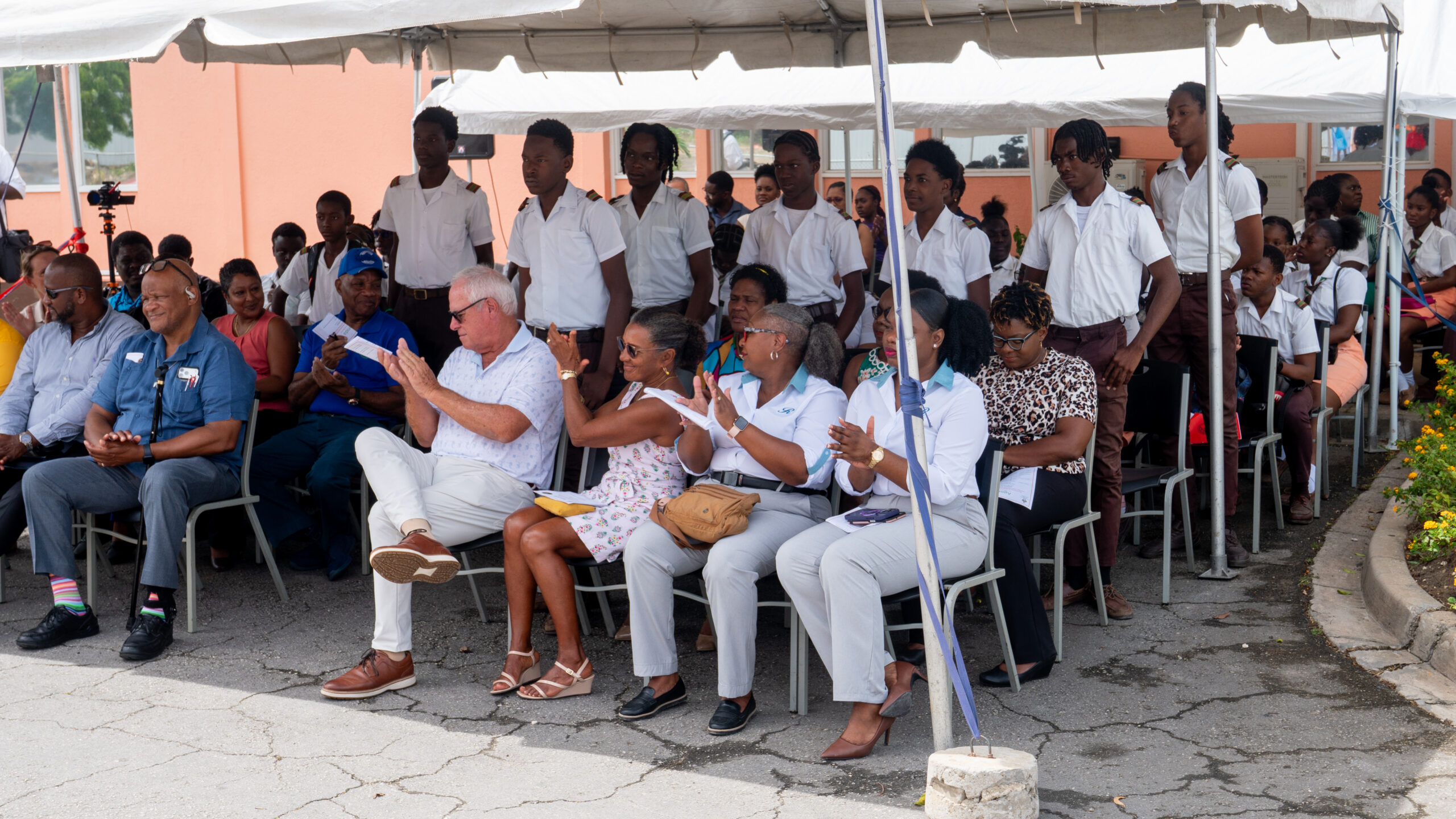
Participants of the Learning Cooperative at FSSS Stand to receive congratulatory applause from the audience in attending at the Closing Ceremony. (Photo credit: Ricardo Roberts/Barbados TODAY)
The initiative went beyond traditional farming by integrating literacy, numeracy and innovation into a model for curriculum delivery. Working on the school grounds, participants built soilless grow boxes, cultivated spinach and herbs, and operated a hydroponic system.
The produce was turned into value-added items, including fresh pesto and homemade mint ice cream, which attendees sampled at the ceremony.
Dr Michele Singh, Director of the UWI Centre for Agricultural Research and Innovation (CAGRI), praised the students’ dedication.
“When we first looked at this project, we saw a distinct opportunity to change the narrative around education. We live in a world where the landscape is changing fast, and far too often, traditional classrooms can leave bright, hands-on minds behind. But we knew that if we connected academic theory with the practical, revenue-driven reality of modern agriculture, we could create something truly transformative. That is exactly what we did here by establishing the FSSS Learning Cooperative.”
She pointed to the joint effort of the UWI School of Education, the school administration and the Barbados Trust Fund Limited, which donated the hydroponic system.
“By transforming agricultural decisions into tangible revenue and community well-being, these students have proven that agriculture is a viable, respectable, and highly profitable venture.”
The initiative was designed as an intervention for 15 boys who were losing their connection to the classroom. Using food production as a tool for personal development, the programme addressed conflict resolution, self-regulation and teamwork.
School administrators reported that the outcomes exceeded expectations and could inform future curriculum delivery.
Acting Principal Shanelle Waithe hailed the programme’s wider impact on the school: “What we did not fully anticipate was how far this small intervention would travel. Over the past seven weeks, these 15 young men have planted, nurtured, harvested and built a hydroponic system. They are learning to resolve conflict, to show up for one another, and to take pride in something they built with their own hands.
“In doing so, they have given this school something far greater than 15 individual success stories — they have given us a blueprint. What started as a targeted programme for a small group of at-risk boys has blossomed into a pilot project that now stands as an exemplar for project-based and integrated learning across this entire institution.”
The initiative also reflects broader efforts at education reform in the region, in line with international discussions on teaching and governance. Dr Laurette Bristol, Director of the School of Education at UWI Cave Hill, pointed to the role of community partnerships and relevant curricula in modern schooling.
“The School of Education at the UWI is a lived expression of engaged scholarship and leadership where we work with schools and teachers to drive authentic education transformation. This is not about superficial change but about ensuring that school communities understand the nature of their educational challenges and build partnerships with communities to respond to the need for education as sustainable and regenerative. This is what reigniting dreams for the future calls us all to do.”
Dr Bristol expressed deep gratitude to the parents, faculty and school leadership who supported the students throughout the programme.
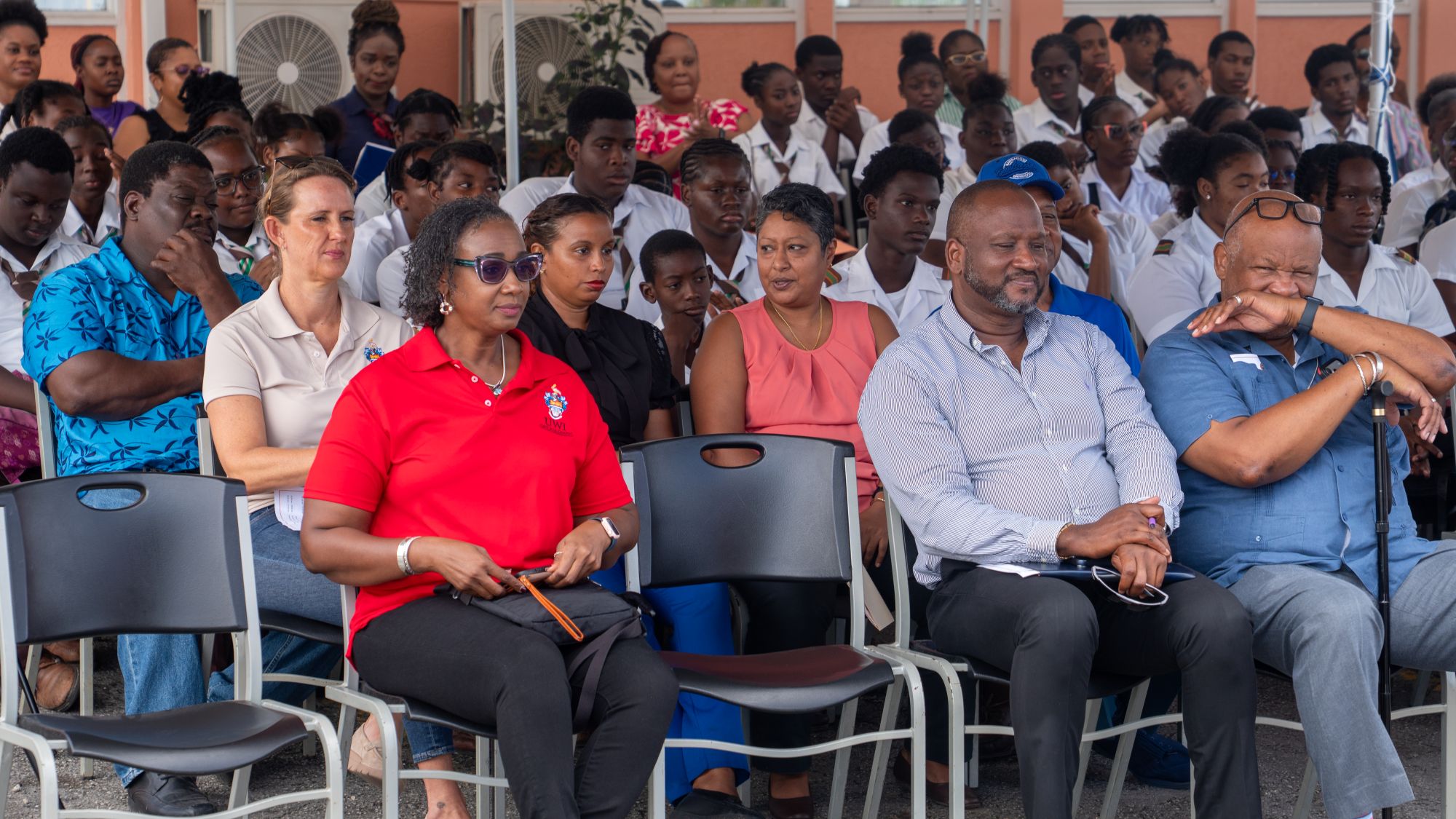
A section of the crowd in attendance at Closing Ceremony Learning Cooperative Securing Futures, Saving Lives Programme. (Photo credit: Ricardo Roberts/Barbados TODAY)
(RR)
The post Learning co-op helps at-risk boys become young farmers appeared first on Barbados Today.