
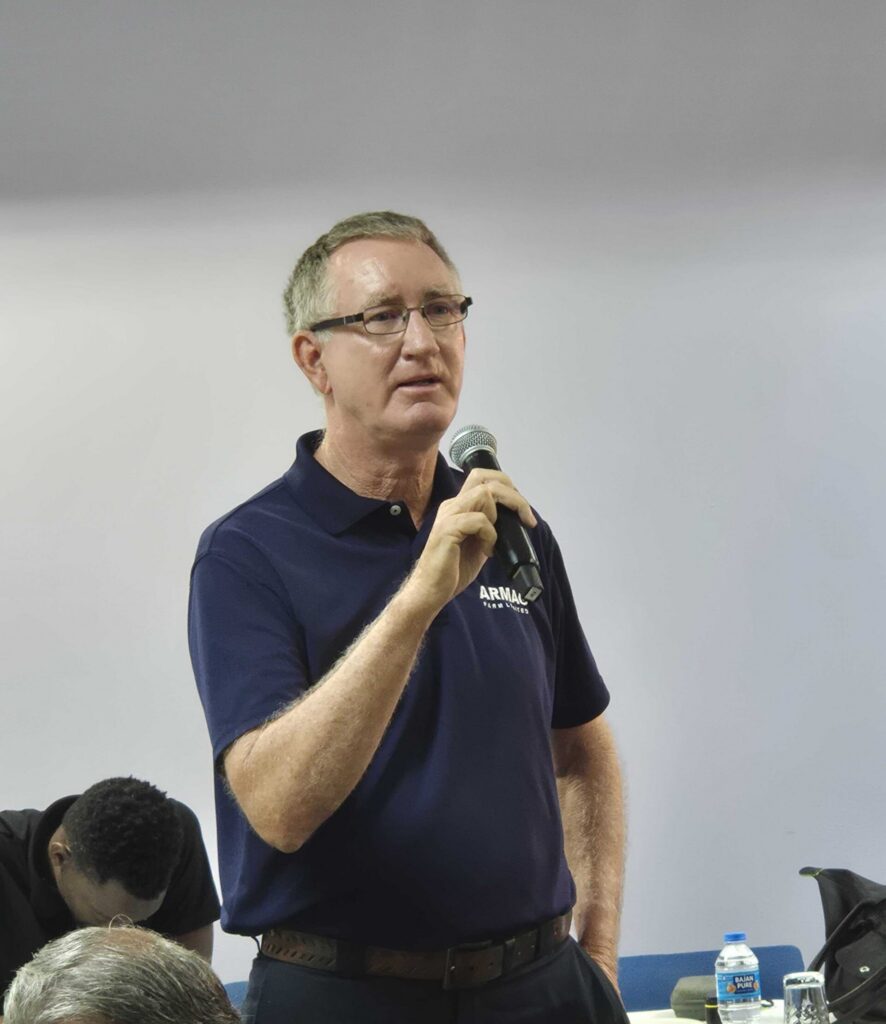
A long-serving farmer has blamed middlemen taking an outsized share of profits for a sharp gap between farmgate prices and retail costs, which pushes producers out of business, with some crops selling for nearly double by the time they reach consumers.
“Do something for the farmer at the bottom, the man with mud on his boots,” Armag Farms’ Richard Armstrong told the Ministry of Agriculture and Food and Nutritional Security’s Looking Forward: Agriculture 2030 colloquium on Monday,
The economics of farming had become increasingly unsustainable because too little of the final selling price reaches those who grow the food, he said.
“The rebound of the complete value of producing food does not get back to the farmer.
“Enough of it does not get back to the man out there in the ground.”
A veteran producer of yams and sweet potatoes for more than four decades, Armstrong said the issue was not unique to Barbados but warned that unless it was addressed, the country risked driving more farmers out of business.
He cited a Caribbean Development Bank study which found that only one in five farmers remained in business five years after starting.
“I hear a lot of talk here today about agro-processing and pack houses and all of these things are necessary.
“They also add costs. They want their piece of the pie. Unfortunately, who has to provide that piece of the pie? The farmer.”
The Sunbury, St Philip-based Armag Farms eventually exited agro-processing because it had become financially unsustainable, according to Armstrong. “The agro-processing business began to ask too much of the farming business,” he said.
“For the agro-processors to make the money that they wanted, they wanted the farmer to take the licks.”
He also criticised what he described as a long-standing focus on keeping consumer prices low without recognising the financial pressure placed on producers.
“The farming community is not given what it deserves,” Armstrong said.
Drawing on a recent experience, Armstrong recalled a customer who bought sweet potatoes directly from his farm returned days later seeking a ‘top up’ after selling the first batch.
The potatoes had left his farm at $2.62 per pound but were later retailed for about $5 per pound, he said.
“Look at the markup that [was] put on.
“But you know who gets the licks… the farmer, not the middlemen.”
Many young farmers had confided that low farmgate prices were threatening their future in agriculture, Armstrong said.
“You know how many young farmers come to me… and tell me if they don’t make money off of this, they done?
“The main concern that they have is, ‘I dig these potatoes and a fella come to me and want to give me little or nothing for them, but yet I see him in town selling them at four, five, six times as much.
While acknowledging that not every vendor engages in the practice, Manager of Markets Sherlock King agreed there were “huge imbalances” between what farmers receive and what consumers ultimately pay, saying the Ministry of Agriculture hopes to address the issue by helping vendors adopt fairer pricing practices rather than pursuing excessive markups.
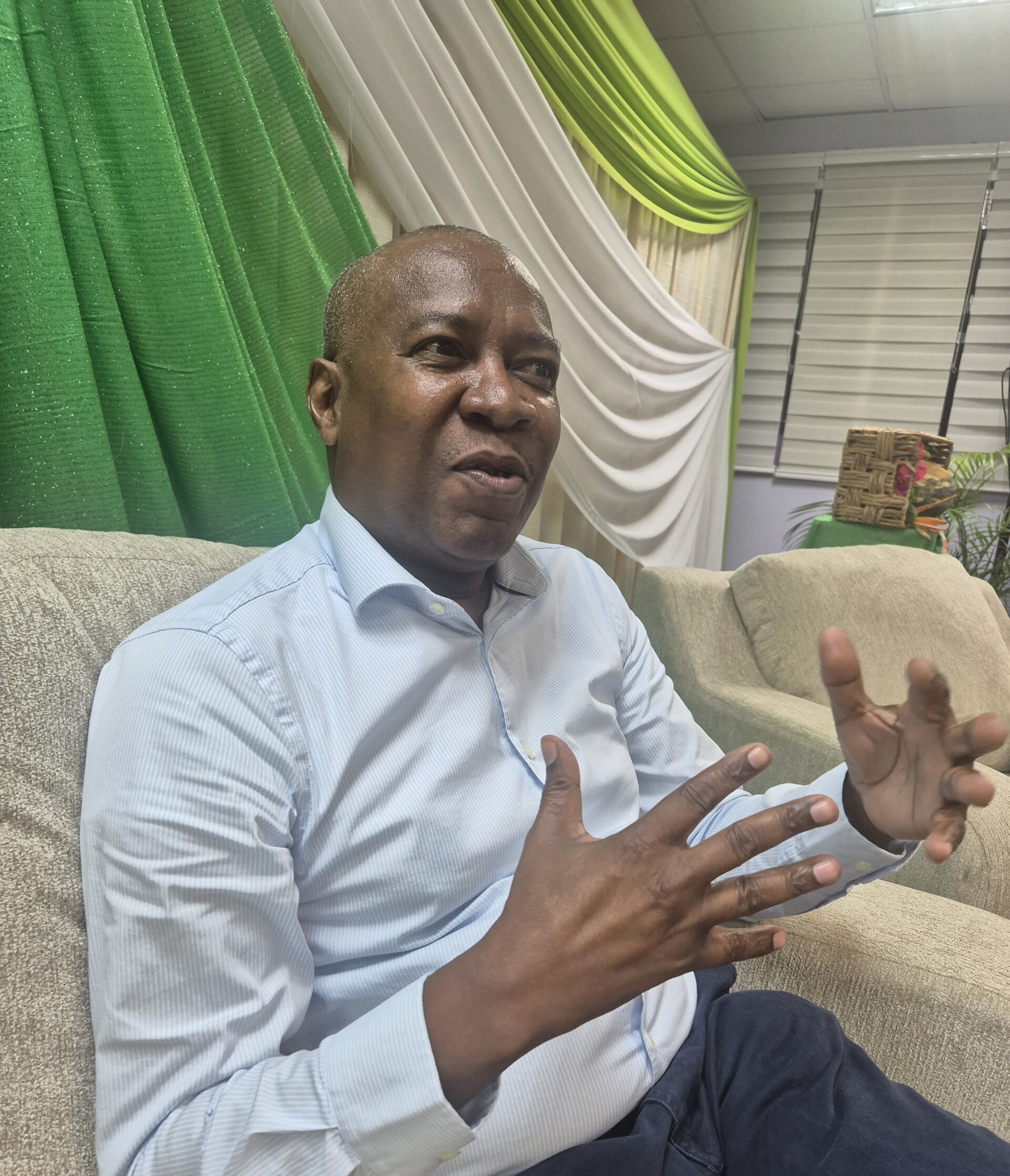
Manager of Markets Sherlock King. (Photo Credit: File Photo)
Following the colloquium, the head of markets told Barbados TODAY that while vendors were entitled to earn a profit and had legitimate costs such as spoilage and transportation, they also had a responsibility to keep healthy food affordable.
“What we want is [for] the vendor to understand how to price,” he said.
King said the ministry wanted vendors to avoid pursuing excessive short-term profits at the expense of consumers and farmers alike:
“If you can have lower prices within the market, reasonable prices, that’s what Mr Armstrong was probably talking about, the average person who has a large family [can] have access to healthy and reasonably priced food,”
When asked whether the bigger issue lay not with what farmers charged but with the markups applied after produce reached vendors, King replied: “Precisely, yes, and that is where the huge imbalance is.”
He recounted instances where farmers sold tomatoes for as little as 50 cents a pound during periods of oversupply, only to later find the same produce retailing for $2.50 a pound.
Rather than calling for price controls, the Markets Division hoped to educate vendors on pricing strategies that balanced profitability with affordability, King said.
“If the vendors keep the prices down, generally the volume may be able to sell more and in that way the customer benefits, the vendor benefits, the farmer benefits, and in this way you can help bring prices of these commodities down.”
(SM)
The post Veteran farmer: Blame middlemen for high food prices appeared first on Barbados Today.