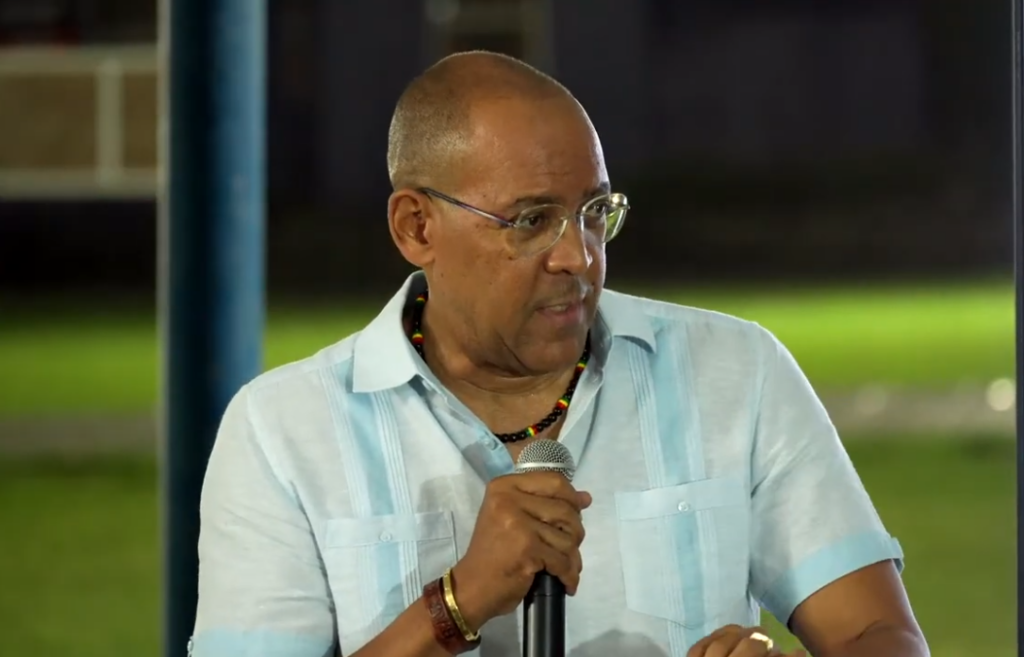
The government is moving to secure jobs for its citizens in oil, gas and renewable energy through new legislation now in an advanced stage, Minister for Energy Kerrie Symmonds has announced.
He also confirmed that domestic gas production has shrunk to a fraction of its output just six years ago, as Barbados eyes importing gas from the new regional fossil-fuel powerhouse, Guyana.
Symmonds made the disclosure at an Ideas Forum public town hall meeting. The revelation came in response to pointed questions from an industry veteran about the absence of clear professional training frameworks in recent state energy reports.
Brantley Green, a professional with 43 years of experience in the international oil and gas sector, urged the administration to seize the critical five-to-seven-year window required for seismic surveys and exploratory drilling. He argued that this preparatory phase is the ideal time to equip Barbadians with highly specialised skills.
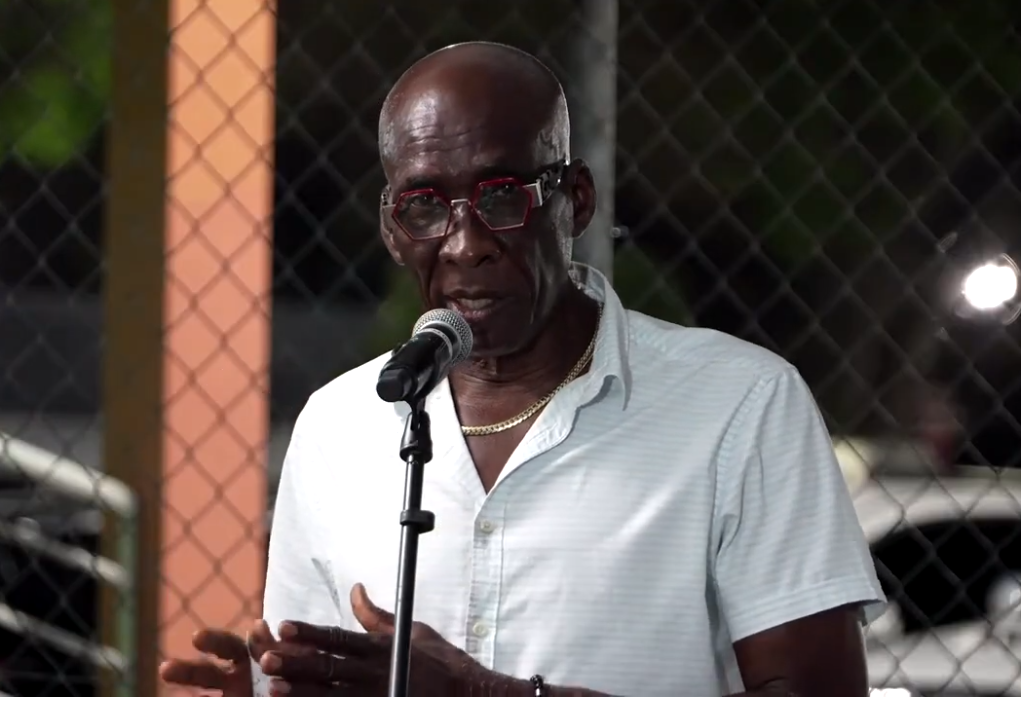
Energy Consultant for BNECL Brantley Green. (Photo credit- PMOBarbados)
“In the oil and gas industry, especially offshore, there’s a great opportunity for professional persons to work,” Green said. “The offshore industry is going to take about five to seven years between doing seismic surveys and drilling. In that period of time, we have enough time that we should be able to train Barbadians. The polytechnic and other institutions should be able to provide industry training for Barbadians to get themselves involved because it’s a very lucrative industry.”
Acknowledging the validity of the critique, Symmonds confirmed that the government is abandoning makeshift training methods in favour of a strict legal framework.
“Mr Green has hit the nail on the head,” Symmonds declared. “The truth of the matter is that we’re not going to just take a random approach to training. There’s actually going to be what you call a local content piece of legislation, which is currently in a very advanced stage of preparation.”
The energy minister explained that legislation will be brought before Parliament to evaluate the totality of opportunities across the entire energy landscape.
“That local content legislation will look at the totality of the opportunities which are derived from the oil and gas sector, and also to the renewable energy sector, because that too offers a tremendous range of new jobs for which we’re going to have to train our people.”
The policy shift comes at a critical juncture for the island’s domestic energy security. During the exchange, Green expressed deep concern over the nation’s current reliance on foreign energy, pointing out that 90 per cent of the gas consumed in Barbados is currently imported. He noted that robust offshore production could significantly reduce foreign exchange losses and lower domestic utility costs, particularly for residents in areas like St George.
Symmonds confirmed a sharp decline in domestic onshore gas production over recent years. He disclosed that during his first tenure as energy minister immediately following the COVID-19 pandemic, domestic wells supplied 70 per cent of the nation’s gas requirements. Today, that figure has plummeted to just 30 per cent.
“The reality is that for many, many of the wells and the fields across this island, we have either run the resources dry, or alternatively, we have to find a way of reinvesting in onshore exploration,” said Symmonds. While the national energy companies are currently trying to eke out the remaining life from existing infrastructure, substantive onshore exploration has been largely stagnant since the tenures of previous ministers in the early 2010s.
“Exploration can be a hit or miss thing,” the energy minister observed. “So there’s no certainty that because you start to spend on that, you’re going to get the derivative that you want.”
To counteract these domestic shortages, the government is looking beyond its borders, pursuing a regional strategy dubbed the Trident and Arrow initiative. This bilateral framework, negotiated between Prime Minister Mottley and Guyanese President Dr Mohamed Irfaan Ali, could see Barbados import natural gas from Guyana to supplement its dwindling domestic reserves.
Such a move would require Cabinet approval and significant capital investment to construct a dedicated regasification and distribution plant on the island. But, said Symmonds, the government views this infrastructure not merely as an expense, but as a strategic asset to defend the country’s dominance in maritime transport and cruise tourism.
As modern cruise lines transition to vessels powered by natural gas, Barbados aims to become the premier regional hub capable of provisioning and refuelling these environmentally conscious ships, preventing regional competitors like St Lucia and Antigua from capturing the market.
“Natural gas is what we would need to use,” Symmmonds said, emphasising that gas remains the essential bridging fuel to carry the nation toward its 2035 renewable energy targets. “It is a holistic thing. There are many moving pieces on the table.”
(RR)
The post Govt drafting local content law for energy jobs as domestic gas output shrinks appeared first on Barbados Today.