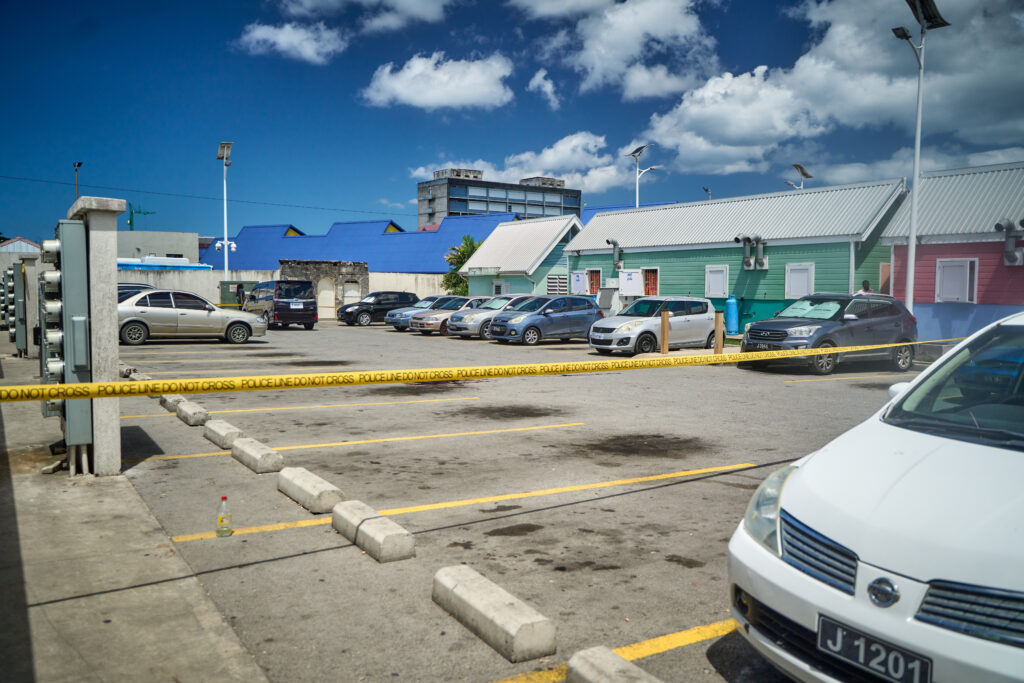
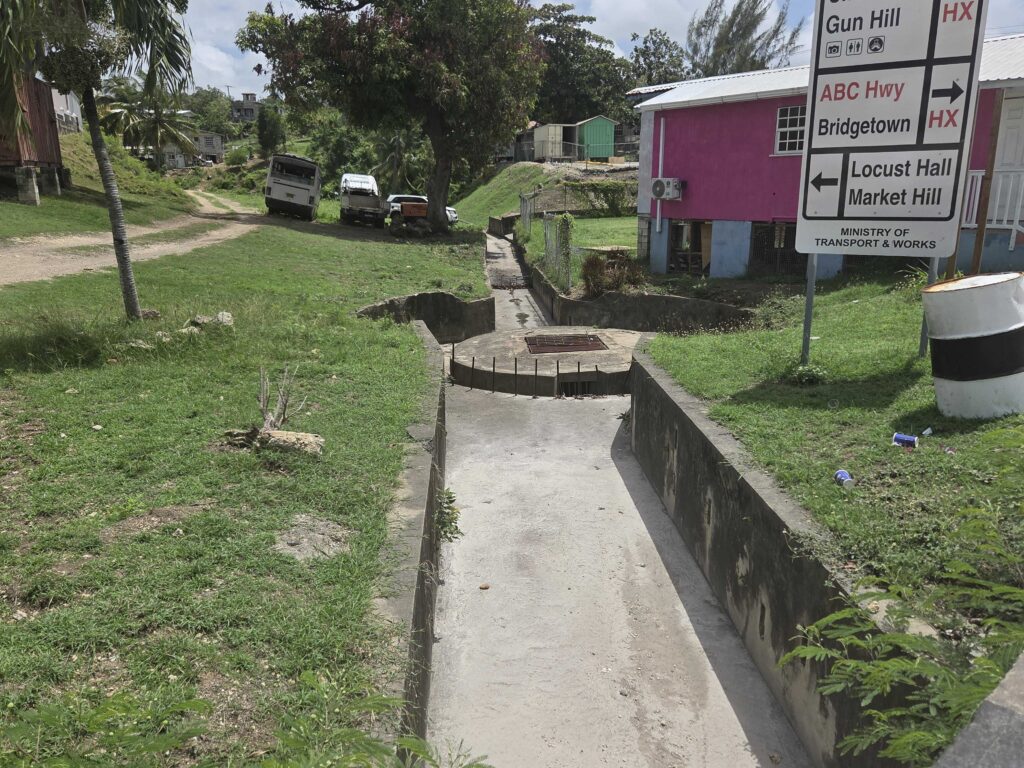
Charles Rowe Bridge in St George is at risk of severe flooding this hurricane season, with residents and business operators warning that blocked drainage systems and damaged electrical infrastructure could put lives in danger if urgent work is not carried out, Barbados TODAY has learned.
A fatal flash flood in November 2025 remains a stark reminder of the dangers faced by residents in Charles Rowe Bridge. Terry Kellman, 58, was swept away by sudden, fast-moving waters that overwhelmed the area during heavy rainfall. Reports at the time indicated that water levels rose rapidly, sweeping through low-lying areas and drainage channels with little warning, trapping vehicles and endangering lives.
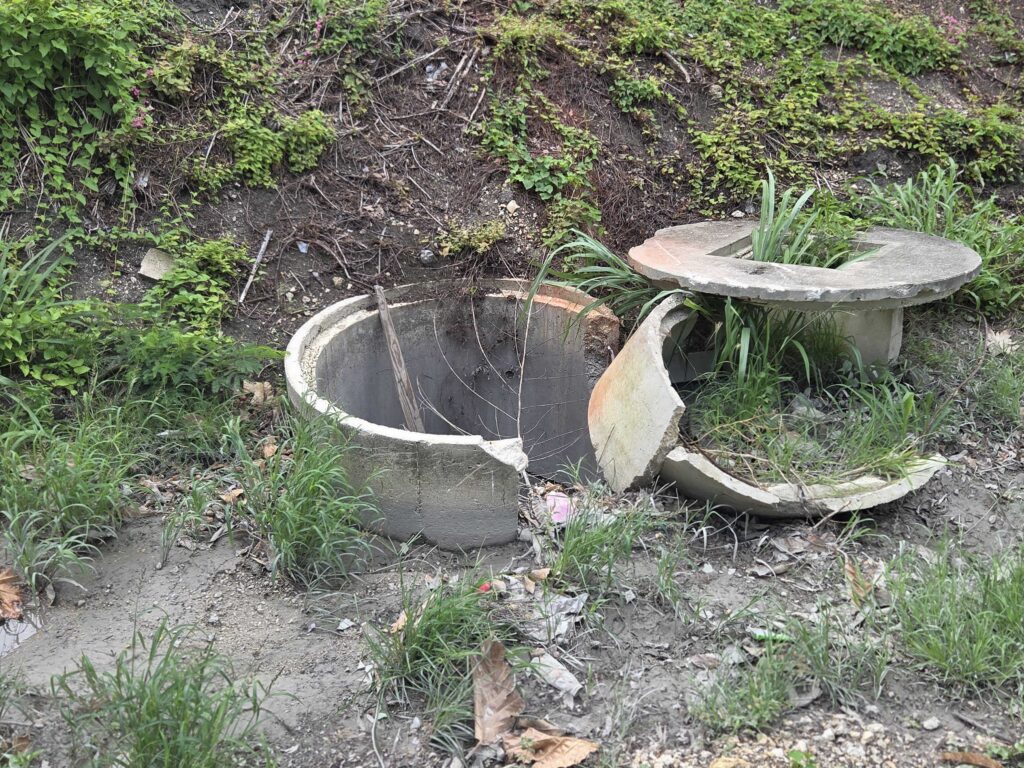
A broken well at Charles Rowe Bridge.
The incident highlighted longstanding concerns about inadequate drainage and the district’s vulnerability during intense downpours, concerns that residents say remain unresolved.
The area, which serves as a natural basin for stormwater rushing down from elevated villages as far as Gun Hill, Newbury, Market Hill, Cottage and Constant, has historically borne the brunt of heavy downpours.
While acknowledging that a joint operation between the Ministry of Transport and Works and the National Conservation Commission recently cleared debris from the gully, people said the most critical drainage components remain heavily compromised.
Businessman Peter Yearwood pointed out that a crucial drainage well, responsible for managing runoff from at least seven different points across St George, has not been properly de-silted for months. Yearwood explained that while the visible areas look clean, the hidden infrastructure tells a dangerous story of neglect.
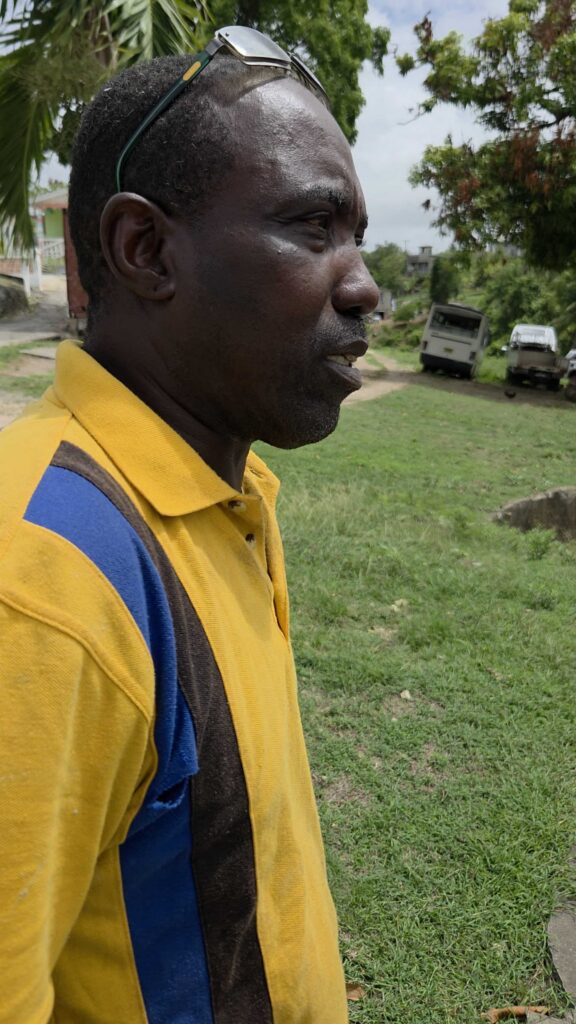
Businessman Peter Yearwood.
“I’ve asked them to clean out this well because the well is where it really matters,” Yearwood stated. “Every well that isn’t cleaned accumulates so much debris and silt at the bottom that you are more likely to get problems with it again. I asked them to do this during the dry season, about four or five months ago, but up to now, I haven’t seen the cleaning happen.
“This is a major well in St George that takes water from almost seven different points. They did a wonderful job cleaning the gully itself over the last two or three weeks, and it looks sparkling now without the old fridges and rubbish, but we still need the grilling and the drains completely cleaned so we won’t have flooding problems.”
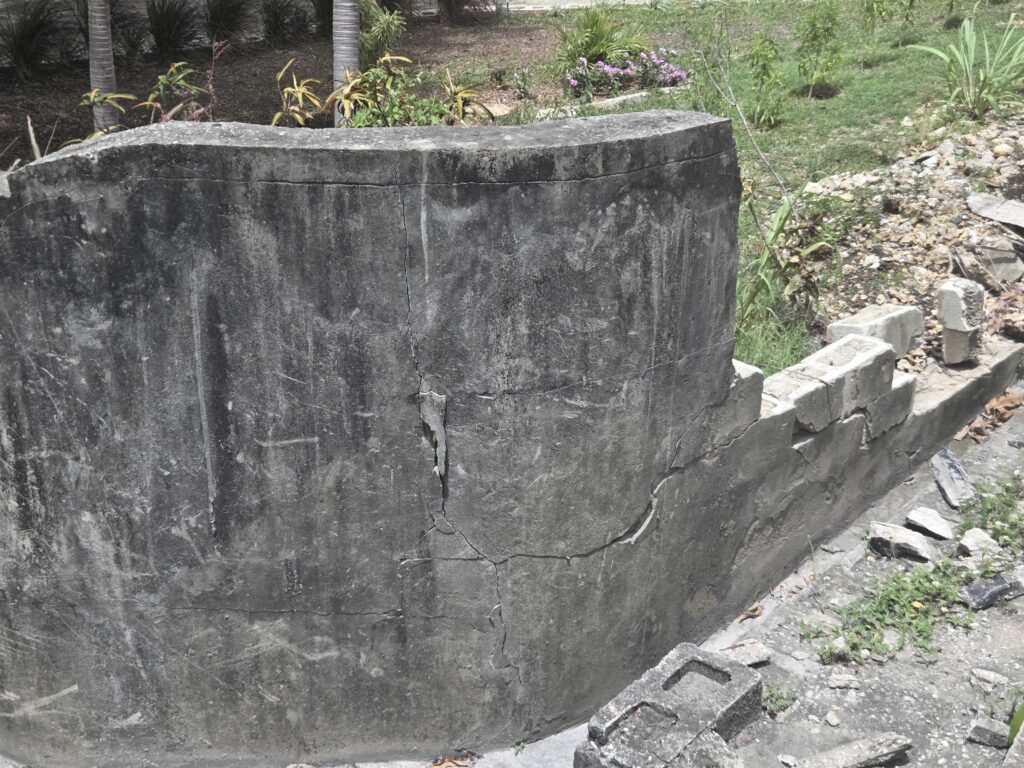
Residents fear more water could remove this damaged wall. They want the authorities give it the urgent attention it requires.
Yearwood guided Barbados TODAY to a large drainage tunnel that remains entirely obstructed by thick grass, mud and debris, rendering it ineffective ahead of expected heavy rains. Adding to the concern is an undermined utility pole near the drainage channel, where past torrents have washed away the surrounding earth plates.
“The water is coming from as far up as Gun Hill, Newberry, and High Hill, so we need to get this sorted out as urgently as possible because this is a major blockage,” the resident warned. “Another washout here could spell disaster. The earth plates are exposed, and if that pole goes down, people could get electrocuted. We can’t afford another washout where utility poles fall, leaving people without electricity, water, or worse, losing their lives.”
The anxiety is deeply felt by those living closest to the watercourses. Near Charles Rowe Bridge, resident Ian Holder expressed concern over an unrepaired retaining wall that collapsed nearly a year ago. Without the wall, he said, there is little to prevent rising waters from rushing directly into his property.
“This situation won’t just smell bad; people are going to get hurt when the flooding happens,” Holder said. “The rainy season and hurricane season are here, and the water from this well comes straight toward the house. It’s been almost a year since the wall tumbled over, and up to now, I haven’t seen anything happen or anyone coming to assess it and fix it. We are expecting the hurricane season and the possibility of flooding, which could cause a serious problem here again. That wall needs to be erected as soon as possible.”
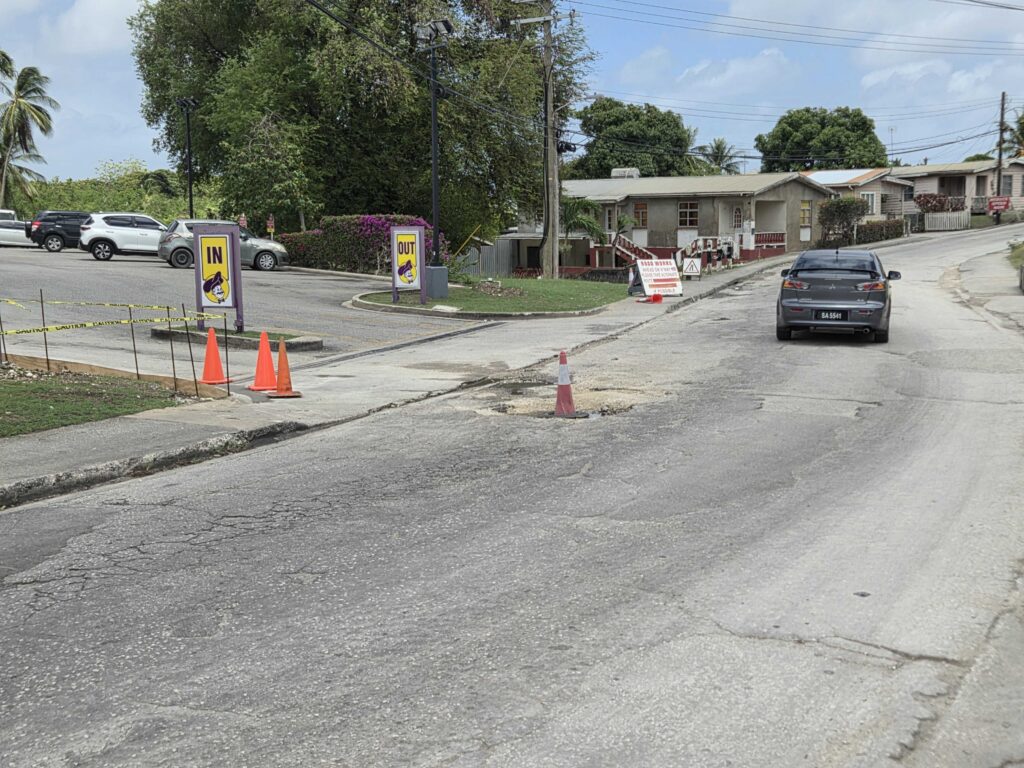
Charles Rowe Bridge St. George.
Holder recalled the force of flash flooding that struck the community last year, describing how the water swept heavy vehicles away.
“You see where those two palm trees are? There was a vehicle parked right there that got washed from here down almost to the doctor’s office next to Lodge,” Holder recalled. “I can only pray that the next big one won’t happen again, but it is a distinct possibility. The drainage teams cleaned up a bit on the other side, and while this well can’t take all the water, it needs to be cleaned so it can at least take some. I have children around here, and it is a major safety concern.”
The impact of past flooding continues to affect the neighbourhood. Another resident recounted how her family was permanently displaced after a previous flood trapped her nephew inside a company vehicle against a retaining wall, with water levels rapidly rising above the windows.
“The water was actually coming through the window; it was about four or five feet of water,” she said. “It was an experience that really tells you what danger is. My brother used to live here, but he is never coming back to live here after that. It was a truly traumatic experience. He lost everything in the house. He tried to save a few things, but it made no sense risking your life doing electricals in that kind of water. With all kinds of things washing down in the water, taking that chance made no sense.”
Longtime residents argue that flood mitigation in St George requires a shift from reactive cleaning to more deliberate engineering solutions. David Connell, from nearby Church Hill, believes the construction of a dam and reservoir system in the upper gullies is the only sustainable way to protect Charles Rowe Bridge from repeated flooding.
“To stop the flooding down here, we have to think about building dams in the gully coming down to our wells,” Connell argued. “If you trap the water further up, you won’t get these massive, destructive flows coming down all at once. You build a succession of dams that catch the majority of the water, and when they get full, the overflow goes safely into local wells. That means you have significantly less volume hitting this low point.”
Connell also criticised successive governments for failing to consult communities when designing infrastructure upgrades, noting that newly paved roads can divert water into residential areas rather than into drainage catchments.
“The government needs to put this in place and make it a reality,” Connell insisted. “When they are building roads, they need to get off their tails, come out into the neighbourhoods, and see exactly how the water flows. We have wells that the road water doesn’t even reach because of poor alignment. If they spoke to the people who live here, they could create more wells to channel the water away from the streets. The water comes from four or five different ways to get down here. If you can stop it up on the hill, it will be much better.”
Memories of narrow escapes remain vivid among business operators, some of whom have worked in the area for decades. One shopkeeper described fleeing his establishment to avoid being trapped by floodwaters during a previous storm.
“I was here when the water came through here, and it was level with my chest,” the shopkeeper said. “If I didn’t run out of that shop, I would have been in serious trouble. Years ago, we never used to have a big problem with massive water flows up here. I don’t know what has changed all of a sudden, but now the water just bursts out from the back lots. It comes from the gully behind the shop, and there is another big gully going up by the police station and St George Secondary School. All of that water hits the road tunnel and converges right here at Charles Rowe Bridge. They have to find a way to divert the water to other places instead of letting everything from Newbury, Market Hill, and Constant flood this one bridge.”
Despite forecasters predicting a less active hurricane season, residents appealed to the Ministry of Transport and Works to deploy heavy equipment to clear underground tunnels and repair damaged retaining walls before any major weather system affects the island.
The post Charles Rowe Bridge folk warn of flood threat as drains remain blocked appeared first on Barbados Today.