A listing offering a weeks-old green monkey for $500 has triggered sharp criticism from visitors and animal rights campaigners, who warn that the trade in infant primates for tourist photos is damaging Barbados’s reputation and may involve the killing or separation of mother animals.
The controversy has exposed a dark underbelly of the treatment of animals, where wild primates are routinely separated from their families to be used as lucrative photo opportunities on popular beaches or paraded through public transport vehicles. For many regular visitors, the latest commercial listing represents a breaking point for a destination that prides itself on being a welcoming paradise.
A frequent visitor to Barbados, who regularly organises group tours to the island, expressed deep distress over the visible escalation of animal cruelty. Speaking on condition of anonymity, the visitor detailed the harrowing reality confronting tourists who arrive expecting an idyllic escape.
“I am writing as a regular visitor to Barbados, someone who brings many tourists to the island each year, and someone who loves Barbados dearly. However, I am becoming increasingly distressed by the level of animal exploitation that visitors are witnessing. The latest example is the sale of an extremely young baby monkey for $500. Judging by its appearance, the monkey looks only weeks old.”
The visitor emphasised that the implications of such a sale extend far beyond a single transaction, pointing to the inherent violence involved in capturing wild primates:
“The reality is heartbreaking. A baby monkey of that age should still be with its mother. The likelihood is that the mother has been killed or separated from her baby so that the infant can be sold or used for profit. This is not wildlife conservation. It is exploitation. Sadly, this is becoming far too common. Visitors regularly see people walking around with baby monkeys, charging tourists to have photographs taken with them. While some tourists may not understand what has happened behind the scenes, many of us do.”
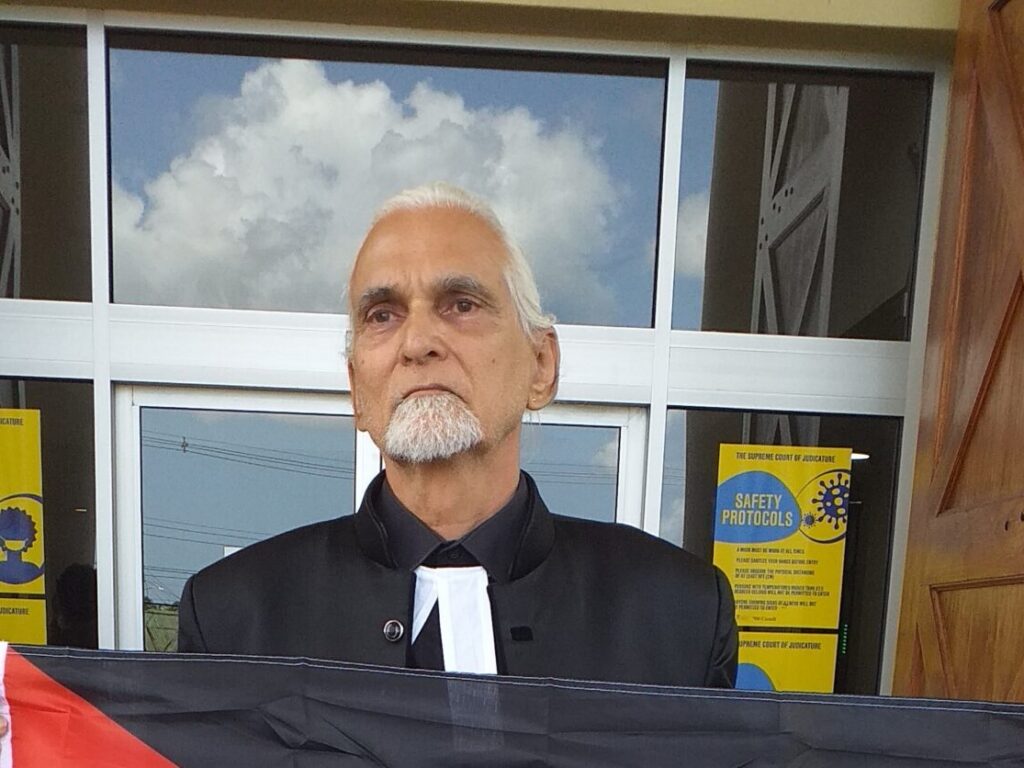
The outrage is shared by attorney-at-law and animal rights activist Lalu Hanuman. Hanuman described the situation as “horrendous and totally unacceptable”, echoing concerns about the methods used to acquire the infants.
He told Barbados TODAY: “Clearly they would have had to kill the parents, or at least the mother, in order to access the baby. I’m seeing this on the beaches. People are posing with these little monkeys on leashes on the beaches for tourists to take pictures with, and it’s abusive, to say the least. The poor animal is out in the hot sun all day without water, deprived of its family because it’s stolen. It’s abusive to say the least. Action needs to be taken on those sorts of things as well.”
Hanuman insisted that law enforcement possess the legislative tools necessary to track down and punish the perpetrators behind the online advertisement, provided there is the political will to do so:
“If they can locate the perpetrators—and I think that the advert actually had some sort of contact details… there must be some sort of contact details so the police can track down the perpetrators and charge them.”
According to Hanuman, the legal framework governing animal welfare in Barbados has undergone significant shifts, though structural issues remain. He said older legislation, specifically the Prevention of Cruelty to Animals Act, passed during the Owen Arthur administration, is inadequate for this crisis because it restricts its protections to “tame animals or animals that can exist for human benefit”, thereby excluding wild primates.
Instead, Hanuman argues that police must utilise the newer Animal Health and Veterinary Public Health Act, which features a broader definition of terrestrial and aquatic animals. But the activist highlighted a drafting error within the 2023 law that creates confusion regarding penalties.
“The Act is a bit badly drafted because it has two different sets of fines that are available,” Hanuman said. “One speaks to 50 thousand and one speaks to 100 thousand for the same offence. There’s an error in the Act, so I don’t know which of the two is the relevant one because there’s an error in the Act, but certainly the lower of the two would apply. It has two sets of penalties in there: one for $50 000 and or two years in prison, and one for $100 000 and or two years in prison.”
Despite the statutory contradictions, Hanuman maintained that a summary conviction carrying a minimum maximum fine of $50 000 and up to two years’ imprisonment provides more than enough teeth for a severe prosecution.
When questioned on whether the presence of primates on public transport and beaches indicates that the practice has been normalised, Hanuman drew parallels with global exploitation but rejected any suggestion of cultural acceptance:
“It’s not normal in Barbados, but it’s normal in many parts of the world. I was in Marrakesh in Morocco, and they have monkeys there with nappies on, other items of clothing on, and the tourists do the same thing. They pose with them for photographs, but it’s clearly abusive. The person in the context of Barbados can be prosecuted for doing that under the 2023 act.”
This perceived institutional apathy, Hanuman said, was recently compounded by a setback in the animal rights movement. A prominent advocacy group, Be Their Voice, was forced to withdraw a High Court appeal regarding the drowning of a dog at Pebbles Beach due to prohibitive cost threats from the state.
“It’s unfortunate that Be Their Voice withdrew their appeal,” Hanuman said. “We had an appeal to do with animal abuse, to do with the drowning of a dog on Pebbles Beach… and they recently withdrew their appeal, which is a shame because that was an excellent platform for championing animal welfare law implementation.”
(RR)
The post Baby green monkey sale sparks animal welfare alarm appeared first on Barbados Today.