
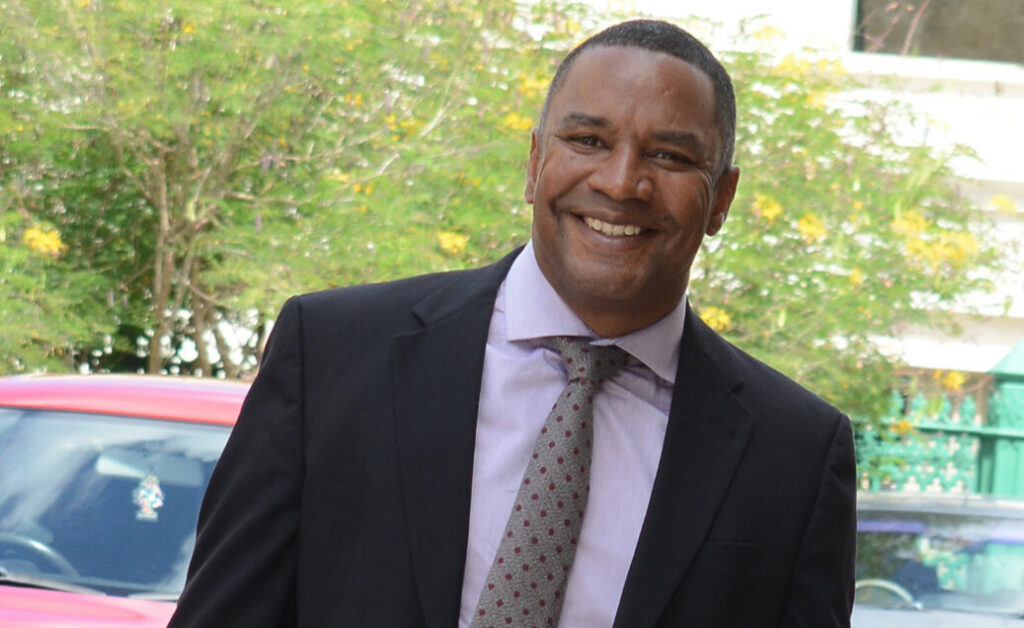
Attorney General Wilfred Abrahams says a comprehensive public education campaign will be critical to the success of the Human Tissue Transplant Bill, as he sought to reassure Barbadians that the legislation contains robust safeguards against abuse, organ trafficking and unethical transplant practices.
Speaking during debate on the proposed legislation in the House of Assembly on Tuesday, Abrahams acknowledged that Barbadians have no established culture of organ donation and that many people remain fearful about donating organs after death.
The legislation itself requires a public education programme to help people understand the benefits of transplantation and the safeguards designed to protect donors and recipients, he added.
“Because the drafters of this legislation understand that there is a culture shift, it is embedded in the legislation itself. Clause 8; the council shall establish a program to educate the public on A, human tissue transplantation and its uses and benefits, and B, the importance of registering for donation of tissue.”
Abrahams said the government could not afford to allow misinformation to shape public opinion about organ donation:
“There must be a campaign spearheaded by the Ministry of Health, ably backed up by the Government Information Service and the arms under the Ministry of Information to inform Barbadians what this is all about.”
He warned that if the public were not properly informed, speculation would fill the void:
“Nature abhors a vacuum. If we don’t get into that space and explain that you may have two kidneys. There’s somebody who needs one. You can survive on one kidney. You may save a life.”
The attorney general urged Barbadians to consider making the decision to donate organs while alive so they could help others after death:
“I can make a decision now, while I’m healthy, now, while I’m good, that if I was to pass, something from me could go on to help save somebody else. I don’t need to take it to rot in a grave with me. There are many organs that can be taken from me that can help save somebody who is suffering.”
The education campaign should also make clear that transplantation extends beyond kidneys, Abrahams suggested.
“It’s not just a kidney. Anything that can be harvested can be used, even down to the eyes. Your eyes can be harvested. Your skin can be harvested to help burn victims.”
Broader organ donation could significantly improve the lives of dialysis patients, he said.
“If we could take half of the people who are doing dialysis off dialysis, that they don’t have to go to the hospital three or four times a week, that their life doesn’t have to be adjusted and interrupted every single week… because I make a donation at the end of my life, you don’t have to do that again. You can live a normal life, an uninterrupted, unscheduled life. Then that’s one of the greatest gifts that can be given.”
While acknowledging that many Barbadians remain apprehensive about organ donation, Abrahams said the government must address those concerns if the legislation is to achieve its full potential.
“The amount of persons that I have heard say, ‘I want to go back to the Lord with everything that He gave me’, or other such things like, ‘I don’t want to donate any organs. How they gonna know that I’m dead? Suppose they take out something from me and I’m not yet dead?’
“So whatever it is that we’re doing and whatever it is that we’re passing, for the full effect of this to happen, we need buy-in from as many people as possible. We need the widest possible donor pool.”
Addressing concerns about corruption, Abrahams said the bill establishes a fair, equitable and transparent system for allocating organs and tissues based on medical criteria.
“Our legislation addresses that. The council shall establish medical criteria for the allocation of tissue and, most importantly, a fair, equitable and transparent system for such allocation to patients awaiting transplantations.”
He said the legislation also removes potential conflicts of interest by preventing doctors involved in transplant procedures from certifying deaths, determining a patient’s need for a transplant or advising potential donors where they stand to benefit from the procedure.
“The legislation protects or removes the sphere of influence from anybody who’s going to be doing the transplant. You are removed by law from any areas of influence to facilitate that transplant.”
Abrahams said the bill also creates an independent registry to record both donors and recipients and ensures organs are allocated through the established system, except in limited circumstances permitted by law.
He further stressed that the legislation expressly prohibits the buying and selling of human organs and tissues.
“It is illegal to advertise for the buying or selling of human tissue. It is unethical and it is morally reprehensible and it is forbidden by the law.”
He also highlighted safeguards protecting children and vulnerable people, explaining that the legislation clearly defines who can give consent on behalf of minors, distinguishes between court-appointed guardians and persons acting in loco parentis, and places strict limits on tissue donations involving children:
“Children come up in this legislation as donors… It makes a distinction in this legislation between the guardian and somebody acting in loco parentis.”
Abrahams said the bill also protects the confidentiality of both donors and recipients to prevent unnecessary public exposure.
“The person who donates is doing a good thing to save the life of the person who receives, and we look no further than that.”
Describing the legislation as a landmark for Barbados, the attorney general said it would transform healthcare while giving hope to people awaiting life-saving transplants.
“This is a watershed moment in law in Barbados. This is a watershed moment in medicine in Barbados… I fully, fully endorse the passage of this legislation, and I hope that the rest of Barbados joins me.”
(LG)
The post Education key to winning trust in transplant law, says Abrahams appeared first on Barbados Today.