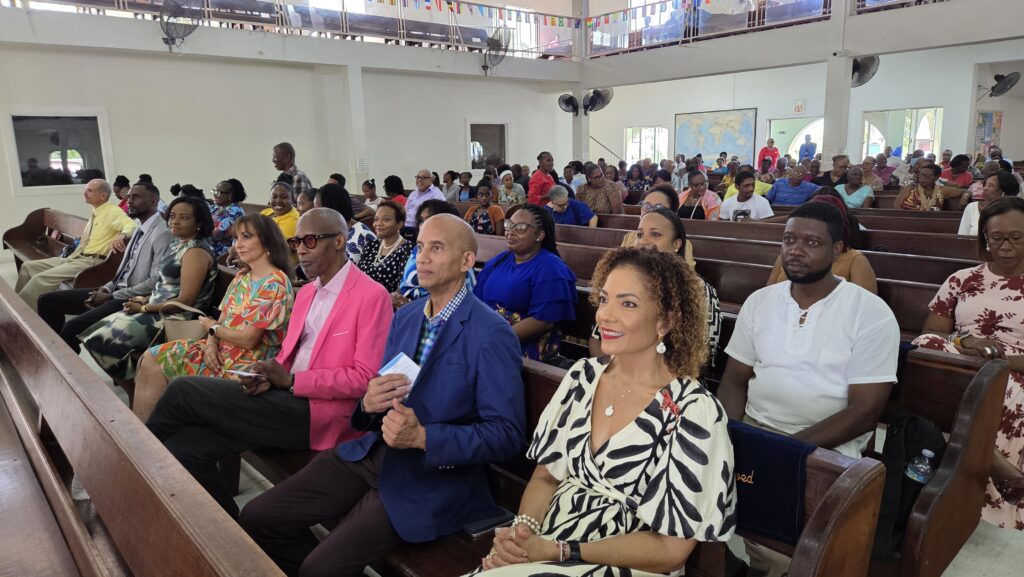
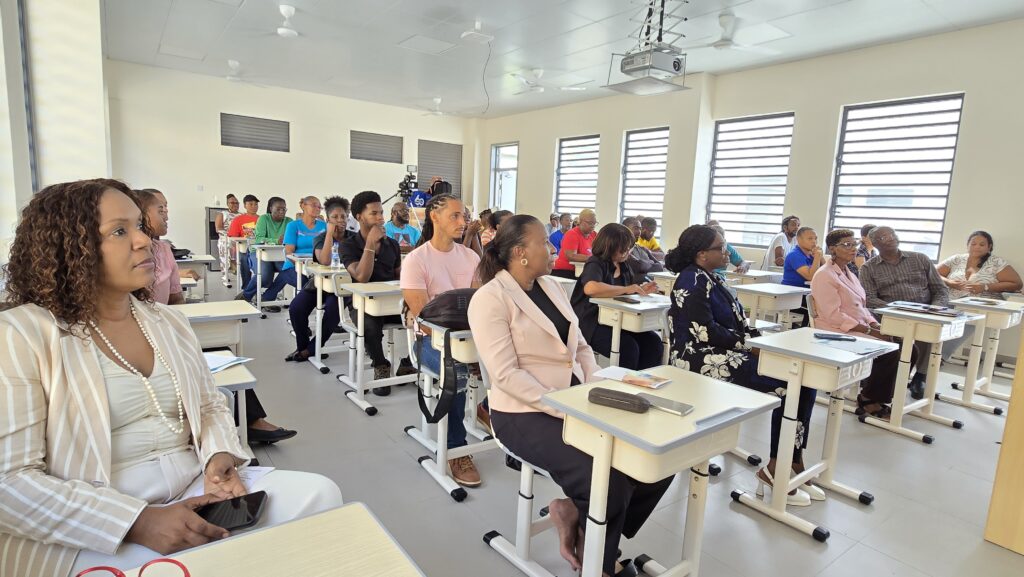
Over 40 graduates of the Hope Agricultural Training Institute (HATI) have been encouraged to use their training to fish farming and beekeeping businesses and create wealth rather than view agriculture as subsistence farming.
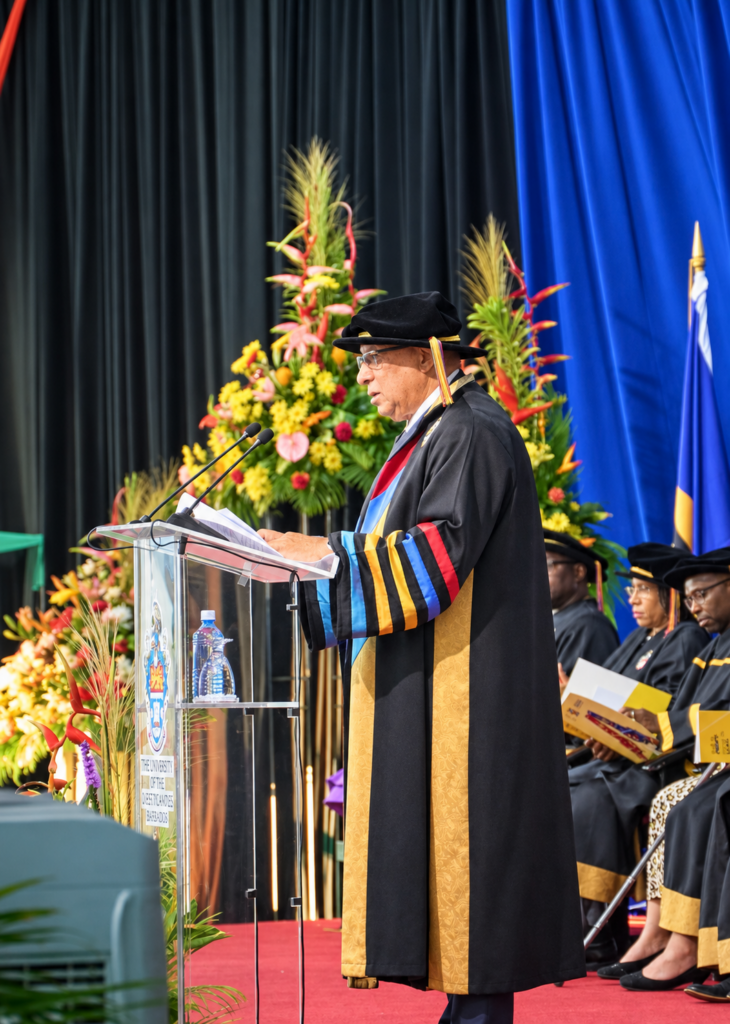
The call came from veteran agriculturalist Dr Chelston Brathwaite, HATI’s consultant, as the first cohort of the Farming and Fishing Gateway Initiative, graduated from ten weeks of training at the St Lucy training institute on Thursday
As he congratulated the graduates on completing the programme, Dr Brathwaite suggested the training represented the beginning of new opportunities for participants to become entrepreneurs and innovators.
“The reality of this institute is that we wish to create a new generation of Barbadians who are informed, knowledgeable, and competent enough to use the new technologies of agriculture to create wealth. This is not about subsistence. This is not about eking out a living. This is about creating wealth. Going out there and using the information that you have to become wealthy.”
Dr Brathwaite urged the graduates to think beyond traditional farming by developing value-added products that meet consumer demand.
He urged Barbados to capitalise on opportunities in agricultural processing rather than simply producing raw commodities.
Recalling an idea he proposed more than a decade ago, he said the vision was never just to plant breadfruit trees but to establish an industry around the crop:
“I was talking about a breadfruit industry. I was talking about breadfruit as an input into an industry that produces breadfruit chips, breadfruit flour, breadfruit pancake, breadfruit wine, bread. This is the vision that we must have, that we, in our own space, can produce something that is novel that the world wants.”
He also stressed that today’s consumers are looking for products that are convenient, nutritious and easy to prepare:
“Convenience is the new watchword. Consumers are looking for convenience. They’re not looking for hard work, they want something that is nutritious, organic, and convenient. Those watchwords are critical. As you go forward and you begin to produce products for the marketplace, bear in mind what the consumer wants. It is not what you can produce, or what you want to produce, it’s what the consumer wants.”
Dr Brathwaite, a former longtime head of the Inter-American Institute for Cooperation in Agriculture (IICA), said agriculture presented one of Barbados’ greatest opportunities for economic diversification:
“Only 30 per cent of the value of agricultural products is in production, 70 cent is in value added. Seventy per cent is in processing, 70 per cent is in marketing, 70 per cent in transportation, 70 per cent is in refrigeration. Seventy per cent is in storage. So when you produce a product, that’s just the beginning. What you must do now is give it the value.”
He encouraged the graduates to apply the knowledge they had gained to create products that are innovative, safe and marketable.
“Go forward with the knowledge that you’ve collected here. And do justice to yourself. To this institution, to your family, and to your country, by producing something novel, something that is convenient, something that is safe, and something that the consumer wants.”
Project manager for the Farming and Fishing Gateway Training Initiative, Liesel Daisley, urged participants to continue building their skills by taking advantage of other free Gateway programmes, including those in construction and hospitality.
“These courses are not going to be available forever. They’re free to all Barbadians, as you know. They come with a stipend. And some other things as well, the job attachment and the equipment toolkit, that type of thing. So take advantage as much as possible of the courses that are available to you free of cost.”
Daisley also encouraged the graduates to persevere through challenges and remain connected to their instructors for guidance as they establish their businesses:
“I want to see you on the news. I want to see you on social media, being interviewed on your fish farm, on your bee farm. This is what we went through all of this planning and preparation for so that we can give you a springboard to succeed, not just for Barbados, but we want to see that you’re change makers in the region as well.”
Apiculture instructor Bernard Thompson said he hoped to see honey production increase to the point that it can be exported:
“One day they will be able to realise that dream because we want to move from a situation in Barbados where we are importing so much honey into the island and be an exporter of local Barbadian honey.”
Aquaponics instructor Christina Adams said she sees her 21 students establishing their own aquaponics systems. She encouraged them to continue to the highest level of the programme as fish farming can help improve food security and be developed into a commercial enterprise.
“I hope that you all continue to have the interest in agriculture, the interest I’ve seen in food security. For some of you, you might just be growing for yourself at home to feed yourself and your family. Some of you are making a little money on the side. It can be a second set of income-earning while you have your full-time job, but I’m glad that some of you too are already looking to the commercial end.”
(LG)
The post Farm school grads urged to turn skills into wealth appeared first on Barbados Today.