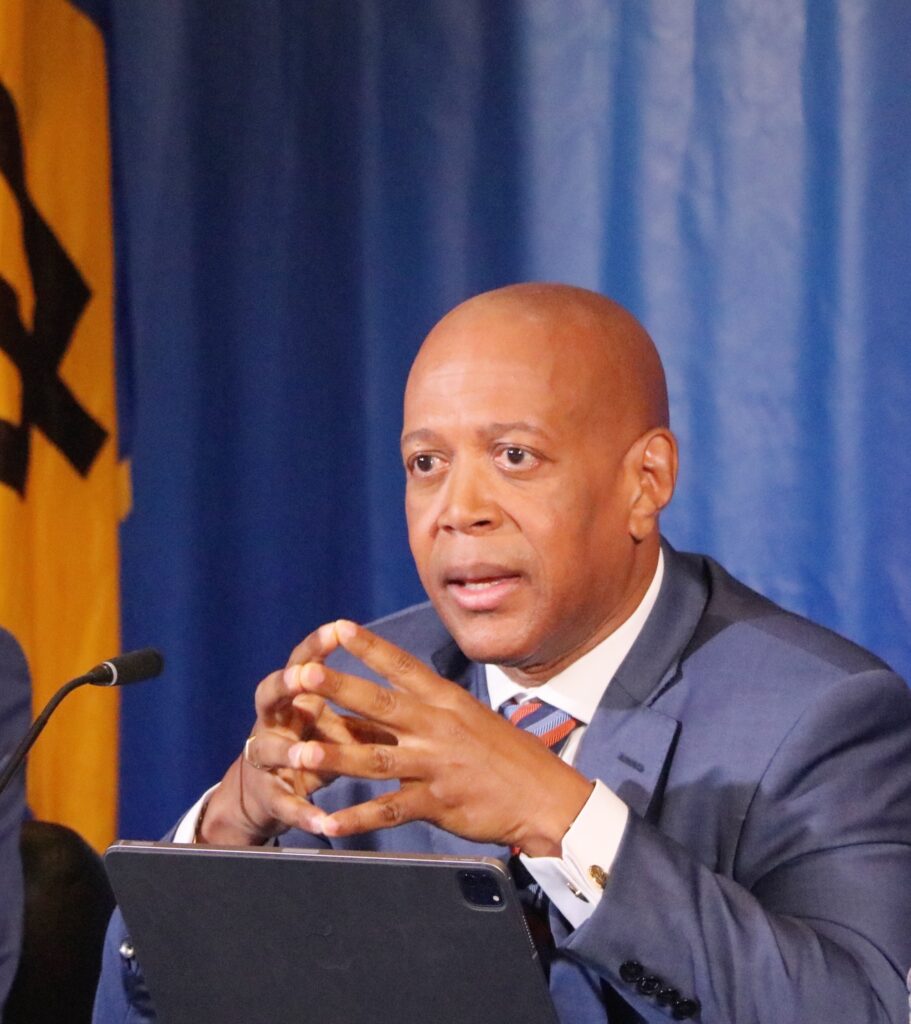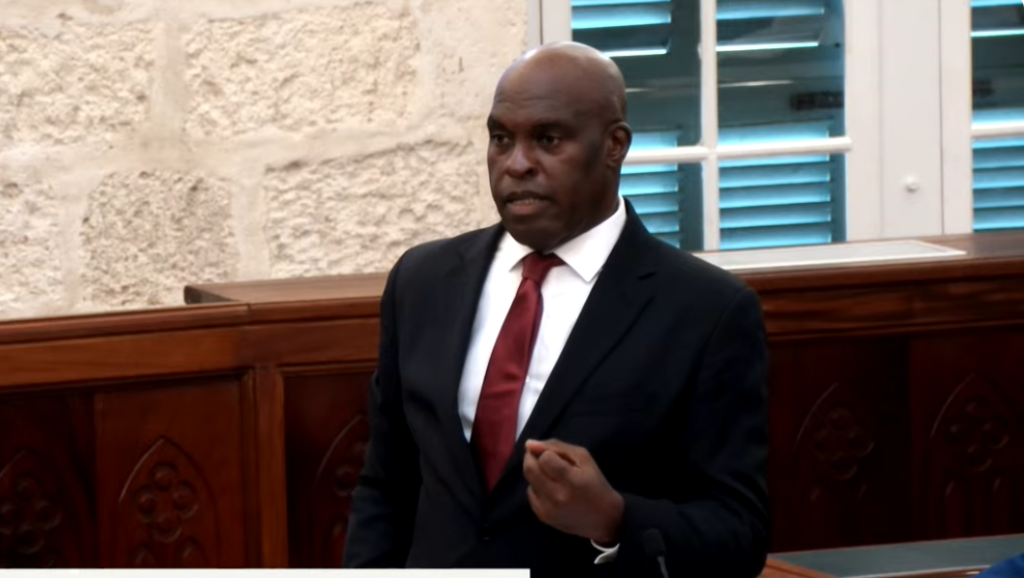
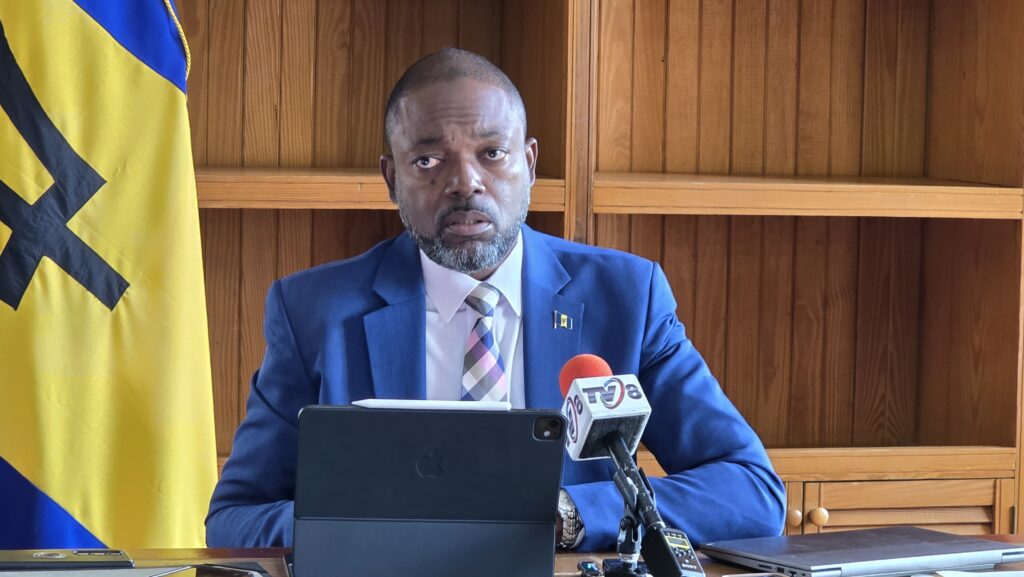
Minister of Labour Colin Jordan has described the Beneficial Ownership Transparency and Register Bill as necessary to strengthen accountability and ensure the country remains aligned with international standards.
The bill is intended to help authorities identify and address criminal activity by revealing the people behind companies and organisations.
The labour minister outlined two fundamental reasons why the bill, which was tabled in Parliament by Minister of Energy, Business Development and Commerce Kerrie Symmonds on Tuesday, was necessary:
“We have to make sure that economic entities operating in this country are operating above board, that they’re operating legally, that they’re operating ethically, and that is why we bring to this place legislation that allows us to look behind the veil.”
He added, “Secondly, because we are part of an international system, then this bill and the legislation that it will put into force once enacted is necessary because if we are to be part of an international system, then we have to abide by a certain internationally accepted group of guidelines….and for systems to be Effective for systems to be sustainable, there has to be a level of order.”
Jordan stressed the connection between domestic systems and the wider global financial environment, which affects everyday Barbadians, including overseas money transfers, banking and business operations.
“If we are in a position where our systems are not considered to be sound enough to have a certain level of integrity, we could find ourselves in a situation where when you go to the bank in New York, Manhattan or the Bronx, and you say, you want to send this $1 000 to my nephew, that you could very well hear, you know, that we can’t do that because that that is not your, your systems back where you’re from don’t meet the standard.”
The minister said a strong transparency framework protects Barbados’ ability to participate effectively in the global financial system:
“We have to make sure that our systems are robust enough that we can participate properly, that we can participate effectively in the global financial system…. What we allow to happen here has an impact. It has an impact at the global, at the international economic system level. We have to be concerned because not just local businesses operate here. We also have multinational enterprises that operate within our jurisdiction. So what they do in some other place can also impact how our financial system, how our economic system is viewed in Barbados.”
He underscored the importance of ensuring multinational enterprises operating locally do not compromise the country’s economy, financial systems or structures.
“We have to make sure that when they are operating here. That they do not compromise our economy, they do not compromise our economic system, they do not compromise our financial structures. That is with respect to multinational enterprises.”
These businesses, he said, must meet a minimum standard of integrity in their operations.
He argued that Barbados must play its part in contributing to maintaining order in the global economy.
“In running a country, managing an economy, there must also be order; there must be order and so this bill, to allow us to be part of a viable international system, must also represent our contribution to maintaining order, to make sure that the global economic system does not go haywire.”
The bill also speaks to the importance of information sharing in a globalised world, said the labour minister.
“We live in a global village and so information, just like money, just like goods and services, information also needs to be shared if we are to maintain good order in our international financial system, and so this beneficial ownership register that is established by this legislation is a critical component.
“In being able to understand what is happening here, and then secondly, in order to be able to participate in what is happening overseas internationally, this beneficial ownership register will help us in achieving transparency.”
Jordan connected the bill to labour protection, stating that some workers may not know who their true employer is because companies can sometimes be used as “organisations of straw”. He argued that authorities need to identify the real persons behind companies.
“There are entities, state entities that are charged with the responsibility of making sure that things go right for workers. Those organisations, and they include organisations like the Labour Department, they have jurisdiction over legislation in Barbados; it includes the National Insurance and Social Security Service. They have jurisdiction over certain matters that relate to workers in Barbados, and those organisations, those state entities with responsibility for regulating activity in this country must be able to know who is behind this operation, who is responsible either for the good or bad treatment being meted out to these people.”
Jordan, who is also the social security minister, said transparency could help prevent companies from avoiding responsibilities. He raised concerns about businesses owing money to the National Insurance and Social Security Service while operating through connected entities.
“There must be the provision for those with the statutory authority to be able to make certain linkages or to determine, I should say, if there are certain connections. There must be that opportunity.”
He said the legislation could assist agencies such as Immigration in determining relationships between organisations, including situations where the entity applying for work permits may differ from the entity actually employing workers.
“Sometimes if the body that apply for the work permits is the same body that doing the construction. Those are things that we need to know. Institutions and the immigration department… we need to be able, the relevant organisations, entities, statutory entities need to be able to understand relationships, to understand who is responsible for what.”
The labour and social security minister also stressed that public institutions must be protected:
“The National Insurance and Social Security Service must also be able to get behind the veil. We must protect our workers, local workers, domestic workers; we’re not domestic workers, that has a different definition: local workers as well as migrant workers, we have to be able to protect them as well, and we must be able to protect our public institutions….Public institutions must be protected, and this beneficial ownership, transparency, and register bill helps with that.”
Jordan also said the bill would help guard against money laundering and terrorism financing. He warned that organisations can unintentionally become conduits for these activities.
(LG)
The post Jordan: No room for hidden hands in economy appeared first on Barbados Today.