A literacy expert has urged the Ministry of Education Transformation to begin collecting meaningful assessment data from Class 1, arguing that decisions on secondary school placement should be based on a child’s development over time.
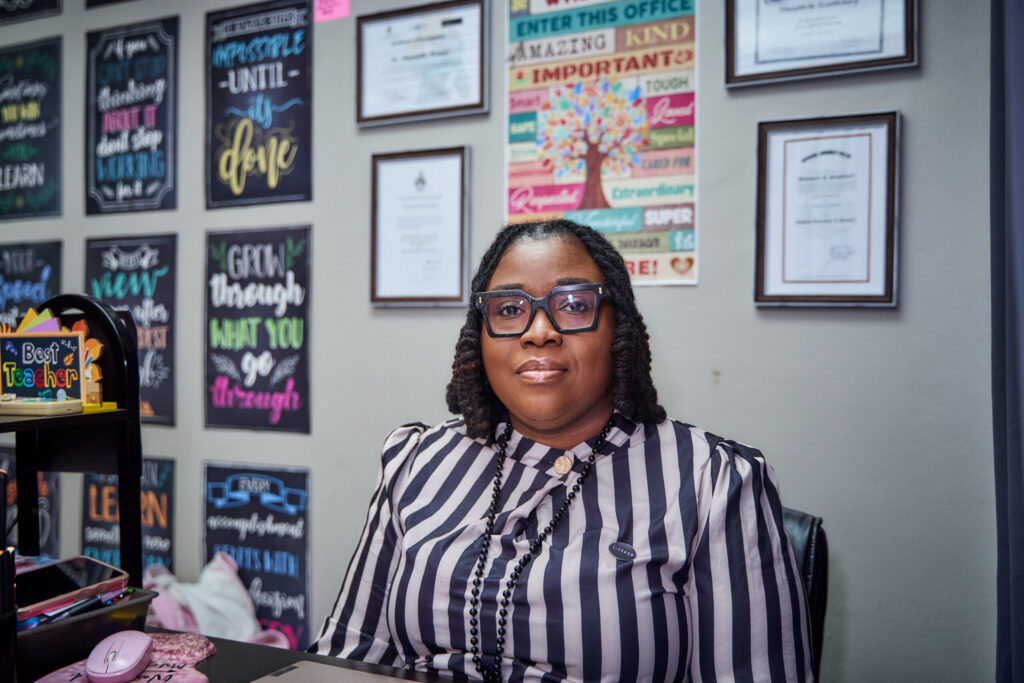
Shawntelle Morgan, founder of I-Teach Transformative Knowledge Solutions Ltd, said while she welcomed the ministry’s acknowledgement of concerns surrounding the proposed introduction of continuous assessment at Class 3, she believes the wider reform should focus on building a long-term picture of each child’s development rather than relying heavily on assessments conducted when students are 10 or 11 years old.
“I would like to see Class 1, which is approximately age seven, included in the assessment framework that informs the eventual transition from primary to secondary school,” she said.
Her comments come ahead of Friday’s promised update from the Minister of Education Transformation who would outline the government’s “full approach and roadmap” on assessment and learning, secondary school placement and the strengthening of schools, it.
The ministry’s announcement follows a petition opposing the proposed introduction of continuous assessment at Class 3, which has attracted nearly 200 signatures. Parents have described the changes as “untested” and “rushed” and are demanding greater clarity before the new school year begins in September.
Morgan said she welcomed the ministry’s acknowledgement of those concerns but cautioned that it was too early to determine whether the issues raised by parents and educators had been addressed.
“What I would like to see on Friday is a clear, evidence-informed rationale for whatever assessment model is being proposed,” she said, adding that the Ministry should provide transparent data explaining why the model was selected and what educational problem it is intended to address.
But she said an important part of that discussion should be when assessment begins.
“My concern is that if we are going to use assessment data to inform a learner’s transition to secondary school, waiting until Classes 3 and 4 – when children are approximately 10 to 11 years old – means that we are potentially making significant decisions based on a relatively narrow window of information,” Morgan said.
Instead, she wants Class 1 to provide a baseline, followed by periodic assessments throughout the primary years.
“I would prefer to see the process begin much earlier, with Class 1 providing an important baseline, followed by periodic assessments and reviews throughout the primary years.”
Morgan stressed that the approach should not be used to label young children or predetermine their secondary school placement.
“I am therefore not suggesting that a seven-year-old should be assessed and effectively ‘labelled’ for secondary school,” she said. “Rather, I would like to see the process of gathering the evidence that will eventually inform transition begin at Class 1.”
A longitudinal approach would provide a clearer picture of a child’s learning trajectory and help distinguish between persistent learning difficulties and a temporary setback, she suggested. The approach could also allow schools to intervene earlier.
“If Class 1 assessment identifies that a learner is struggling, we should not simply record that information and wait until Classes 3 or 4,” Morgan said. “The data should trigger appropriate support, with progress monitored over time.”
Morgan also cautioned that assessment reform would only work if schools had the resources to respond to the information being collected.
“We cannot create a system in which assessment identifies gaps but the system does not have the capacity or resources to address those gaps.” (SB)
The post Literacy expert: More data needed to decide secondary school assessment appeared first on Barbados Today.