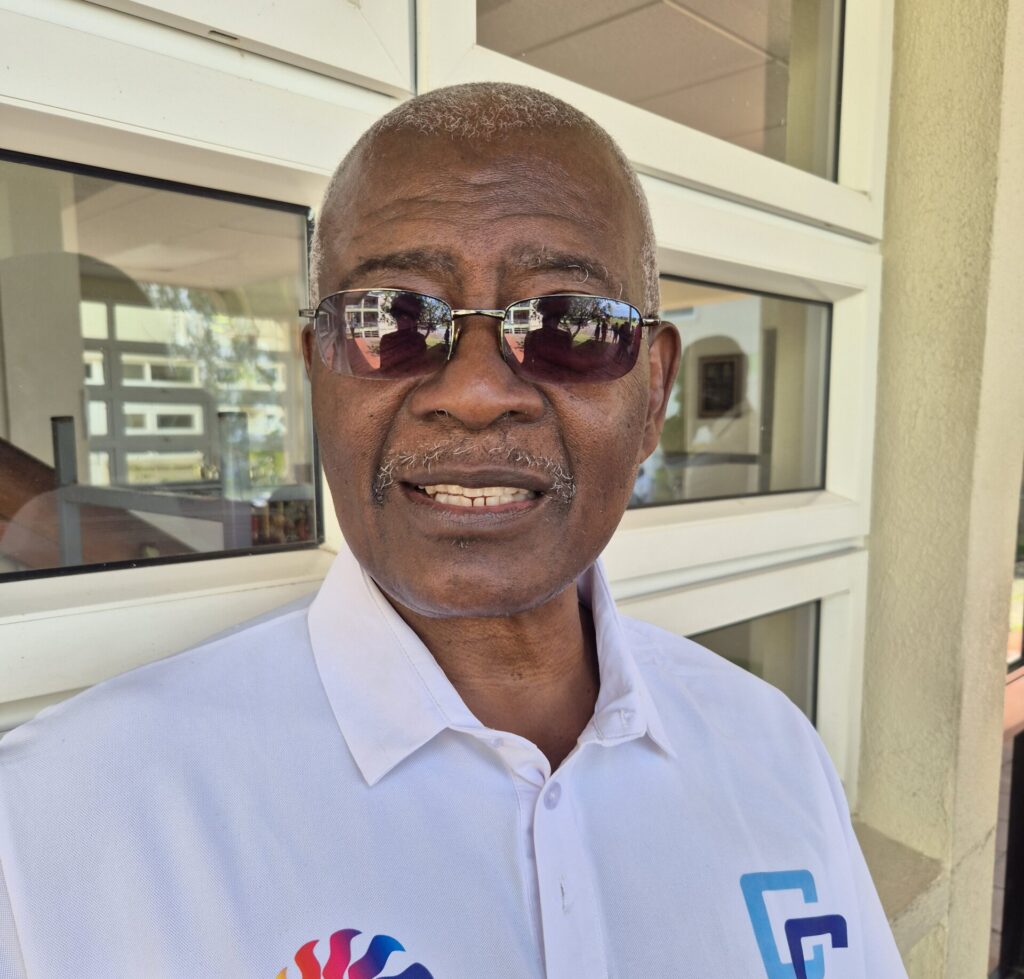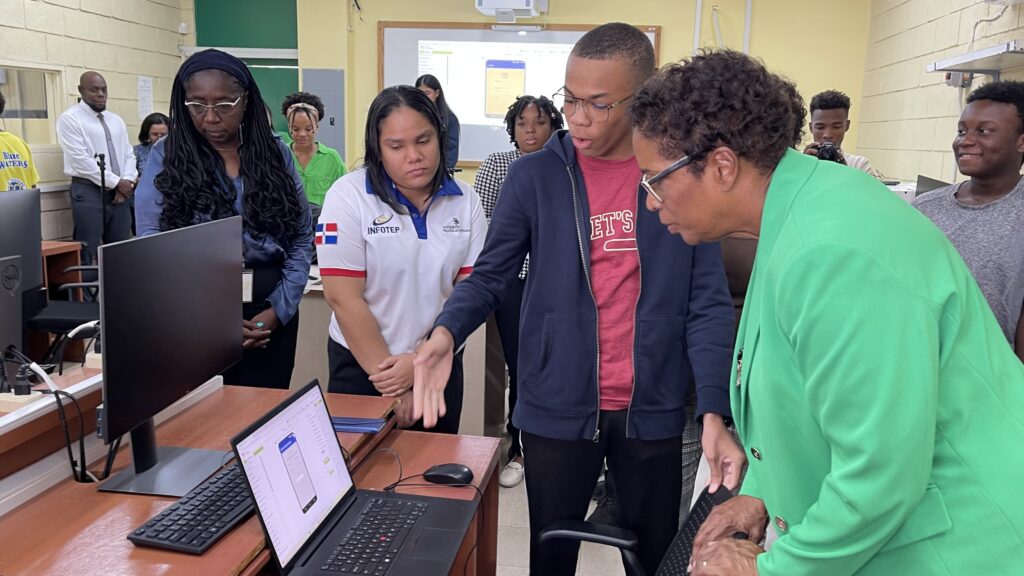
Foreign Affairs Minister Chris Sinckler on Wednesday urged international investors to view the Caribbean not as a group of small, vulnerable markets but as a stable, connected region offering high-yield opportunities in sectors including renewable energy, digital technology and logistics.
He said the region was prepared to offer significant commercial returns in several high-growth sectors, including renewable energy, digital technology, modern logistics, climate resilience and food security.
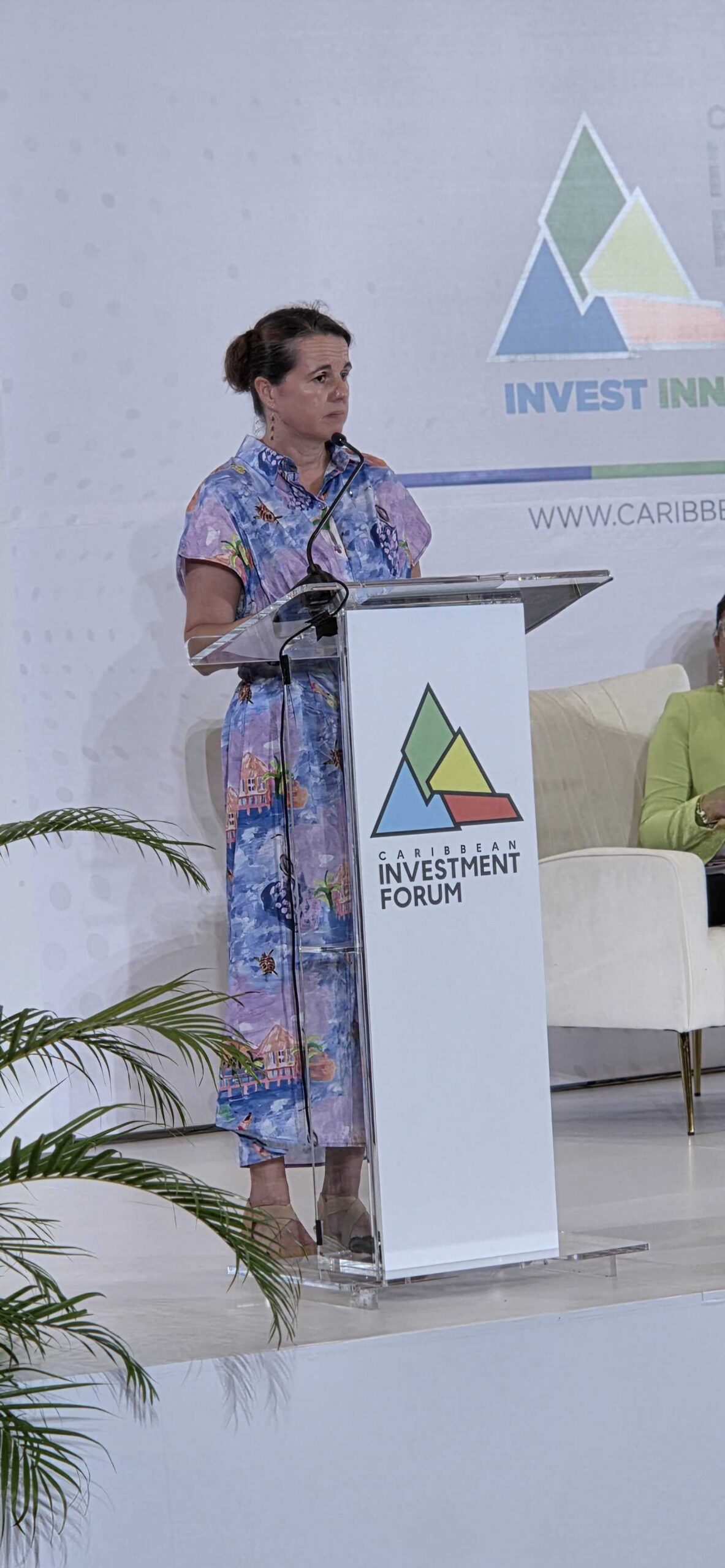
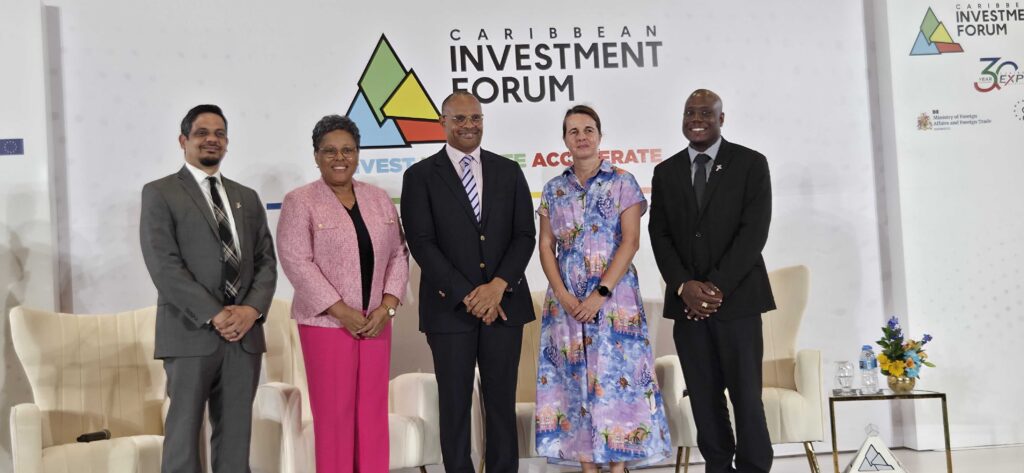
Ambassador Fiona Ramsey European Union Delegation To Barbados and the Eastern Caribbean_
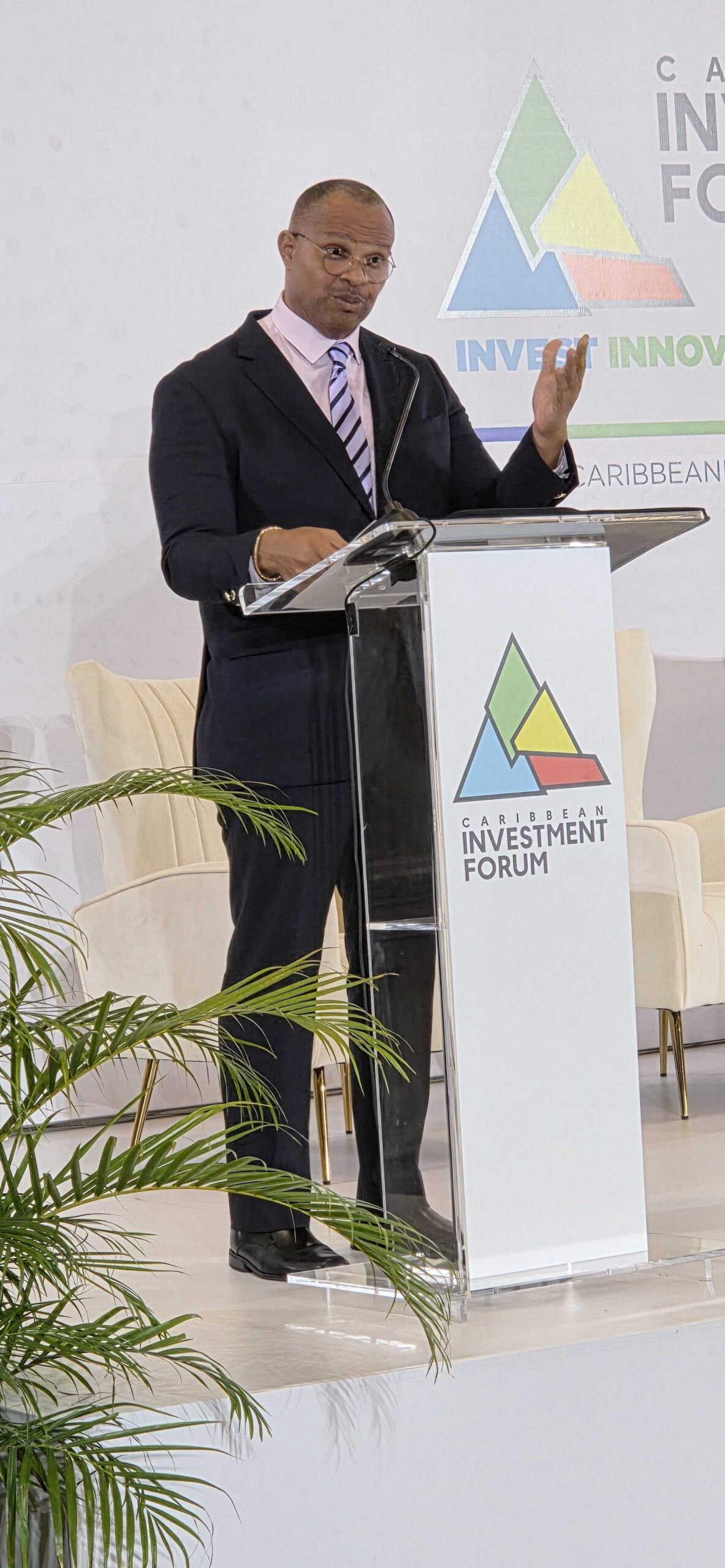
Senior Minister, Minister of Foreign Affairs and Foreign Trade Chris Sinckler
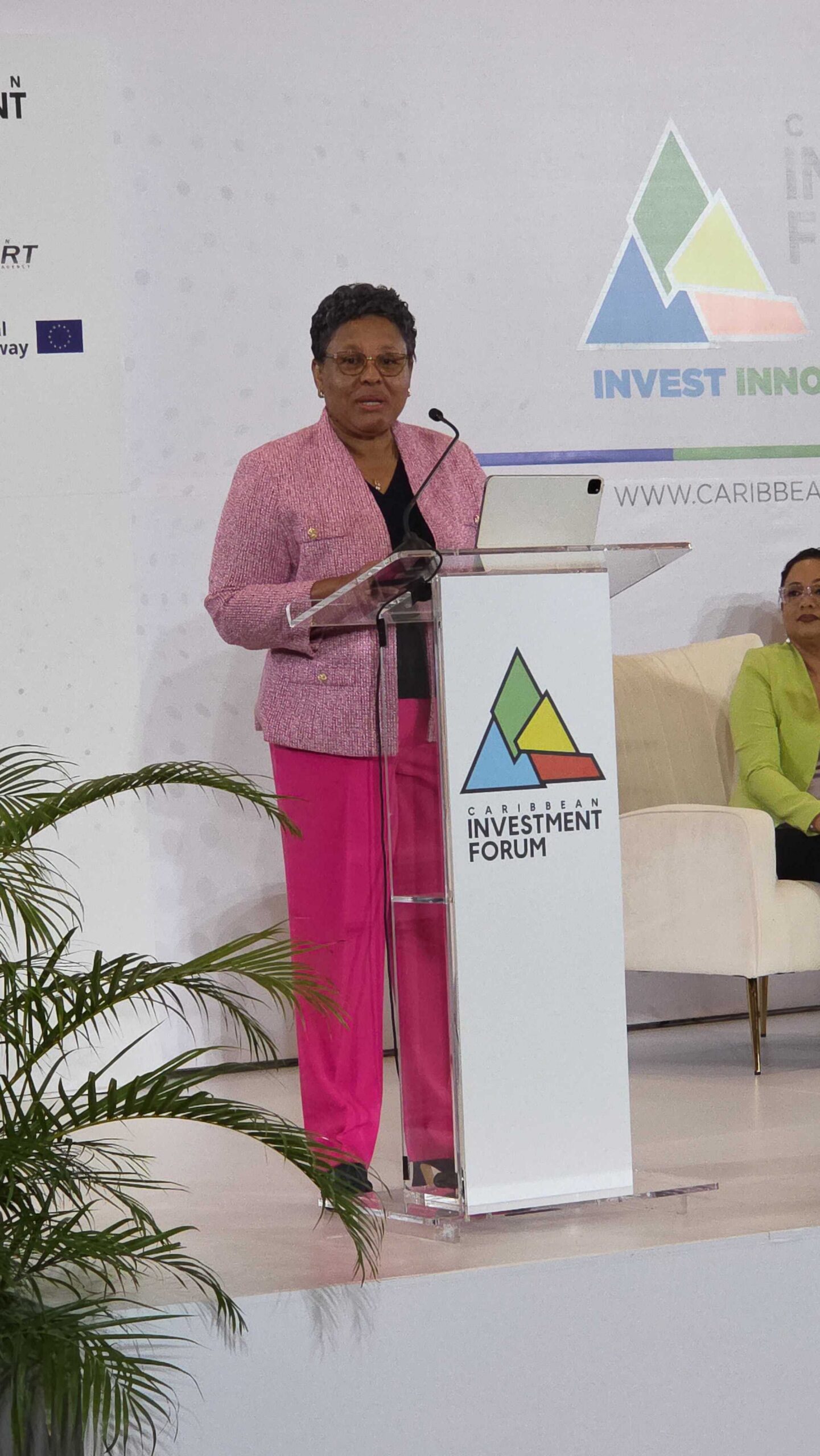
Dr Lynette Holder, Chair – Caribbean Export Development Agency
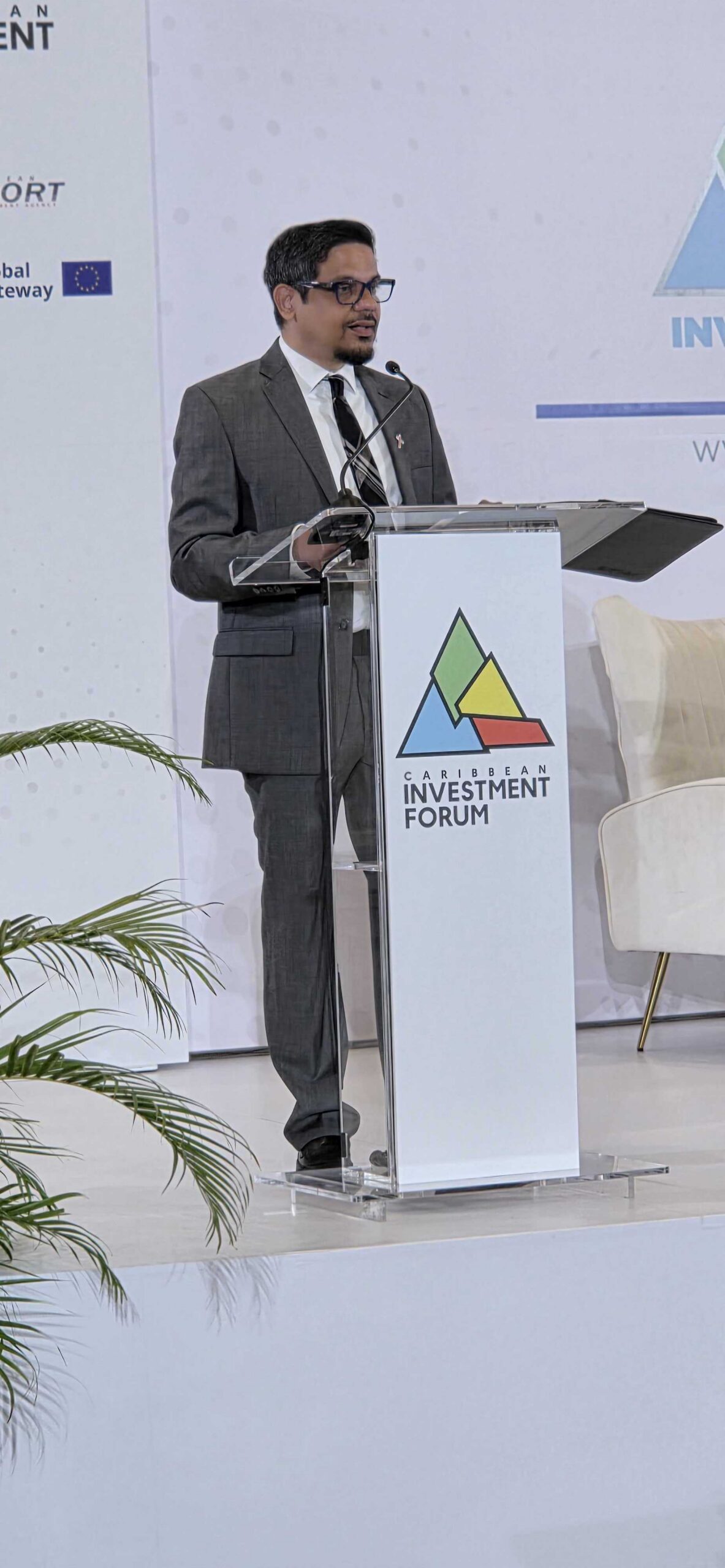
Dr. Damie Sinanan, Executive Director Caribbean Export Development Agency
Speaking to diplomats, business leaders and global stakeholders, the senior minister described the Caribbean as a connected and progressive economic space. He emphasised its potential to drive transformative development for local populations and international investors.
He said: “Our reality in the Caribbean is that we are often viewed as just a collection of small vulnerable markets sitting on the peripheries of the global economies waiting for some small slice of global development to pass on to us.
“The truth is that nothing could be further from the truth. Our region is a stable, connected, and increasingly innovative geopolitical and economic space that offers commercially sound opportunities in global priorities.”
Sinckler highlighted the significance of Barbados hosting the high-level event in October under the theme “Invest, Innovate, and Accelerate”. To support the case for a targeted regional strategy, he pointed to recent international trade statistics.
“Global capital, that is foreign direct investment, rose by six per cent to US$1.6tn [$3.2tn] in 2025,” Sinckler said. “However, flows to developing countries, including in the region, only grew by two per cent. So this shows that capital is moving, but selectively to jurisdictions that are prepared, credible, and able to execute. We must ensure our regional assets are positioned to secure a far larger proportion of that capital.”
To achieve this goal, Sinckler advocated an urgent reduction in administrative delays and institutional rigidity in the public and private sectors. He said that while regional investment agencies had successfully promoted individual countries, outdated structural procedures still hindered overall efficiency.
He continued: “Rigid institutional systems in the region may very well be one of the most constraining features of the investment rate across the region.
“Whether it is in customs procedure, port facilitation, tax policy, transportation, banking, and access to finance, operational procedures remain too rigid and lacking flexibility. We continue to shoot ourselves in the foot if we fail to harness and unleash the hidden capacity that exists in this region.”
He stressed that regional policymaking must become more empirical and data-driven. By leveraging cutting-edge technology such as artificial intelligence, the region could provide investors with the transparency, speed and stability they require.
Sinckler cited Barbados’s economic performance as evidence that long-term structural reforms build investor confidence. The nation has seen 22 consecutive quarters of growth, a reduction in unemployment to 6.1 per cent and a rise in international reserves to US$3.1bn ($6.2bn) covering nearly 26 weeks of imports.
He detailed major public investments designed to eliminate trade barriers, including the recent $213.5m ($426m) commissioning of Berth 6 at the Bridgetown Port. The project aims to enhance shipping logistics across the Caribbean and international markets.
He noted the government’s introduction of the national instant payment platform, BiMPay. By connecting commercial banks and credit unions, it lowers transaction costs and accelerates cash flow for micro, small and medium-sized enterprises.
He said: “We are not in the business of trying things; it is not trial and error. Barbados is ready because we have done the heavy lifting in the past few years in rebuilding the foundations of our economy on which investment depends. We have restored economic stability, modernised legislation, upgraded infrastructure, and fast-tracked cutting-edge digital technology.”
The senior minister also praised Dr Lynette Holder, the outgoing chair of the Caribbean Export Development Agency, for her leadership in establishing the forum as the region’s leading investment platform.
Sinckler urged entrepreneurs and business leaders to engage fully with the upcoming event’s business-to-business exchange. He described this forum as an essential catalyst for transforming innovative ideas into tangible projects.
He continued: “Our investment proposition must include not only what can be built in the Caribbean, but the assets that Caribbean people can use to build things for the world.
“Barbados is open for business. We welcome investors to come, innovate with us, grow with us, and build a prosperous future together.”
(RR)
The post Sinckler: Caribbean could be investment hub appeared first on Barbados Today.