
The growing interconnectedness between commercial banks and other financial institutions in Barbados does not currently pose a significant systemic risk to the country’s financial system.
However, a new study has concluded that financial sector supervisors should still keep a close eye on liquidity risk given the concentration of nonbank financial institutions’ (NBFI) deposits within individual banks.
That advice comes in the report Assessing Direct Balance Sheet Linkages Between Banks And Non-Bank Financial Institutions in Barbados, which was authored by Terrel Howard and Simone King, both economists in the Central Bank of Barbadoss financial stability unit, and Karen A. Roopnarine, the institution’s chief research economist.
The research was published among the body of work accompanying the 2025 Financial Stability Report produced by the Central Bank and Financial Services Commission.
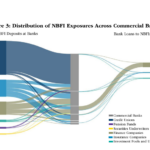
The economists said that bank lending to NBFIs – finance companies, credit unions, insurance companies, pension funds, securities underwriters and dealers, and investment pools and unit trusts – was estimated at $73.1 million as at December 2025, constituting less than one per cent of commercial banks’ total loan portfolio.
They also noted that “deposits in the banking system were estimated at $908.9 million as at December 2025, equivalent to 6.9 per cent of total bank deposits”.
“This analysis indicates that direct balance-sheet interconnectedness between banks and NBFIs in Barbados remains relatively contained. Bank lending to NBFIs accounts for only a small share of banks’ overall loan portfolio, suggesting that the direct credit risk channel is unlikely to pose material solvency concerns to the banking system under current conditions,” the study found.
“The more significant linkage arises on the liability side of banks’ balance sheets where NBFIs maintain sizeable deposit balances at commercial banks. While these deposits support the liquidity management needs of NBFIs, they create a channel through which stress in the NBFI sector could be transmitted to the banking system.
“However, under current conditions, this direct liquidity channel appears manageable at the system level but remains material for banks with concentrated exposures.”
The economists explained that “this distinction between system wide and institution-specific vulnerabilities is important, as aggregate exposure indicators may, however, understate the risks associated with bank-NBFI linkages”.
The study said the exposure index showed that credit unions’ deposits at banks “represent the most material channel through which potential liquidity stress can emerge, reflecting both the concentration of these exposures and their size relative to the available liquidity buffers”.
As a result, the economists said their findings “highlight the importance of monitoring not only the aggregate size of bank-NBFI linkages, but also their distribution across institutions, sectors, maturities, and currencies”.
Close supervisory monitoring
“While current direct bank-NBFI linkages do not appear to present an immediate systemic threat to the Barbadian banking sector, maintaining close supervisory monitoring of these bank-NBFI linkages will remain a critical component of macro -financial surveillance and financial stability assessments as NBFIs continue to grow,” the researchers advised.
They also outlined some policy implications which were relevant for financial sector regulators.
“While NBFI deposits account for a relatively small share of total bank funding at the system level, their uneven distribution across banks means that institution-specific vulnerabilities may emerge during periods of significant financial stress,” the study stated.
“In addition, continued monitoring of bank-NBFI exposures is important given the evolving role of NBFIs in domestic financial intermediation.”
Another observation was that “as NBFIs expand and diversify their activities, their interactions with banks may increase through funding, lending , payment, and settlement channels”.
“Maintaining detailed information on these linkages can support the early identification of emerging vulnerabilities and potential contagion channels,” said Howard, King and Roopnarine.
“Moreover, enhanced reporting of bank -NBFI exposures could strengthen financial stability surveillance. More granular information on exposures by counterparty, sector, maturity, and currency would improve the assessment of concentration risks and facilitate more targeted stress testing exercises.
“Finally, the findings reinforce the importance of assessing interconnectedness across the financial system rather than focusing solely on individual sectors.
“While the direct exposures examined . . . appear manageable, indirect linkages and common exposures may represent additional channels through which stress could propagate across the financial system,” they added.
In the report, the economists highlighted some limitations to their research that should be considered when interpreting the findings.
They explained: “The assessment focuses primarily on direct balance sheet exposures and therefore does not capture indirect linkages arising from common asset holdings, intragroup relationships, or payment system dependencies.
“Together, these channels could amplify stress transmission, potentially leading this analysis to understate the broader financial implications of bank-NBFI interconnectedness.”
They added: “Moreover, the absence of complete bilateral exposure data limits the use of network-based stress simulations to assess potential shock transmission between individual banks and NBFIs, including possible second round effects that may arise across the financial sy stem.
“Future work incorporating more granular exposure data and stress-testing techniques would support earlier identification of emerging vulnerabilities and provide a more complete evaluation of potential contagion channels and systemic risk.” (SC)
The post Eye on financial sector links appeared first on nationnews.com.