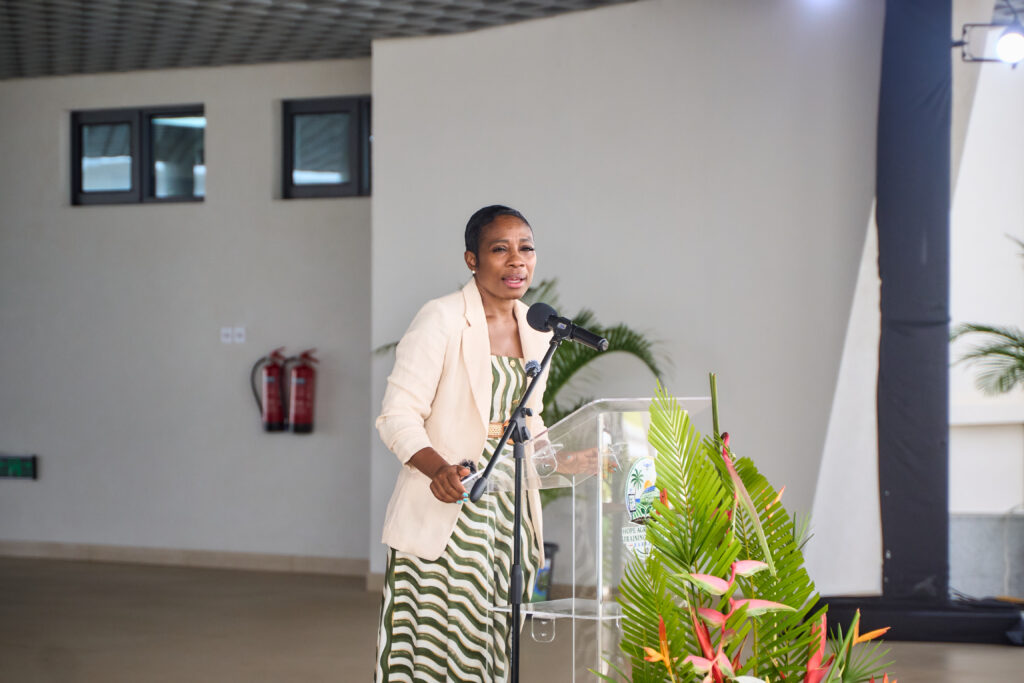

The Barbados-based Caribbean Development Bank (CDB) Tuesday launched its inaugural Caribbean Evaluation Space (CEvalSpace 2026), the region’s first dedicated platform for strengthening evaluation and evidence-based policymaking across the Caribbean.
The region’s premier financial institution said that for years, most regional evaluation initiatives have had limited focus on the Caribbean’s specific realities and the CDB President Daniel Best said the three day event provides the estimated 150 regional and international participants an opportunity to strengthen evaluation systems and practice across the Caribbean.
He said that it also marks an important shift ”in how we think about development in our region” and that CEvalSpace 2026 reflects a growing understanding that evidence is not optional, it is essential.
“Essential evidence informs better decisions, guides smarter investments, strengthens accountability, and ultimately delivers better results for the people we serve. Evaluation, therefore, is no longer something that happens at the end of a project. It helps institutions learn, adapt, and improve,” Best said.
Best said that independent evaluation, therefore, is central to that responsibility and that “the discipline of evaluation challenges us to ask some of the most important questions in development”.
“Today, our region faces a development landscape unlike any we have known. Climate change continues to test our resilience. Fiscal constraints demand increasingly difficult choices. Competing priorities requires to make the best possible use of every development investment.”
Best told the delegates that digital transformation is reshaping economies and labour markets and that demographic shifts are changing the composition and needs of regional societies, ”and citizens rightly expect greater transparency, stronger institutions, and better public services.
“In this context, accountability and transparency are not simply good governance principles. They are essential to how we position ourselves to honour national, regional, and global commitments, build public trust, and ensure that scarce development resources deliver maximum impact. ”
Best said that in this environment, then, intuition, experience, and good intentions, however sincere, are not enough.
“We need evidence. Evidence gives us the confidence to make better choices. Evidence helps us adjust course when necessary, and evidence ensures that every investment contributes meaningfully to the sustainable development of our Caribbean region.”
Best said that this is why evaluation matters, adding that for CDB, evaluation is not just a compliance requirement “it is a strategic tool that drives learning, improves performance, strengthens institutions, and enhances development impact”.
He said that the Office of Independent Evaluation at the CDB is central to this effort, providing the evidence, insights, and accountability needed for stronger decision-making and institutional learning.
Best said that this role is particularly important as the CDB implements its 2026 to 2035 strategic plan, with its focus on development effectiveness, measurable results, and continuous improvement.
“Independent evaluation helps us understand not only what works, but how to achieve results more effectively and sustainably. Yet, evidence-based learning cannot stop at one institution.
“The Caribbean’s development challenges are shared and interconnected, requiring collective learning and knowledge sharing,” Best said, noting that by drawing on each other’s experiences and evidence, (“we can build a stronger understanding of what works and achieve greater impact across our region.
“This underscores the vital importance of the Caribbean evaluation space,” he said, noting that he is particularly encouraged by the strong emphasis on young and emerging evaluators.
“If we are serious about building strong institutions for the decade ahead, we must invest in the people who will actually shape them. Youth is at the heart of CDB’s strategy because the future of our region depends on the talent, creativity, and leadership of our young people.
“Young professionals bring fresh perspectives, digital fluency and curiosity and the courage to ask new questions. You will help redefine how evidence is generated, communicated, and most importantly, how it is used to improve lives.”
Best told the audience that many of them will one day shape national policies, advise governments, lead institutions, and influence decisions that affect millions of Caribbean people.
“Our responsibility, therefore, is not only to strengthen decision-making today, it is to build the leadership systems and institutions our region will need for tomorrow. Friends, the Caribbean evaluation space is therefore not just a conference, it is an opportunity to strengthen the foundations of how we develop our region.
“It will deepen regional collaboration and integration. It will encourage innovation and new approaches to persistent and stubborn development challenges. Ultimately, it will help improve the lives of Caribbean people through better public policy, stronger institutions, and more effective development action,” he added. (CMC)
The post CDB launches inaugural Caribbean evaluation space appeared first on nationnews.com.