
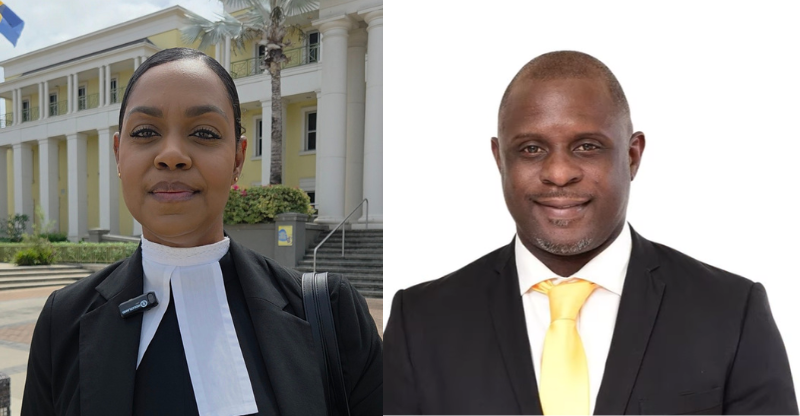
Attorneys have welcomed plans to introduce virtual hearings in the Magistrates’ Courts, saying the change could reduce delays and costs, but they urge retaining in-person access and safeguards for accused people.
On Sunday, Minister of Legal Affairs and Criminal Justice Michael Lashley announced that virtual hearings are to commence in two Magistrates’ Courts this month, in a bid to bring greater efficiency to the judicial system.
Agreeing that the system must be modernised, attorney-at-law Lesley Cargill-Straker warned, however, that convenience cannot replace the human interaction and safeguards essential to justice.
“Yes, we need to modernise Barbados’ criminal justice system,” she said. “However, we must ensure that modernisation does not come at the expense of its effectiveness.”
She expressed concern about any plans to stop bringing prisoners on remand to court, insisting that regular face-to-face appearances were important to attorneys and accused people.
“It is impractical for attorneys to trek to the prison each time we need to talk privately with a client. The 28-day in-person hearing guarantees that we can consistently take instructions from our clients, address concerns that have popped up since we last saw them, have documents signed and generally build the client/attorney relationship of trust necessary to represent them in serious matters.”
Cargill-Straker added that telephone calls are not always an adequate replacement, given their cost and restrictions.
She said some of her clients had also repeatedly said they would prefer to see their attorneys in person, as “prisoners do not trust the prison’s virtual arrangements”, adding that there are already challenges in securing private meetings with clients at the prison because of staffing issues and a shortage of attorney-client meeting rooms.
Another concern the defence counsel outlined was what removing in-person court appearances could mean for prisoners themselves.
“Prisoners are human beings and need to be treated as such,” she said, pointing out that, for some people on remand, the trip to court may be the only opportunity to interact with people other than prison officers. “These are persons we hope to rehabilitate to enter society and function, after they have paid their dues if found guilty.”
The attorney-at-law insisted that virtual hearings had wider implications.
“The Magistrates’ Courts conduct criminal and civil trials, protection order hearings, evictions, maintenance matters. Hearing these matters virtually, without the option to appear in person, will without a doubt affect the effectiveness of the court to adjudicate on these matters justly and affect attorneys’ ability to fully represent their clients.
“What of unrepresented persons who don’t have access to devices or data? How will I take instructions from a client on remand while his or her trial is going on? Can a magistrate truly assess the countenance of a witness and quality of his or her evidence via Zoom? How can we guarantee that a witness is not being prompted or otherwise influenced when the evidence is being given virtually?”
Nevertheless, Cargill-Straker said introducing a virtual system in the Magistrates’ Courts would be especially useful for lawyers with cases listed in different courts on the same day.
She said lawyers often find themselves racing from one end of the island to the other to reach a court before a matter is called, or having to ask for an adjournment because they cannot physically be in two places at once, wasting valuable court time.
She also said accused people on bail could benefit because, by appearing virtually, they would not have to “take an entire day from work or other commitments to wait for hours outside a courtroom, many times for a simple adjournment which, once the matter is called, is over in a minute.”
Attorney-at-law Rasheed Belgrave welcomed the move to virtual courts, saying it was not particularly new to the justice system, as the High Court already uses a mix of virtual and in-person hearings.
In criminal cases, bail hearings are already conducted via the cloud-based video communications platform Zoom, and Belgrave said the same approach could be replicated in the Magistrates’ Courts.
Belgrave said the Prison Service stood to benefit significantly because fewer prisoners would have to be transported to court.
“The absence of remanded persons coming from the prison to the Magistrates’ Court is not unheard of, if the prison faces some challenges. Most times, attorneys aren’t told specifics, only that the prison bus isn’t coming today and your client would be given a remand date. Moreover, given the recent escapes by prisoners, the move would be beneficial to safety and security for the court and public at large.”
Virtual hearings could also help when magistrates cannot physically get to court, he said, pointing out that similar situations had already occurred in the High Court, where lawyers may receive notice that a judge has an emergency and cases are therefore heard online.
Virtual hearings helped lawyers and the courts organise their days more efficiently, as specific times could be set for mentions, adjournments, submissions and bail hearings, he said.
The real benefits would come when virtual hearings are fully implemented across the Magistrates’ Courts, adding that he looked forward to the technology’s successful use and its impact on the judicial system.
He urged that virtual hearings eventually be extended to the civil side of the Magistrates’ Courts, particularly maintenance and access matters.
Noting that family cases can take up significant amounts of court time, Belgrave added that parents and other parties can spend long periods waiting for their matters to be heard, and that virtual hearings could reduce some of those delays and make it easier for social service personnel involved in family cases to participate.
“It could increase greater access and participation from the Social Empowerment agency which amalgamated a number of social services such as the National Assistance Board (NAB), the Welfare Department, the National Disabilities Unit, and the Resilience and Reintegration Unit, in addition to securing attendance from personnel from the Paredos parenting programmes.”
(JB)
The post Lawyers welcome virtual hearings but urge safeguards appeared first on Barbados Today.