
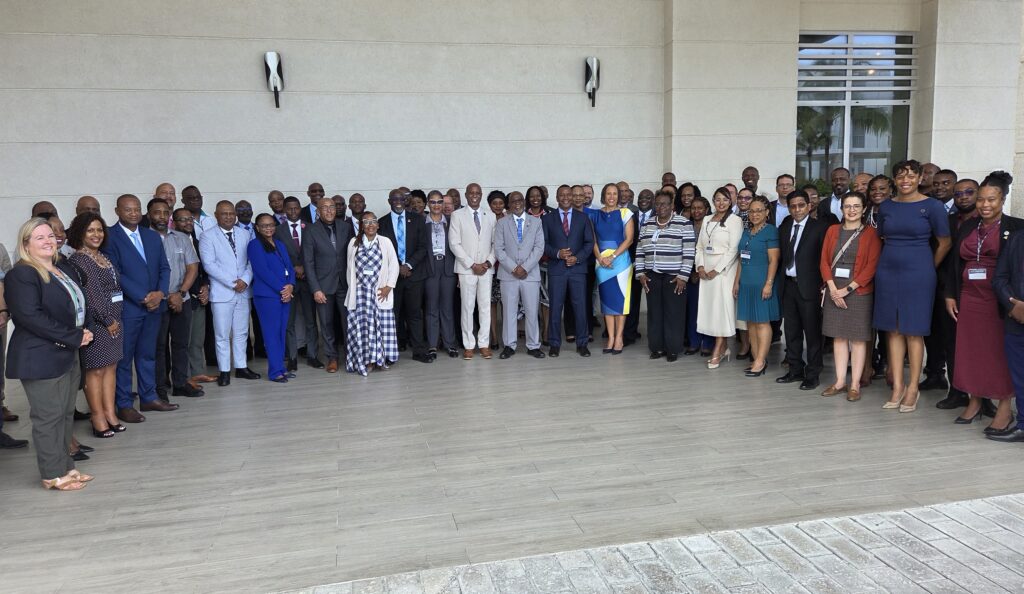
Corrupt officials, illicit firearms traders and drug traffickers face a government crackdown on their assets, with a dedicated squad pursuing proceeds of crime and unexplained wealth, Attorney General Wilfred Abrahams has announced.
Abrahams warned that the government would go after the assets of those involved, ending the days when people could be convicted of these serious crimes, serve their time or pay a fine, and still keep their wealth.
He told reporters: “The same people are involved, and the same networks are used for all of them. So we need to start to follow the money.”
The authorities could no longer stop at seizing drugs or firearms, making arrests and securing convictions, the attorney general declared.
“For everybody who falls in that category, we need to be looking at everything that they own, every contact that they have. They need to justify every single thing in their possession or that they have access to. And if they can’t, we seize it, we sell it, and we use the proceeds of the sales of the unexplained wealth or the seizures to fund the programmes that help us to track more of the illegal activities.”
The dedicated asset recovery unit within the Office of the Director of Public Prosecutions is expected to be funded by proceeds from seized criminal assets rather than taxpayers, Abrahams said.
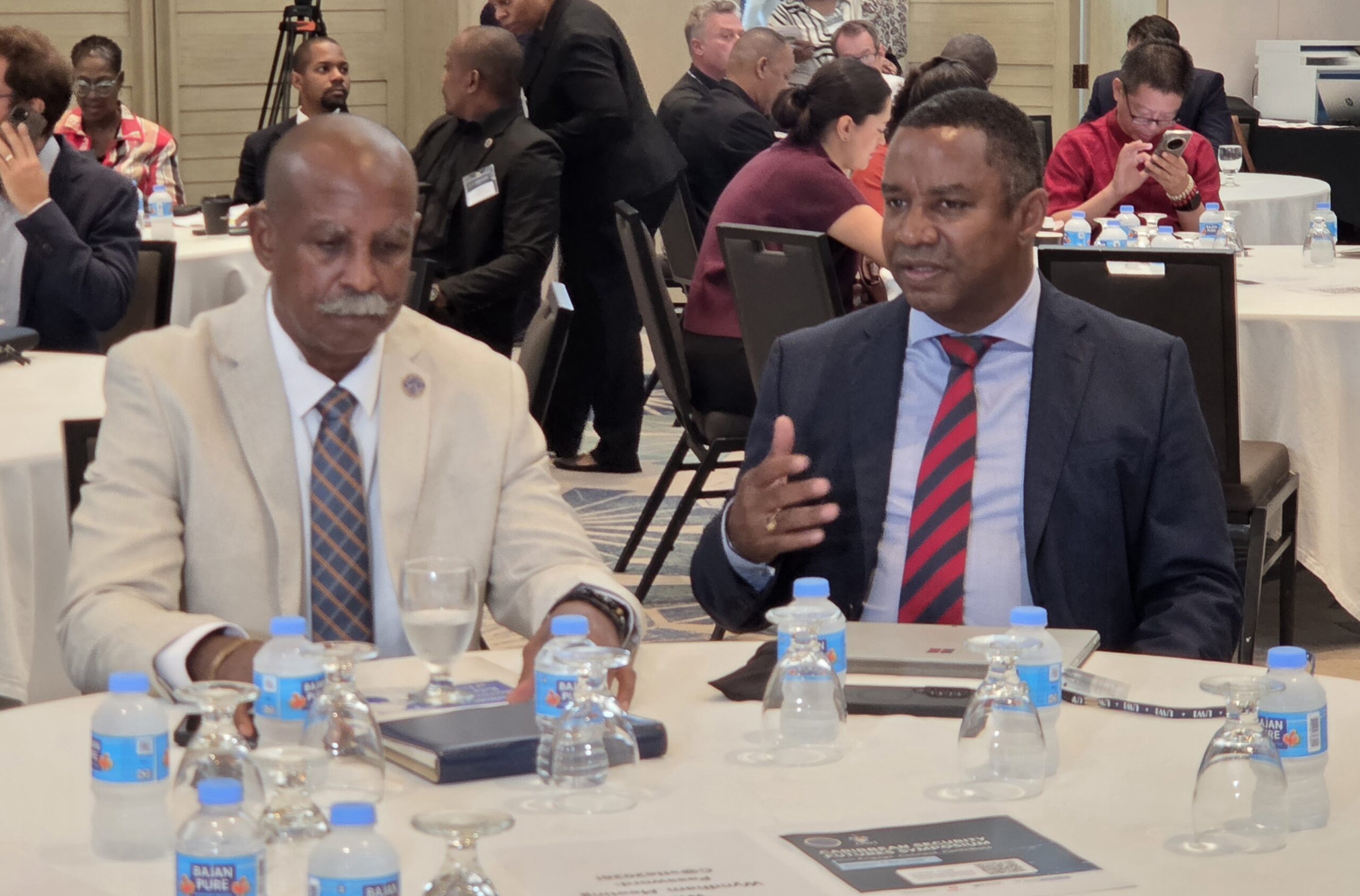
RSS Executive Director Rear Admiral Errington Shurland and Attorney General Wilfred Abrahams share a word during the symposium. (Photo JB)
“I want to send a message out there to all in that space. Don’t sit comfortably. We coming after everything that you have. The days of persons involved in corruption, illegal drugs and firearms sitting comfortably are over.”
Barbados has recently completed its fourth-round evaluation by the Financial Action Task Force and the Caribbean Financial Action Task Force, but the focus is now moving beyond whether countries have the necessary laws and structures to whether they are using them effectively, said the AG.
“We can’t just relax and trade on the fact that we have a whole set of laws that technically speaking deal with that, but that we are using the laws to track, trace, seize.”
That, he added, required the various agencies involved in the criminal justice system to work together: “We cannot operate in silos.”
In his opening speech to the security symposium, Abrahams said small Caribbean states with limited resources could not effectively tackle illicit financial flows and transnational crime on their own and stated that all relevant agencies must therefore be willing to share information to respond to the evolving nature of crime that was affecting all Caribbean islands.
“Everybody wants to keep their information to themselves, but the criminals are not operating in silos. They are using their networks.”
He cited United Nations Office on Drugs and Crime figures that money laundering accounts for between two and five per cent of the region’s GDP, while the wider criminal economy accounts for between 11 and 14 per cent of total economic activity.
“Think of what those dollar figures represent,” Abrahams said. “They represent the solution to many of our pressing challenges. US$20bn [$40bn] to $30bn [$60bn] gets us the strength of our borders and our regional and domestic security arrangements and agencies.
“[It] gets us the ability to more effectively deal with transnational organised crime and the funding of gangs and their access to more sophisticated and lethal weapons.
“To effectively stop these flaws, we must dismantle interrelated criminal networks that give rise to them.”
The head of the Regional Security System (RSS) backed Abrahams’ call for greater cooperation, saying Caribbean people’s safety depended on how well agencies worked together.
Executive Director Rear Admiral Errington Shurland urged regional security talks to shift from examining governance and operational structures to building genuine strategic partnerships.
Professor Derek Chadee, deputy principal of the University of the West Indies at St Augustine, said the region must become better at identifying vulnerabilities before threats emerge.
“Crime is changing in its methods and reach,” he said, warning that criminals were increasingly exploiting new technologies and operating across borders.
Professor Chadee suggested the region’s digital development must therefore go hand in hand with stronger capabilities to understand, anticipate and respond to emerging threats.
The RSS and UWI are also expected to sign a memorandum of understanding during the symposium. It will cover education, professional development, research, crisis management, public engagement and technological innovation, and create opportunities for students to gain practical experience through internships with the RSS.
(JB)
The post Abrahams: Asset recovery unit to recover crime proceeds appeared first on Barbados Today.