Virtual hearings and changes that allow trials to continue when magistrates leave office are at the heart of sweeping reforms brought to Parliament on Tuesday to cut backlogs in the lower courts.
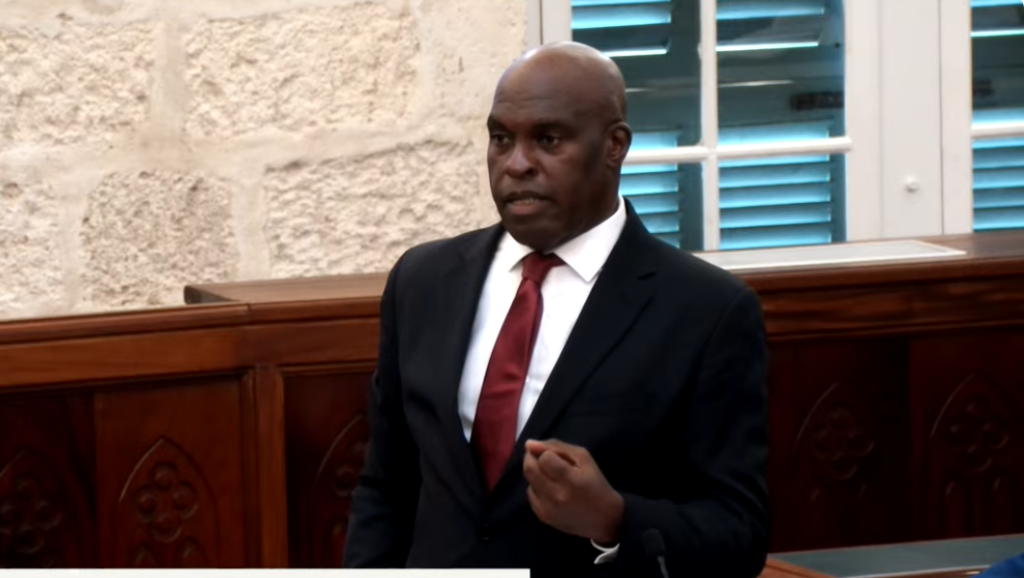
Minister of Legal Affairs and Criminal Justice Michael Lashley moved the second reading of the Magistrates’ Court Amendment Bill, telling the House of Assembly that the proposed changes represent a radical transformation of what he termed “the people’s court”.
The legislation focuses on institutional flexibility, allowing virtual hearings and ensuring legal proceedings can continue seamlessly if a magistrate leaves office permanently or temporarily.
The amendments address long-standing vulnerabilities concerning judicial continuity. Previously, if a presiding magistrate was promoted to the High Court or left the Bench, ongoing trials often had to restart entirely. The new provisions enable the chief justice or chief magistrate to assign another judicial officer to conclude existing cases.
“You know what has to happen. According to the present law, all the matters now have to start over, which is a waste of valuable judicial time,” Lashley said, emphasising that judicial resources are precious.
Minister of Legal Affairs and Criminal Justice Michael Lashley (File Photo)
“These two amendments to this bill will impact positively on getting rid of the backlog, stopping delays, causing bottlenecks in the system.”
For decades, the physical constraints of courtrooms, such as shared facilities at District ‘C’, have caused extensive delays, transport bottlenecks for prison buses, and frustrating bottlenecks for litigants.
Under the new framework, virtual access will let bail applications and preliminary case management proceed without requiring dangerous, costly physical transport for high-risk prisoners, the criminal justice minister said.
The legislative package also paves the way for digital integration, including the automated generation of immediate audiovisual transcripts to accelerate criminal appeals, which historically faced months of delay.
As part of the modernisation push, infrastructure upgrades are already well underway. Lashley highlighted the District ‘A’ Court, which is already “about 95 per cent already outfitted” to handle virtual hearings.
“Within a couple of weeks, the Magistrates’ ‘A’ [Court] will start hearing matters virtually,” the legal affairs minister announced.
To further ease the burden on court dockets, the government is introducing an electronic traffic ticket system to replace traditional court summonses for minor infractions.
“I believe that the days of a police officer stopping you, warning you of intended prosecution, then you’ll receive a summons from a magistrate to appear before a court that we should close off those days and introduce what we call ticketing,” Lashley explained.
“A man is stopped; as soon as he decides he’s speeding, you issue him a ticket. He gets the ticket, he pays it. Matter closed. So the traffic court is no longer clogged up with traffic matters.”
While acknowledging that infrastructure upgrades and outfitting courts require substantial investment, estimated at around $400 000, the criminal justice minister stressed that access to justice must not be hindered by a lack of digital devices among low-income citizens.
Plans include partnering with community centres to provide secure, private virtual access rooms for vulnerable witnesses, complainants and defendants, he added.
“We all know full well the importance of the Magistrates’ Court… we call them the people’s court. That is where very serious matters of a summary nature, domestic violence matters, civil matters under certain jurisdictions are concluded.”
Lashley told lawmakers that key interest groups, including senior criminal defence lawyers and members of the magistracy, had been consulted and broadly supported the updates.
“This is what we are seeking to do: to alleviate the delay of justice, ” he said.
(RR)
The post Magistrates’ Court reforms target delays, repeat trials appeared first on Barbados Today.