As public debate rages over access to Barbados’ beaches, the Barbados Wetlands Trust (BWT) says it is prepared to have the court decide whether roads and tracks historically used by the public to reach the coastline can be lawfully blocked by private landowners.
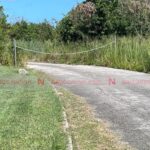
The Trust has served notice on owners of the Chancery Lane, Christ Church property who recently installed a chain across Teal Road – an access the Trust says the public has used for decades to get to the popular Long Beach and to the wetland.
The Abed family, which owns the approximately 90-acre property, previously said they were instructed by the Ministry of Health to install the chain to prevent illegal dumping. They said pedestrian traffic had not been prevented and there were still other access points to the beach and wetlands.
In a statement released earlier this month from the ministry on this matter and the issue of dumping in the area, it explained that after
dumping in the area, it explained that after discussions between the Environmental Health Department and the landowners, it was agreed that vehicular access would be restricted, while keeping the area open to pedestrians.
Public access
But BWT said its concern extended beyond the chain itself to protecting long-standing public access to one of the island’s important natural coastal areas.
Anthony Da Silva, protector of the BWT, told the Weekend Nation yesterday that trustee, Senior Counsel Alair Shepherd, had written to the Abed family’s attorneys indicating the dispute over the chain “may ultimately require determination by the High Court.
The letter, sent on November 19, gives the landowners seven days after receipt to confirm whether the Teal Road chain and posts would be removed or to identify the legal basis for keeping them.
In the letter, Shepherd also pointed to a topographical survey prepared by Godson Associates on August 20, 1998, which identified a network of roads and tracks across the Chancery Lane property.
Mapped routes
BWT maintains the mapped routes, together with evidence of longstanding public use, provide grounds for establishing legal rights of passage. It acknowledges, however, that the appearance of roads and tracks on a survey does not by itself establish their public status.
Shepherd formally identified seven routes over which the Trust is seeking recognition of public passage rights. They include the paved Teal Road, an older 12-foot right-of-way corridor, connecting tracks towards the wetland, routes running behind and through the coastal dunes, and a southern access corridor towards Long Beach.
The Trust contends members of the public have historically passed openly and peacefully along these routes, without seeking individual permission, to reach the wetland, dunes, Long Beach and connecting roads.
BWT has emphasised that it is not challenging the landowners’ ownership of the property or seeking unrestricted access across private land, but is asking for clarification of public rights of passage that may already exist.
The property owners have been asked to provide a substantive response addressing each of the seven routes within 14 days.
“If the matter cannot be resolved, the trustee will consider proceedings seeking declarations of such public rights of pedestrian or vehicular passage as the evidence establishesẠỊthe Trust noted.
The Trust pointed out the Attorney General’s involvement might be necessary because the proposed proceedings concern rights asserted on behalf of the public.
While supporting measures to prevent illegal dumping and protect public health, BWT maintains that these objectives should be achieved without unlawfully interfering with established public rights of passage. It has indicated its preference for resolving the dispute without litigation.
BWT’s move comes amid recent statements by two Government ministers on beach access.
During a site visit to Paynes Bay, St James, earlier this month, Minister in the Prime Minister’s Office with responsibility for Economic Affairs and Planning Marsha Caddle spoke of Government’s intention to strengthen the protection and enforcement of public beach access across Barbados.
Caddle also outlined the use of planning conditions and greater coordination among Government agencies to maintain and improve access.
“Her statements are particularly relevant to Chancery Lane, where BWT has now produced historical survey evidence identifying seven access routes whose legal status it wants formally examined,” the Trust stated.
Senior Minister and Member of Parliament for St James Central Kerrie Symmonds announced last Friday that he intended to seek Cabinet approval for the partial compulsory acquisition of land at Paynes Bay, St James after a traditionally used beach access route was blocked by its owners.
The widening access dispute comes as BWT continues its broader initiative to establish the Barbados Wetlands Sanctuary Network, bringing together major wetland ecosystems for permanent conservation, ecological restoration, education, scientific research and responsible public enjoyment.
Chancery Lane is one of three primary wetland landscapes central to that vision, alongside Graeme Hall and Green Pond.
The Trust has advocated Government acquisition of the Chancery Lane property so the wetland, surrounding grasslands, coastal dunes, beach and buffer areas could be permanently protected and managed as an integrated natural landscape. (MB)
The post Long Beach row may go to court appeared first on nationnews.com.