For a long time, the story of Barbados overseas has been told through rum, beaches, festivals and wuk up.
Those things are part of us, and they will always have their place. But as Barbados prepares to celebrate 60 years of Independence, it may be time to widen the story.
We are also designers, makers, writers and entrepreneurs.
And this Bajan is in belt business.
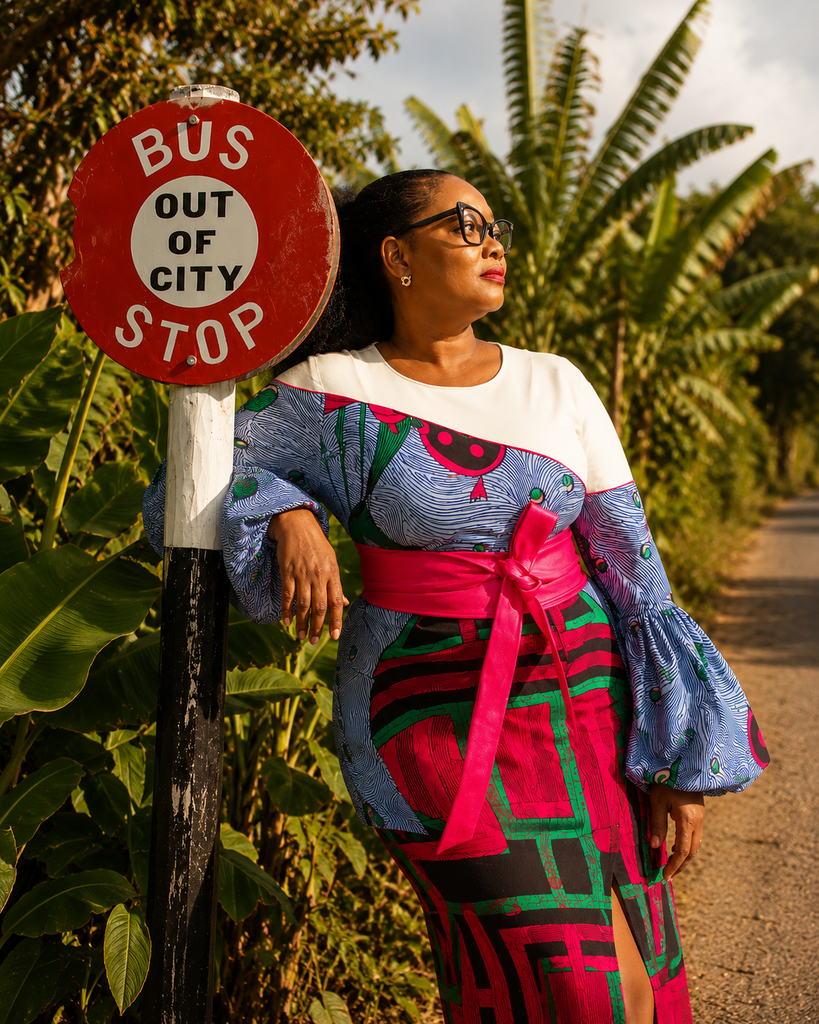
I recently spent two weeks in Belgium carrying out market research and export-preparedness activities for my lifestyle brand, Okoye By Kim, with the support of the Embassy of Barbados in Brussels and the National Cultural Foundation.
I travelled with belts, but I also carried questions.
Would the product translate in Europe? Would women understand the Barbadian story behind the brand? How would the belts sit on different body types? Could a small business from Barbados find space in a market interested in slow fashion, versatility and products with a story?
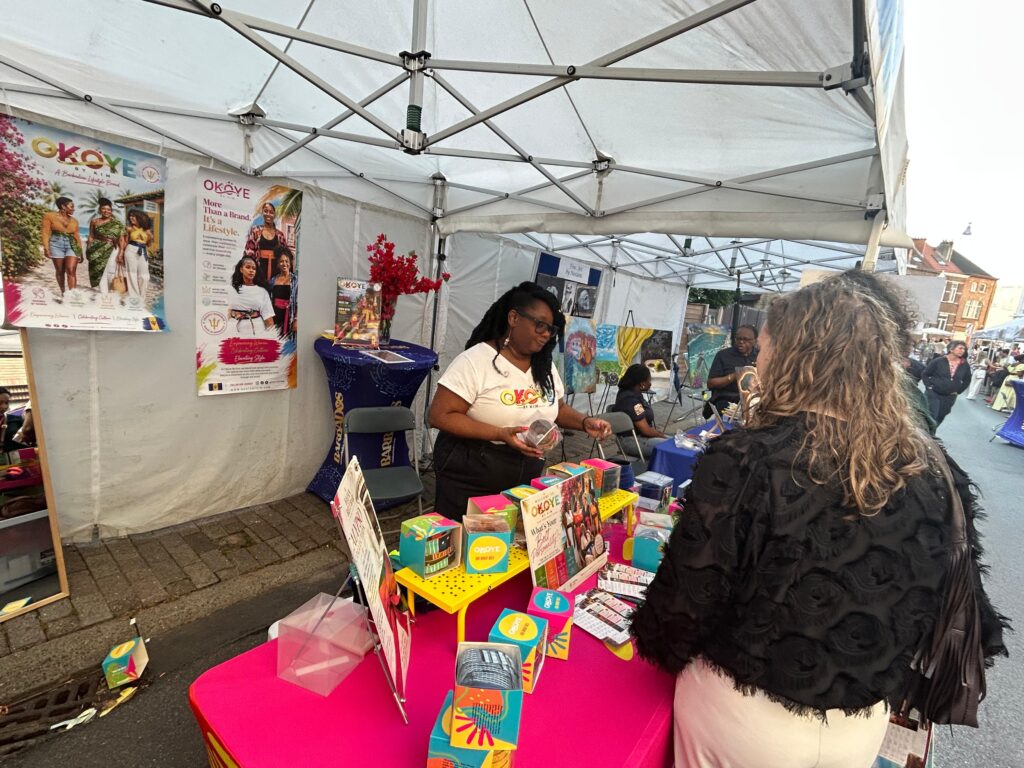
At the Brussels Street Fair, I stood behind the display listening to several languages moving around me, watching women stop, touch the belts and ask questions.
Some were curious about the colours. Others wanted to understand how the belts worked. Many of the women were more petite than the customers I usually style in Barbados, and that immediately gave me useful information.
Some tied the belts higher on the body. Others wrapped them twice. A few created shapes I had never considered.
I had travelled prepared to teach women how to wear my product.
Instead, they showed me new possibilities within my own designs.
That is the value of market research. It is not only about asking people whether they like something. It is about watching closely enough to understand how they use it, what they connect with and what they may be trying to tell you without saying a word.
At the centre of the experience was the Belt Personality Quiz, which helped women identify the collection that best suited how they wanted to feel when they dressed.
We asked simple questions. How do you want to feel when you enter a room? What is your wardrobe missing? What kind of statement do you want to make?
Their answers helped guide them towards one of four collections.
Classic is for the woman who knows what works and wants something polished and dependable. Calypso is for the woman who loves colour and possibility. Breadfruit is wider and more sculptural, for the woman who is not afraid to take up space. Moko, named for the moko jumbie, is for the woman who stands tall and wants more movement and drama in the way she wraps her waist.
The names are not Caribbean labels added afterwards to make the product sound more interesting. They are part of the design language. They come from our memory, our environment and the way we speak about ourselves.
That is the difference between exporting an item and exporting culture. Culture does not always have to travel in a bottle, on a stage or through a festival. Sometimes it can be wrapped around the waist.
One of my favourite moments came when I met a Japanese family who immediately recognised the obi influence. That opened a conversation about their own tradition of wrapping and how I had reimagined the form through a Barbadian lens.
For a few minutes, a belt became common ground between Japan and Barbados. That is what cultural export can do, it can create a conversation before it creates a sale.
A few days later, I hosted An Evening with Okoye, attended by women from Africa, the Caribbean and the wider diplomatic community. They tried on belts, shared stories, took photographs and made purchases.
The photographs were part of the research too. They allowed me to study how the product translated across age, nationality, body type and personal style. The evening also reminded me why I created the Bajan Belt Bar.
I often say that everybody has belly business. It is funny, but it is also true. The belly is one of the parts of the body women are most often told to hide, flatten, reduce or apologise for. Yet the waist has carried meaning for generations. Women have wrapped their bodies after childbirth. Cloth, bands and belts have been used for support, shape, ceremony, protection and identity.
The waist is not simply a measurement, it is a place where women carry life, memory, strength, change and sometimes insecurity. The Bajan Belt Bar is therefore more than a place to try on a belt. It is a space where women can talk, experiment with style and build confidence around a part of the body they are so often encouraged to conceal.
That experience in Brussels also made me think about what Independence should mean as Barbados enters its next chapter.
Sixty years after Independence, how do Barbadian ownership, design and intellectual property become part of the national conversation?
Independence cannot only be about what we inherited or what we achieved in the past. It must also be about what Barbadians own now, what we create and how we build value from our own ideas.
The value of an Okoye belt is not only in the fabric or stitching.
It is in the design, the brand, the names of the collections, the customer experience, the way the product is presented and the cultural story wrapped around it.
That is intellectual property, and it matters. For a small country with limited manufacturing capacity, cultural export is especially important because we may not always be able to compete on volume or price. We may not be able to produce the cheapest item or supply thousands of units at short notice. But we can create products that are distinctive, well designed, culturally grounded and difficult to copy without losing the story that gives them meaning.
That means we also need to think differently about scale.
Not every micro business should be judged by whether it can supply a major international retailer. For some businesses, the first real overseas market may be the Barbadian and Caribbean diaspora.
Those consumers already understand our references. They know breadfruit, calypso and moko jumbies. They recognise the humour, colours and language. They are often looking for meaningful ways to remain connected to home.
The opportunity may already be there. The harder question is whether our small businesses have the capacity, systems and support to reach it.
Export facilitation must therefore go beyond placing entrepreneurs at overseas events and hoping orders follow. Small businesses also need help with production, pricing, packaging, intellectual property, online sales, fulfilment and partnerships that connect them to diaspora markets.
We should also be looking more carefully at how Barbadian culture is already being packaged through fashion, food, beauty, literature, music, wellness, design and lifestyle products.
I returned from Belgium with sales, contacts, photographs and new ideas. But I also returned with a clearer understanding of what it means to sell Barbados. Sometimes it is not a bottle of rum or a tourism advertisement.
Sometimes it is a woman in Brussels putting on a belt, looking in the mirror and understanding something about Barbados that no brochure could fully explain.
That is the opportunity before us as we mark 60 years of Independence. To own more of what we create, protect the stories inside our products and to carry Barbados into the world, one belt at a time. (Kim C. Butcher)
The post A Bajan in Brussels on Belt Business appeared first on nationnews.com.