
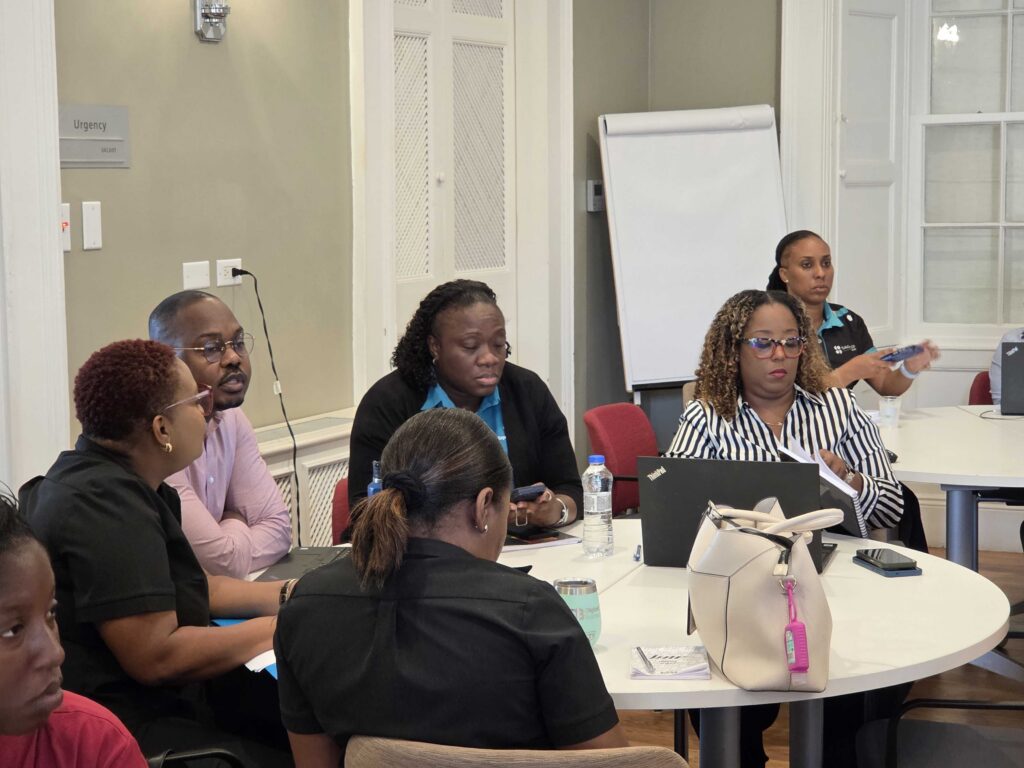
Efforts to make banks and credit unions fully accessible to people with disabilities have taken on new urgency, as key advocates warn that the days of viewing inclusion as charity are over — it is now the law.
Human Rights Commissioner Kerryann Ifill joined with disabilities advocate and attorney-at-law Andwele Boyce to issue a call to the financial services industry to transition from a culture of “charity” to one of “rights”.
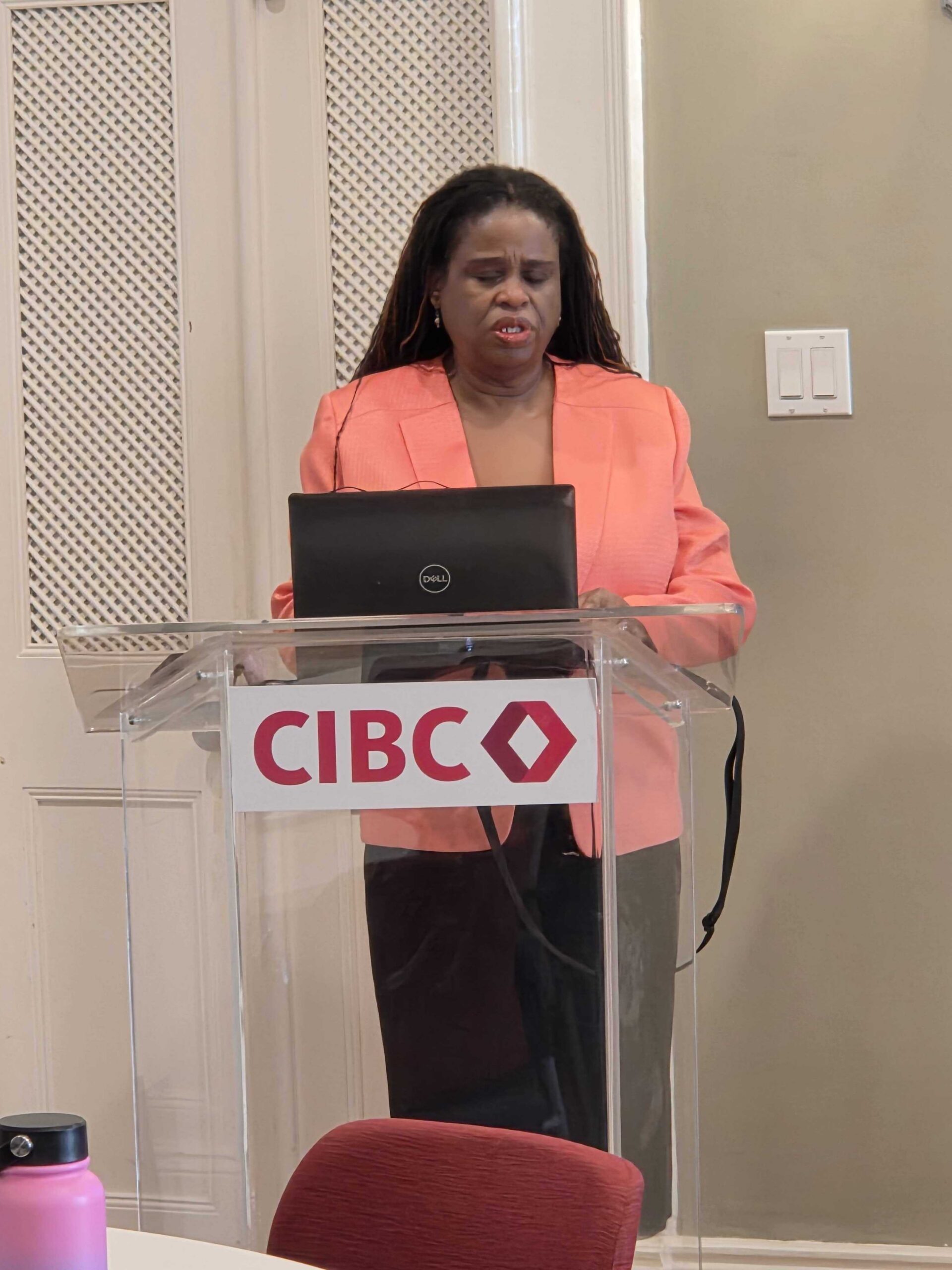
Human Rights Commissioner consultant on Disability Rights Issues Kerryann Ifill,
Speaking at an accessibility training session hosted for banking and credit union professionals at CIBC in Warrens, the advocates emphasised that inclusion is no longer just a moral preference but a legal mandate under the Rights of Persons with Disabilities Act, which came into force in January this year.
Commissioner Ifill challenged the traditional view of disability, noting that 15 per cent of the global population lives with some form of impairment. She argued that the “disability” itself is often created by society’s failure to provide accessible environments rather than the physical or sensory condition of the individual.
“Disability is not the impairment,” Ifill said. “The disability is the barriers that society has put in place that prevent people from enjoying full participation in everyday life. Disability does not have to create dependency. It does not mean that we cannot determine our own path.”
Sharing a personal account of a morning when her usual transport failed, Ifill described how technology allowed her to navigate the crisis independently. However, she noted that the banking sector often remains a source of frustration due to procedural hurdles.
“Sometimes, I gotta tell you, the most upsetting parts of my life have to do with the bank,” she remarked. “You’re asking your clients to give up their right to independence… What you need to see is opportunities to create a pathway to independence.”
Attorney Boyce provided a technical breakdown of the legal obligations now facing financial institutions. He noted that Barbados ratified the Convention on the Rights of Persons with Disabilities in 2013, which has now been domesticated through the 2025 law.
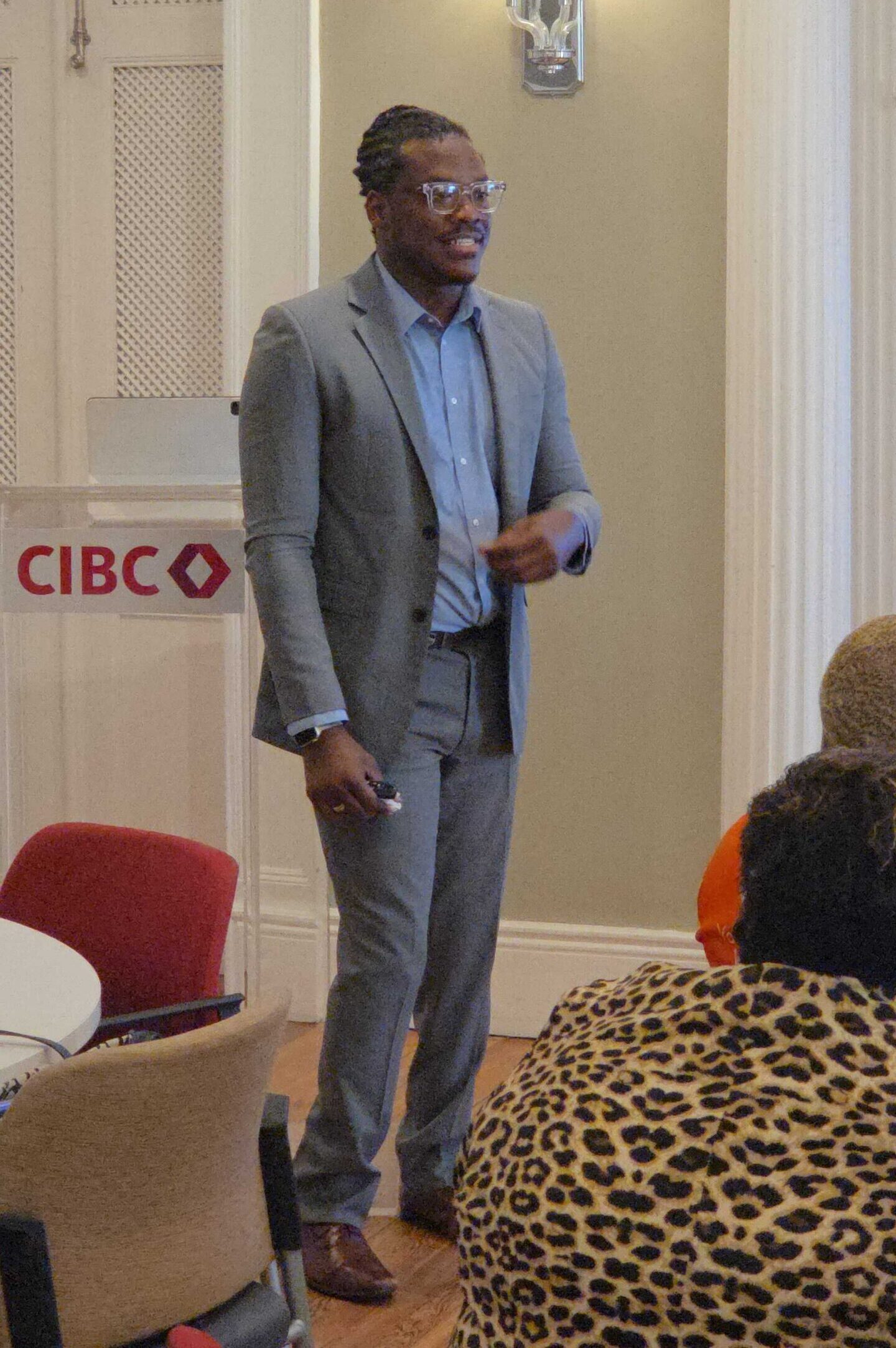
National Disability Advocate, Attorney-At-Law Andwele Boyce
Boyce noted that section 75 of the new legislation provides that services and facilities must be fully accessible. This includes a three-year window for retrofitting pre-existing buildings and an immediate requirement for accessible ATMs and digital services.
He also said credit and lending should not be barred on the basis of a disability. Boyce explained that the objectives of the law are to provide comprehensive legal protections for persons with disabilities and to ensure that people do not suffer discrimination on the basis of their disability.
He warned that the legislation carries significant weight, including the establishment of a tribunal headed by a High Court judge to hear complaints.
“You can’t withhold credits or lending on the basis of someone’s disability, and there are offences associated with each of these inactions… a $100 000 fine in relation to all of them,” Boyce said.
The training highlighted specific barriers within the banking hall, from high counters that exclude wheelchair users to “inaccessible tech” such as CAPTCHA tests that frustrate visually impaired clients.
Boyce emphasised the concept of reasonable accommodation, such as nullifying the rigid requirement for identical signatures for those with physical challenges, and ensuring ATMs do not “clock out” too quickly for elderly or disabled users.
Ifill, who was named the country’s first human rights commissioner last December, also pointed to the success of digital tools such as “First Pay” as examples of how inclusion drives growth.
“Inclusion is just smart economics,” Ifill said. “If I can easily access my money, I can easily transact business, it drives growth. I don’t need, when I travel next week, to leave my debit cards at home… nobody needs to help me out.”
Both advocates agreed that the most significant barrier remains attitudinal. Boyce cautioned staff against “infantilising” disabled clients or speaking to their companions instead of to the clients themselves.
“Speak directly to a person with a disability,” Boyce advised. “I will tell you that even as a thirty-something-year-old who has lived life and gone to school… there are lots of times in which service providers still speak to the people with me as opposed to me.”
He noted that the Social Empowerment Agency (SEA) is now active and empowered to investigate claims of discrimination.
Boyce encouraged financial institutions to view accessibility not as an “undue burden” but as a fundamental human right that strengthens the entire Barbadian economy.
(RR)
The post Banks urged to remove disability barriers under new law appeared first on Barbados Today.