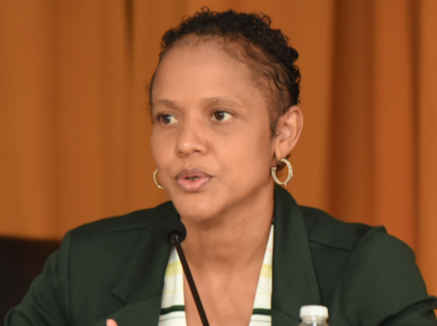

While welcoming the Older Persons (Care and Protection) Bill, the Barbados Association of Retired Persons (BARP) has warned that stronger enforcement will be key to its effectiveness.
BARP President Marilyn Rice-Bowen described the legislation which was brought before lawmakers on Tuesday as a long-overdue step towards strengthening the rights and dignity of older people.
“It affirms that ageing is not a liability; it is a stage of life that if we are fortunate enough to reach, deserves the full protection of the State.
“The Older Persons (Care and Protection) Bill moves us decisively away from the deeply troubling notion that seniors are a burden on society. They are not, and they must never be treated as such,” Rice-Bowen said.
She stressed that beyond the legal framework, the deeper objective must be societal change where seniors are recognised as “reservoirs of knowledge”.
“Every senior Barbadian has given of themselves over a lifetime. This legislation is, at its core, about honouring that contribution and ensuring that every individual can age with dignity, security and purpose,” Rice-Bowen said.
The BARP leader underscored that while penalties serve as an important deterrent, legislation without enforcement risks being ineffective.
“The fines are there to signal seriousness, but enforcement must follow. Legislation alone depends entirely on implementation, on effective funding for social care agencies, on trained personnel, and on sustained public awareness. Without these, the best-crafted law achieves very little,” she pointed out.
Rice-Bowen said it was troubling that society had reached a point where such penalties are necessary.
“It is a poor reflection on us that we have reached a point where we must legislate hefty penalties simply to compel people to treat their elders with respect.
“We must return to what obtained before; a society in which seniors were revered, honoured, loved and properly cared for within the extended family. The fines are a deterrent. Our goal must be a Barbados where punishment for elder abuse is never necessary, because abuse simply does not occur,” she stressed.
Rice-Bowen also called for elder abuse to be clearly defined and spoken about without euphemisms, arguing that direct language is essential for awareness and accountability.
“We must stop cloaking abuse in fancy terms. When people speak of ‘unfairing’ a senior, let us be clear, that is abuse. Call it by its name. The moment we name it correctly, we heighten public awareness and signal, unambiguously, that it will not be tolerated. Euphemisms protect perpetrators. Plain language protects victims,” she contended.
“Once you can define it and you call it by name, then that heightens the public awareness of what abuse is. If you keep cloaking it, people won’t understand what abuse is.”
Rice-Bowen also outlined the key requirements needed to ensure the Bill is effective once enacted.
“Its effectiveness depends heavily on implementation and enforcement. There have to be clear reporting mechanisms, adequate funding for social services, trained personnel to support and protect seniors, and equally important, we have to roll out public awareness programmes so that both older persons and caregivers understand their rights and responsibilities,” she said.
(LG)
The post BARP: Fines alone not enough appeared first on Barbados Today.