
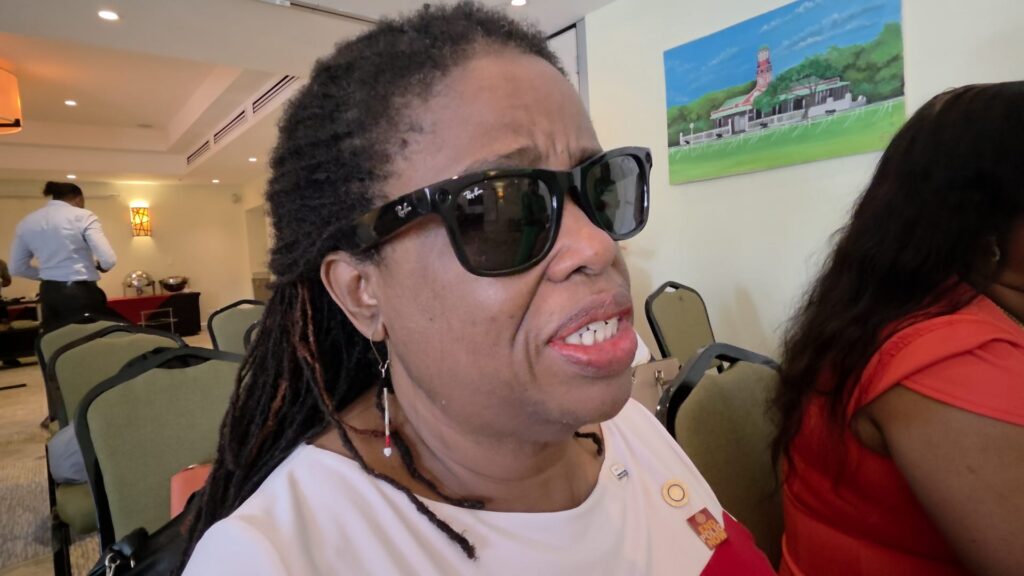
Plans unveiled in the national Budget for urban upgrades to make the capital more accessible have sparked a mix of optimism and caution from disability campaigners.
While leaders at the Barbados Council for the Disabled (BCD) viewed the push for a more accessible Bridgetown as a vital milestone, they called for more robust, sustainable financial measures to enable the most vulnerable households to be economically self-sufficient.
In Monday’s Budget Speech, finance minister Ryan Straughn announced that over half a million dollars has been dedicated to improving accessibility to all citizens, especially members of the disabled community, adding that the changes will begin in The City.
But the physical transformation of the capital is more about dignity and autonomy than just infrastructure, said the advocates.
BCD Vice President Kerriann Ifill hailed the current trajectory as a significant win for inclusivity: “Bridgetown is our capital city and must welcome everyone.”
The improvements would be an opportunity for persons with disabilities to “feel safe and have the opportunity to travel anywhere at any time in their city”, calling the move a “very positive step in the right direction”.
But Ifill, the first blind member of the Senate leadership, noted that physical access is only one piece of the puzzle. She expressed a desire for a specialised evolution in how the community moves across the island, specifically advocating for “subsidised travel, not necessarily the ‘Call-A-Ride’ service, but an expanded service for persons with disabilities to travel independently”.
She also expressed hope for a “wider expansion of the disability grants for more persons with disabilities,” noting that while she would have loved to see those changes immediately, she believes these improvements “will come in time”.
While the infrastructure plans received praise, the financial provisions for the community were met with more scrutiny from Patricia Padmore-Blackman, BCD president, who expressed concern that the Budget may only offer temporary relief to those facing a high cost of living.
Addressing the scale of the proposed works and financial aid, Padmore-Blackman suggested the efforts might be marginal compared to the actual depth of the need: “While we appreciate the fact that something is being done with regards to accessibility in Bridgetown… it sounded a little low in comparison with other initiatives.”
Padmore-Blackman remarked that while the community is “not ungrateful”, there were serious concerns regarding sustainability once short-term relief expires: “I still see the sustainability in terms of… after that $100 has expired, what happens then?”
Many individuals remain “on the edge” and are not adequately provided for, particularly in households where children or elderly people with disabilities live, she said.
She also highlighted that many in the disability community are underemployed or unemployed. While acknowledging that “the government cannot suffice every occurrence”, she maintained that “something better can be done to assist persons, especially with disabilities and the households that we know are still challenged”.
The post Call for greater inclusion, self-sufficiency for people with disabilities appeared first on Barbados Today.