As Cuba reels from worsening fuel shortages, prolonged electricity blackouts and growing concerns over access to food and critical medical supplies, this country’s envoy to the Caribbean Community (CARICOM) called for a more forceful response to the decades-old United States embargo.
The humanitarian crisis in the communist-led island has deepened following fresh US measures aimed at tightening enforcement of the 64-year-old blockade, including an executive order imposing punitive tariffs on countries that supply oil to Cuba. The new restrictions have compounded existing challenges in an economy already strained by inflation, limited foreign exchange and the lingering effects of the COVID-19 pandemic.
The United Nations and several international humanitarian organisations have warned of mounting hardship on the island, particularly among vulnerable groups such as the elderly and children. Images of long lines for basic goods, shuttered services and darkened neighbourhoods have circulated widely on social media, fuelling concern across the region.
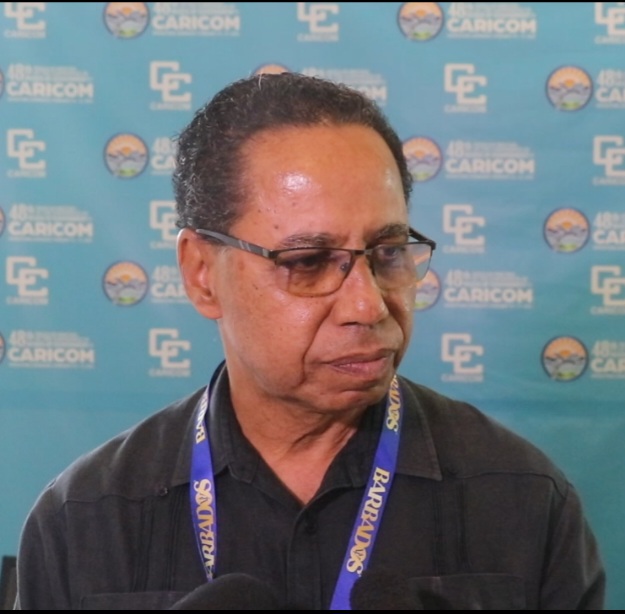
Against that backdrop, Ambassador to CARICOM David Comissiong urged governments and citizens alike to act.
His call comes ahead of next week’s summit of CARICOM leaders in Basseterre, St Kitts and Nevis.
In a letter to the editor sent to Barbados TODAY, Ambassador Comissiong pointed to a viral social media message from an ordinary Cuban woman describing the toll of the crisis on everyday people.
He wrote: “It is a message that was issued against the background of the President of the USA, radically intensifying the USA’s 64-year-old illegal blockade of Cuba by signing an executive order that imposes punitive US tariffs on any country that dares to supply Cuba with oil.”
He highlighted the woman’s account of elderly Cubans “dying prematurely because the blockade prevents the arrival of medications for heart conditions, high blood pressure and diabetes”, newborn babies struggling as “incubators in Cuba have had to be shut down due to a lack of fuel”, and what she described as “terrorism through hunger”.
Ambassador Comissiong continued: “Without a doubt, the current situation in our sister Caribbean nation of Cuba constitutes a severe humanitarian crisis that demands a significant and meaningful response from all people and governments of conscience.”
He grounded his appeal in history, recalling that in 1972, the four founding states of — Barbados, Jamaica, Guyana and Trinidad and Tobago — established diplomatic relations with Havana despite intense external pressure. That decision laid the foundation for what he described as a “special relationship”, reflected in Cuba’s long-standing support to the region in medicine, education, sports, the arts, agriculture and disaster response.
“The time has come for us — the people and governments of CARICOM — to do our duty and help our Cuban sisters and brothers to make it through this severe existential crisis,” he added, calling for contributions of food, medical supplies and renewable energy equipment to help ease the island’s energy woes.
Senior law lecturer at the University of the West Indies Cave Hill Campus, Dr Ronnie Yearwood, portrayed the developments in Cuba as part of a broader geopolitical pattern.
“I think one of the first things we have to recognise is that what we’re seeing in Cuba is an offshoot of what we saw in Venezuela,” Dr Yearwood said, arguing that Washington’s approach suggests an attempt at regime change. “If Venezuela hadn’t worked in the way it worked out, I don’t [think] they would have moved on Cuba.”
He warned that the combination of hyperinflation, low fuel supplies and electricity shortages points to an escalating crisis. “They’re pretty much trying to stranglehold on the country and it seems to be working,” he said, adding that if CARICOM’s response mirrors what he described as a weak and muted regional reaction in the Venezuelan case, “then the US will succeed because there’s not going to be effective pushback”.
Yearwood also suggested that some Caribbean states may already be yielding to pressure from Washington, citing Saint Lucia’s reported move to cut certain links involving Cuban-trained doctors. The US Embassy in Bridgetown later denied pressing Castries to bring home its students in Cuba.
At the same time, Dr Yearwood argued that CARICOM underestimates its collective leverage.
“The Caribbean is a major trading partner for America. We buy millions and millions and millions of dollars in American goods every year, and we have to recognise collectively we have some form of power,” he said, calling for a more coordinated regional position.
Reflecting on earlier eras of Caribbean leadership, Yearwood contended that former prime ministers such as Owen Arthur, PJ Patterson, Dr Ralph Gonsalves and Kenny Anthony may have responded more robustly to external pressure.
“Knowing the type of personalities they were … I don’t see those men responding [by] capitulation or in the same way that the current governments have responded,” he said.
The post CARICOM urged to aid Cuba amid deepening crisis appeared first on Barbados Today.