Two senior attorneys say accused people can wait up to three years or more for case files in the Magistrates’ Courts, a situation which can prolong remand periods for some and leave accused and complainants in limbo.
Last week, acting Chief Magistrate Douglas Frederick expressed frustration over the continuing delays in starting cases after several matters had to be adjourned because files had not yet been completed by investigating officers.
He said: “In Barbados, we have one of the best police forces in the world. If a crime happens tomorrow, within a week, they will hold the person, or they will have somebody assisting the police, but the problem that we have is to get the files. Today, the prosecution would have gotten up and would have said: ‘We have no file. We have no file.’ And if you look at the dates of the matter, you will see that it is a little frustrating to people coming and they don’t have the files.”
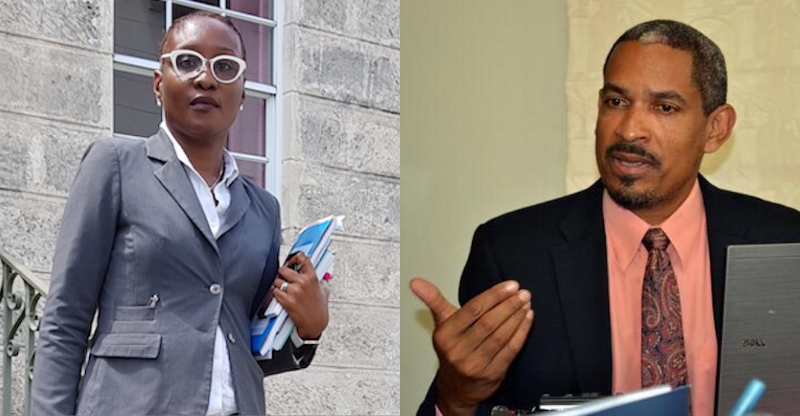
Senior Counsel Angella Mitchell-Gittens told Barbados TODAY that the delays had become so commonplace that she did not expect a file to be ready within the first year after a person was charged.
She said: “I guess generally speaking you expect that there’s going to be a period when there is no file. So on average I would say within the first year I don’t have any expectation of a file and maybe sometimes even approaching the second year you have no expectation of a file.”
She blamed systemic reasons for the delays, including limited resources, with the same police officers often responsible for investigating cases, particularly more serious and complicated ones.
But Mitchell-Gittens said the consequences for accused people could be severe.
“From the perspective of the accused person you can spend a lot of time on remand. You can spend, even if you’re on bail, years with a matter hanging over your head affecting your job prospects and other things.”
In some courts, she said, cases had remained unresolved for years because files were still outstanding.
“Some judicial officers may take the point that two years – a simple matter, no file, dismissed. And there are matters before some courts, five years, six years, and the accused person just turn up and adjourn, turn up and adjourn.”
She said there was no “magic number” for when a case should be dismissed because the decision was ultimately at the discretion of the judicial officer.
Mitchell-Gittens warned, however, that the dismissal of a case because no file was produced did not necessarily bring finality for the accused.
“If the matter had been dismissed without any adjudication of the matter, it can be relodged. So you can be merrily getting along with your life, working, all of that, and if it’s a serious enough matter it gets relodged, you may even find yourself back in prison.”
She argued that there were also many people, particularly those on remand for serious matters, who wanted to plead guilty but remained in the Magistrates’ Court for months because a file had not been completed.
“A person who wants to plead guilty should not be in a magistrates court for month after month after month, 28 days after 28 days.”
Evidence could be given to establish a triable case and sent to the High Court, allowing such cases to proceed without waiting for a complete file, she suggested.
Senior Counsel Andrew Pilgrim described the failure to deliver files as the “fundamental and principal cause of delay in the system”.
He said: “The fact that you can’t get a file ready to start a matter, sometimes two years, three years after a person is charged. What did you charge a person for if you don’t have evidence?”
The problem affected both serious and less serious cases, he suggested, adding that, in some instances, more investigation should take place before an arrest was made.
Pilgrim urged judges and magistrates to impose deadlines on the prosecution, saying this could put greater pressure on the system to improve.
“Give the prosecution a deadline, say ‘I’m going to give you a year to be ready and if you’re not ready in a year, I’m going to dismiss it’, it will have a greater impact on the police.”
While acknowledging that courts often gave the police leeway because of understaffing, Pilgrim said this had not forced the system to improve.
“So they try to bend over backwards, but that doesn’t force the system to get better and that’s the problem that I see. So it leads to longer periods of remand, it leads to evidence being weaker, because obviously witnesses are coming to give evidence, sometimes years after the event, and even professional witnesses are affected negatively by that.”
(JB)
The post Court file delays leave cases hanging for years appeared first on Barbados Today.