The Congress of Trade Unions and Staff Associations of Barbados (CTUSAB) is renewing its call for a comprehensive overhaul of the island’s public transportation system, arguing that longstanding deficiencies are affecting productivity, commuters and national development.
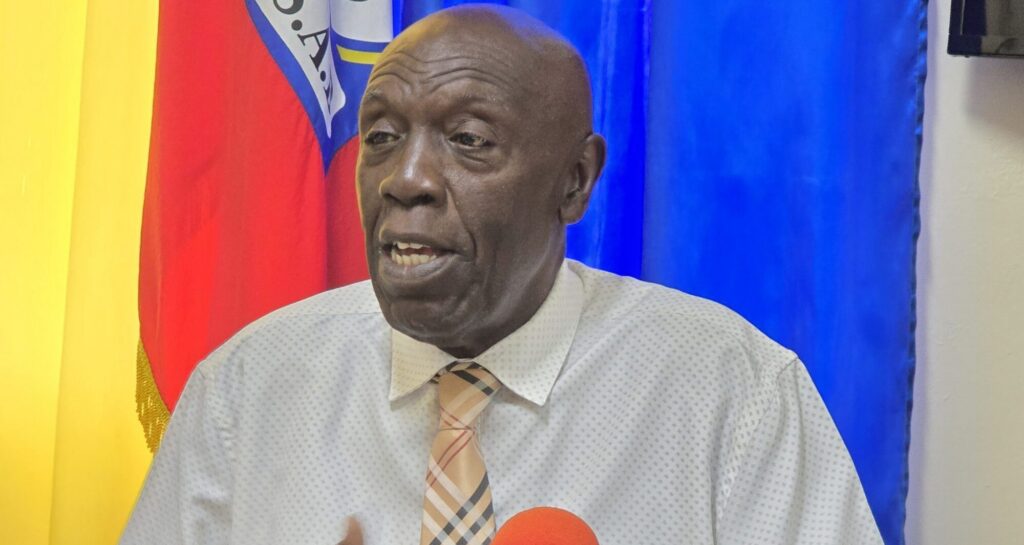
Speaking during CTUSAB’s monthly press conference at its Garrison headquarters, general secretary Dennis DePeiza said unreliable transport services continue to disrupt the lives of workers and the travelling public.
Furthermore, he maintained that privatising the Transport Board would not solve the sector’s problems.
“The privatisation of the Transport Board is not the solution to remedy the inefficiencies in the management of the public transportation sector.
“As a first step towards ensuring a more reliable and efficient public transport service, there is a definite need to address both management and regulatory issues. CTUSAB maintains that public transportation must be seen by the government as a national good,” DePeiza said.
He pointed to the Transport Augmentation Programme (TAP), introduced in 2019 to help fill gaps in the system, suggesting the initiative had not fully addressed the challenges facing commuters.
“In the absence of reliable and efficient public transport service, it can be reasonably argued that this is contributing to a fall in national productivity. We can also say that this is as a direct result of time loss by workers commuting to and from work,” DePeiza said.
Speaking to the media on Thursday, DePeiza said government needed to treat transport reform as a national priority and move decisively to address problems that have persisted for decades.
“It cannot be fair that Barbadians who live outside the urban corridors have to continually suffer the indignation of being treated less favourably when it comes to access to public transportation.
“It is unacceptable that commuters should be made to wait for hours for a bus to travel to any destination, or to have the uncertainty of not knowing when or if a bus will come,” DePeiza said,
He maintained that the time had come for government to abandon a piecemeal approach to reform and adopt a comprehensive strategy.
“Inasmuch as public transportation is a national priority, it requires that the government redirect funding to ensure that the required number of buses are purchased. Notwithstanding the fact that there’s a place for the engagement of private sector vehicles in the public transport system, it would be a travesty if the government and its agencies failed to undertake a reassessment of how these can be in reintegrated or integrated into a reformed public transport system,” DePeiza said.
DePeiza also criticised what he described as widespread indiscipline among some public service vehicle operators and called for a zero-tolerance approach to dangerous driving practices.
He questioned why compliance issues have persisted for decades and suggested Barbados could learn from transport management systems elsewhere in the region.
“Those place the lives and the safety of commuters and road users at risk. The failure by some of these operators in not completing the route to which they have been issued a permit to provide a service, their non-compliance with the road traffic regulations, indulging in habits such as overloading, speeding, dragging, and hogging, are all practices that can no longer be ignored nor tolerated,” he said.
“Barbados could benefit from the learning of the management systems and practices which are observed in CARICOM states such as Trinidad and Tobago and Saint Lucia.”
DePeiza also addressed the issue of illegal PSV operations, commonly referred to as pirates, arguing that the problem has been fuelled by licensed operators failing to adequately service their approved routes.
“What are they complaining about? A competition that has arisen because they do not ply the routes that they’re supposed to. That’s what’s happened because the registered vehicles are not going where they’re supposed to go, so these fellows decide, well, here’s an opportunity, you ain’t going there, so I can get some people and I’m going to travel where you are not going.
“So you’re going to complain now, because you recognise that somebody eating my cake. Fix your own problem, stop your indiscipline, do what you are supposed to do,” DePeiza insisted.
The trade unionist also criticised the lack of transport services during evenings, weekends and public holidays.
“How can this be allowed to obtain in an island that has a 24/7 business culture and prides itself as being world-class and an international tourism destination?
“It’s about time that there is an islandwide reliable transport system that is not limited to the tourist belts of Highway 1 and 7, catering heavily to the west coast and the south coast of the island,” DePeiza pointed out.
At the same time, he welcomed government’s proposed school bus service, saying it could ease pressure on the public transport network while reducing students’ exposure to negative influences.
“This is indeed a positive move towards reducing the competition faced by persons who are using public transportation to go to and from work. But more importantly, it’s a step in the right direction in moving school children away from the antisocial behaviour that is said to be part of the ZR and minibus culture,” he said.
(LG)
The post Depeiza: Public transport failures hurting productivity appeared first on Barbados Today.