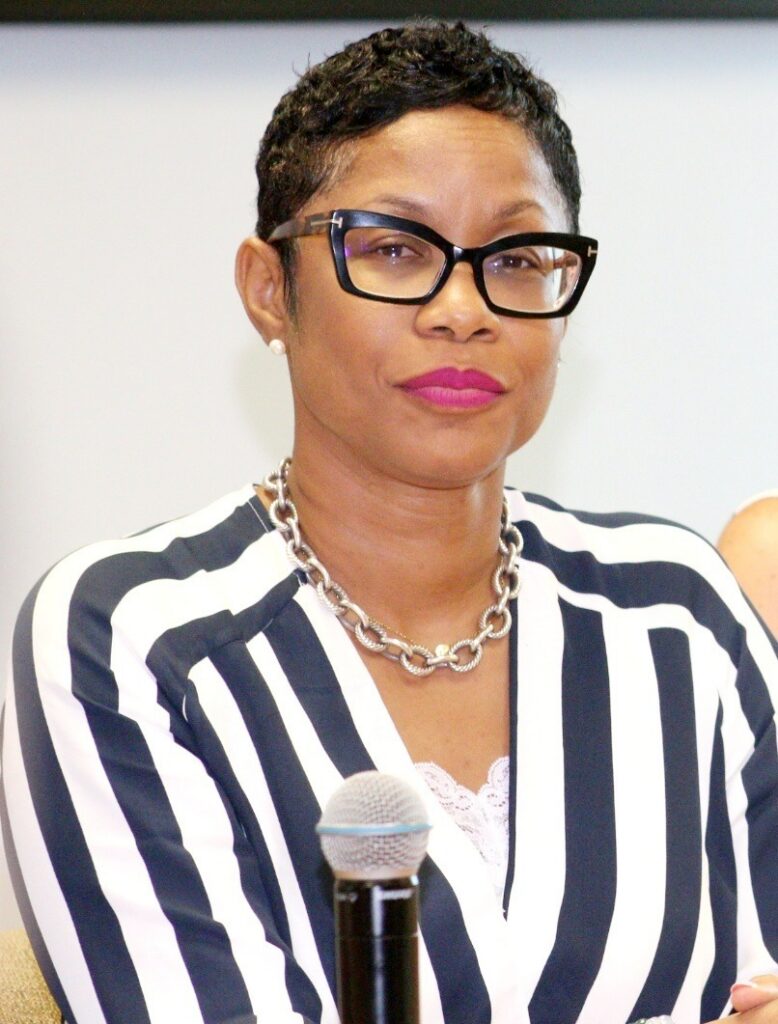
Barbados is confronting a “crisis of elder abandonment”, with growing numbers of older people left in hospitals and care facilities without family support, the health minister warned on Wednesday, as new legislation seeks to impose legal duties on relatives and strengthen state protection.
Senator Lisa Cummins, also leader of government business in the Senate, called for a national “culture shift”, as she moved the second reading of the Older Persons Care and Protection Bill.
The senator painted a stark picture in which the very individuals who built modern Barbados were increasingly being left behind in hospital wards and district facilities, forgotten by the families they once raised.
The legislation arrives at a pivotal demographic moment for the island. With the national average age climbing to 42.5 years and a death rate that currently outpaces the birth rate, the “care burden” has shifted from a private family matter to a national emergency. Senator Cummins argued that while the law can create a framework for safety, the primary struggle is not against a lack of regulation, but against an erosion of empathy.
“I want to start my comments today by making an appeal to families,” Senator Cummins said. “These people are there, and the nurses and the doctors in an institution have become their family because you are not there. Abandonment, and this legislation speaks to it, is not even just a physical act. It is the emotional and the mental knowledge that your family is not ‘checking for you’ in Bajan terms. They’re not coming to provide you with the things that you like to eat… they’re not even coming with thirty minutes of time, which costs nothing.”
The health minister’s speech in the debate was punctuated by anecdotes from her recent tours of the Queen Elizabeth Hospital and the Psychiatric Hospital.
She described the “cruel to be kind” phenomenon, where families’ admission-seekers intentionally leave elderly relatives in the Accident and Emergency department, knowing they are safe but effectively surrendering their responsibility. More distressing, she noted, was the silence that follows.
She recalled asking medical staff if families visit those who have been admitted for long-term care, only to be told that for the vast majority, no one ever comes.
“From the Queen Elizabeth Hospital to the Psychiatric Hospital, there is no family engagement,” she lamented. “In our district hospitals, whether it is St Lucy or St Philip, family members not only are leaving them there, but they’re not coming back even to visit them. There’s something fundamentally wrong in Barbados with that. These are our elders. These are our older persons.”
The Older Persons Care and Protection Bill was touted as a rigorous legal shield designed to move the state from “passive tolerance” to “active safeguarding”. For the first time in Barbadian law, the elderly are being explicitly affirmed as “rights holders”, as respect and care are no longer viewed as discretionary acts of kindness but as legal entitlements.
The bill is intended to dismantle the “code of silence” that often surrounds domestic neglect by introducing mandatory reporting, investigative powers for authorities and enforceable sanctions against those who exploit or abuse the vulnerable.
Beyond physical harm, the legislation targets financial exploitation — specifically the practice of “drawing people’s pension checks” while leaving the senior in a state facility without support — as well as psychological manipulation and the withholding of medical care.
Senator Cummins emphasised that the bill also seeks to regulate the burgeoning residential industry, ensuring that every facility, whether state-run or private, meets a “gold standard” of air-conditioned, well-appointed and “homey” environments.
But the health minister was candid about the limitations of legislation. She argued that no amount of law can replace the foundational role of the family and the community. She pointed to everyday instances of “ageism”, such as able-bodied young people refusing to yield seats on public transport or drivers occupying disabled parking spaces for “quick runs”.
“Legislation can punish abuse, it can regulate facilities, it can create duties and responsibilities… but legislation on its own will not create care,” she told the Senate. “Legislation on its own will not provide for our elderly. We must still take responsibility for teaching our families respect and care for our elderly. It must be taught, it must be reinforced, and it must be socially expected.”
The government is positioning this bill as part of a wider “whole-of-country” approach, linked to mental health reform and workplace flexibility policies.
The goal is to create a society where a smaller working-age population can support an ageing demographic without facing personal collapse. Senator Cummins challenged Barbadians to look inward, noting that the “builders of our nation” deserve more than a bed in a ward; they deserve the dignity of being remembered.
“This bill applies to all of us who want change, because change begins with us,” she said. “Let the answer be clear for all of us. Let us focus on the rights of our elderly. Let us ensure that we enforce this bill in our homes and in our society.”
(RR)
The post Elder abandonment crisis looms, senator warns appeared first on Barbados Today.