Barbados has cleared almost five million pounds of sargassum seaweed from its beaches in the past six months, amid the authorities’ warnings that the intensifying influx is set to double this season, Barbados TODAY can reveal.
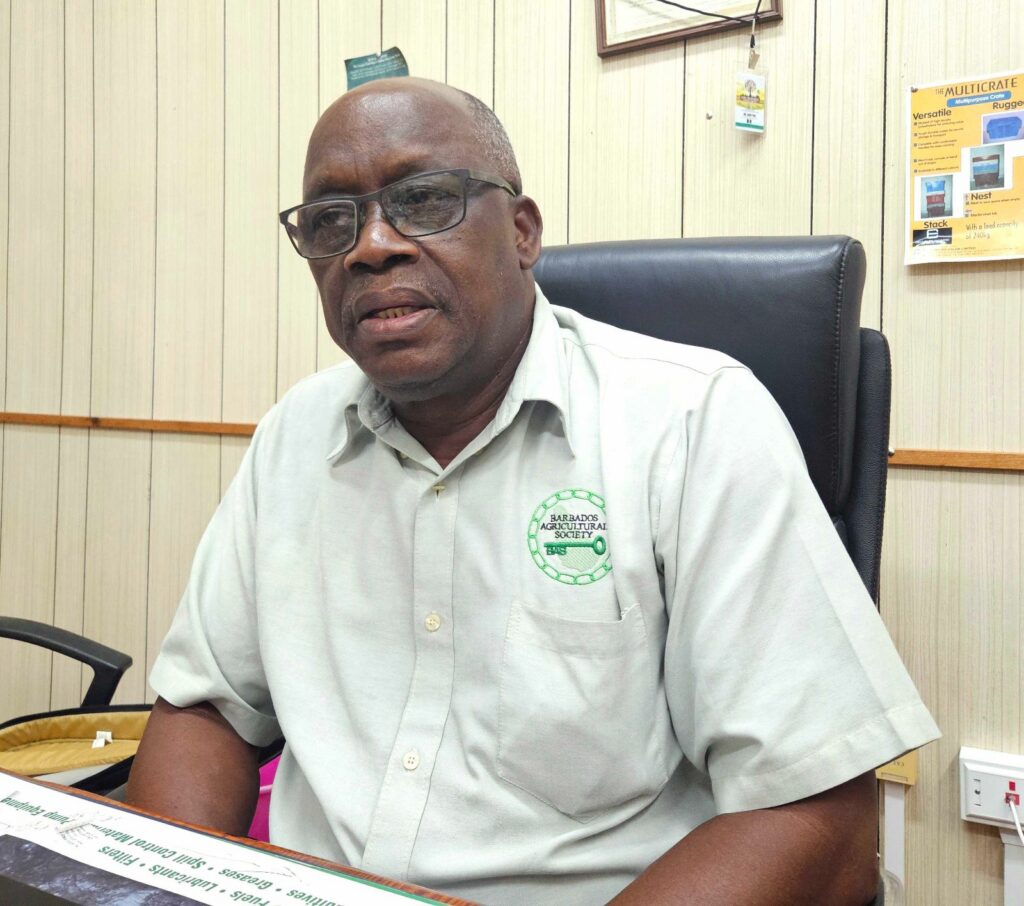
National Project Coordinator of the Sargassum Seaweed Collection Unit, David Carter, said collections exceeded eight million pounds last year, with projections pointing to even higher volumes in the months ahead.
In an exclusive interview on Wednesday, Carter outlined the scale and urgency of the operation, which falls under the Ministry of Environment, National Beautification and Fisheries, while also revealing that the government has begun exploring a pilot project to convert sargassum into a value-added by-product for foreign exchange.
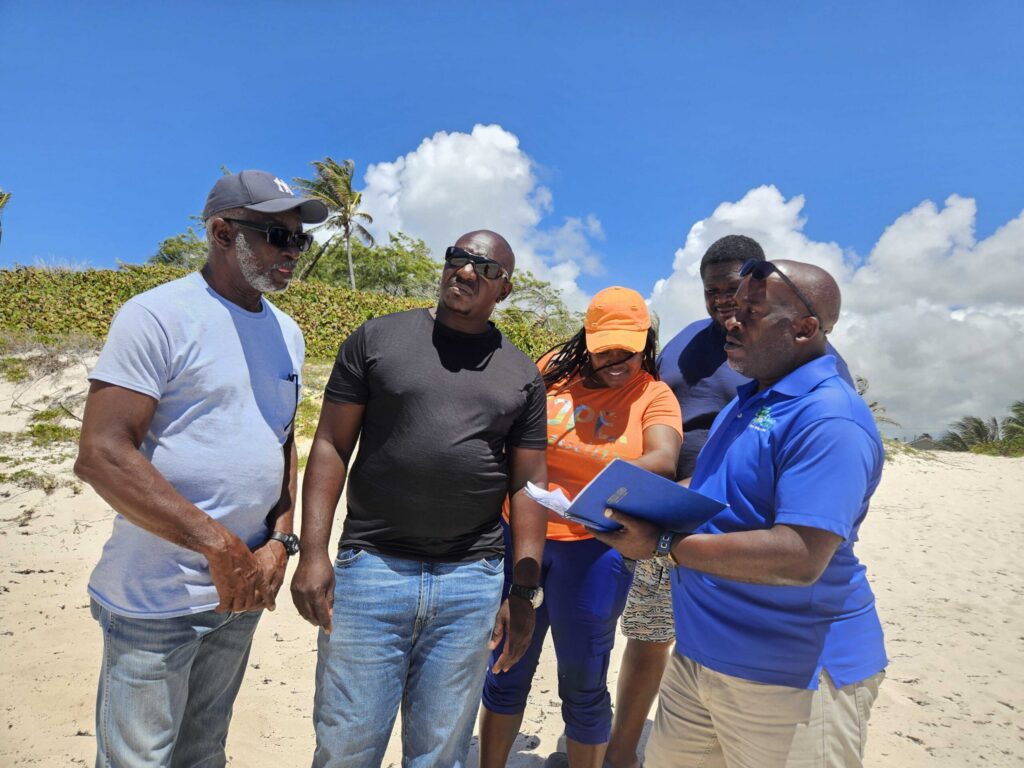
“For the last two quarters, we’ve probably collected 4.9 million pounds of sargassum,” Carter said during an interview at Silver Sands, Christ Church. “That will be moved and stored at Bath Land, which is clay land, so it will not affect our aquifers or our water table.”
The clean-up operation relies heavily on manual labour, with about 100 workers deployed across four teams and an additional 34 workers.
“We have about four teams. Each team has about 25 persons,” Carter said. “We use manual labour. We have the workers come and break it up, shovel it into the pancarts, and the pancarts are stored in a secure location on the beach. And then the NCC comes, collects it, and takes it away.”
He explained that the work begins early each day to ensure beaches remain accessible.
Despite these efforts, both Carter and mechanic and equipment operator Omar Greenidge warned that the problem continues to escalate, with sargassum no longer following predictable seasonal patterns.
Sargassum influxes typically affect Barbados between May and October, tapering off towards the end of the year. But officials said the pattern shifted significantly in 2025, with volumes intensifying in October and continuing through November and December, extending the season beyond its normal cycle.
That unusual carry-over has set the stage for a heavier 2026 season, Greenidge said: “It didn’t stop last year at all. It went straight to December. Normally it holds up around October, but last year it went through October, November, December.”
Carter added: “Recently, we’re seeing heavier influxes, and the predictions are that it’s going to be double what we had last year.”
Greenidge described the relentless nature of the influx, noting that cleared beaches can quickly become re-covered.
“If you look at the beach, this morning we had here clear, and within an hour this is what you’re seeing already. If you look at the sea, you can see it deposited and still coming in,” Greenidge said. “All these streaks you see are going to come together and come up on the shoreline and deploy itself on the beach. So it is an ongoing process.”
Carter echoed that challenge, pointing out that complete clearance remains unrealistic.
“You can never have a clear, clear beach. You always got sargassum because when you move this, it returns,” he said.
The physical demands on workers remain significant, with each load weighing heavily on teams operating in difficult coastal conditions.
“Each pancart is about 90 pounds, and it’s on dry, dead sand, so my workers work very hard,” Carter said.
To reduce health risks associated with decomposing seaweed, particularly gas emissions and odour, teams operate within tight timeframes.
“We don’t leave the sargassum too long because of the gas component, and we don’t want workers exposed to it, so we give them short bursts of three to four hours and get it done,” Carter said. “If it decays, you will get that smell, so to avoid that, we get the workers in early and get it off the beach very quickly.”
Greenidge noted that conditions along the east coast worsened the situation due to terrain challenges, allowing sargassum to accumulate and decay.
“On the east, because of the terrain, we can’t get behind rocks, so it comes and it sits and it starts to decay,” Carter explained. “Once it sits on the water too long, it will decay and then it starts to have that smell.”
By contrast, the west coast experiences less severe impacts.
“And the west coast is not as heavily impacted,” Carter said, noting that changes in currents often carry the seaweed away before it accumulates.
Efforts are now under way to improve efficiency through mechanisation, supported in part by international partners. A pilot project is also on the cards that could lead to the island gaining significant amounts of foreign exchange from a sargassum by-product.
“Currently, in conjunction with the UNDP, we have two vessels on shore, three tractors at this present moment, and we have more equipment on its way to assist with the beaches,” Greenidge said.
However, he cautioned that even with expanded resources, the scale of the problem remains daunting.
“It’s going to be very rough going down, because at the rate the sargassum is coming, it ain’t easy. It’s a lot to deal with on these workers,” he said.
Officials said further details about the pilot project would come from Deputy Prime Minister and Minister of Environment Santia Bradshaw.
Large-scale sargassum influxes first began affecting Barbados in 2011, transforming what was once an occasional occurrence into a persistent seasonal challenge. Since then, the volume and frequency of seaweed landings have increased, with recent years showing longer seasons and heavier accumulations.
(SZB)
The post Exclusive: Govt eyes by-product pilot as sargassum surge worsens appeared first on Barbados Today.