Barbados’ long-standing overseas farm labour scheme is still active but sending fewer new recruits abroad, as Canadian employers increasingly request returning Barbadians already familiar with agricultural operations, lawmakers were told on Monday.
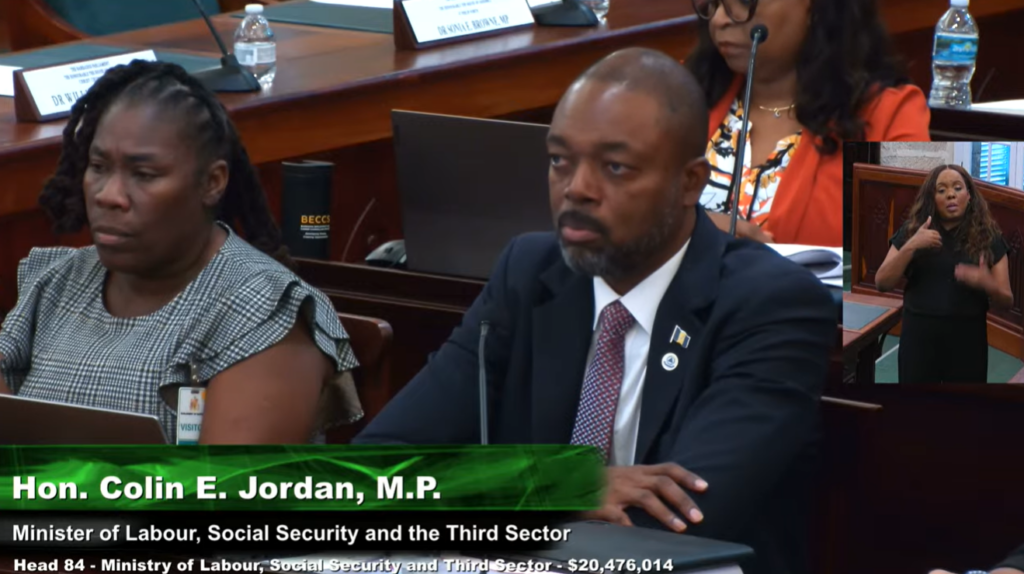
The update came during the House of Assembly Estimates for the Ministry of Labour, after St John MP Charles Griffith asked whether the programme was still operating and how young Barbadians could access it.
Minister of Labour Colin Jordan confirmed that the initiative continues under its current name, the Seasonal Agricultural Worker Programme, which sends Barbadians to work mainly in Canada’s farms.
“We call it now the Seasonal Agricultural Worker Programme, but a lot of Barbadians still recognise it as the farm labour programme,” Jordan told the House.
The programme remains in demand overseas, but the number of available positions has declined in recent years, the House was told, partly because Canadian employers increasingly request workers who have previously participated and are familiar with farm operations.
Acting director of the Barbados Employment Career and Counselling Service, Moreen Bowen, provided the latest figures showing a gradual reduction in placements over the past three years.
In 2024, 102 workers participated in the Seasonal Agricultural Worker Programme, declining to 86 in 2025, while requests for 2026 currently stand at 59 workers, she said.
Bowen explained that the shift does not necessarily mean the programme is shrinking permanently. Instead, many farmers are opting for experienced labourers who require little training.
“Employers are requesting what we would call repeat workers, so you don’t have many opportunities for new workers to go on the programme,” she said.
“You’re getting a lot of repeat workers because obviously the employers are comfortable with persons who know the farm and the operations and who are familiar with the process.”
The ministry has also been adjusting its strategy to maintain Barbados’ participation in the programme, which operates in a competitive regional environment with other Caribbean countries supplying labour.
Officials have begun exploring new areas of employment and developing relationships with employers in provinces that have labour shortages, Bowen said.
One such initiative involves new employment opportunities in the Canadian province of New Brunswick, where 16 Barbadians are due to travel in early April to work in seafood processing.
She noted that unemployment levels in Canadian provinces also affect recruitment because employers must first attempt to hire locally before bringing in foreign workers.
“If the unemployment rate in a particular province is six per cent, it means that they have to hire in-country. They can’t hire persons from Barbados and the other Caribbean islands,” she explained.
Despite the decline in placements, Bowen said the programme remains accessible to interested Barbadians through the Barbados Job Register.
Jordan said Barbados continues to advocate strongly for the programme with Canadian authorities, particularly at a time when global attitudes towards migration have become more restrictive.
Bur he warned that workers selected for overseas placements must adhere strictly to workplace rules, particularly regarding drug use.
“My ministry has a zero tolerance for anybody who misbehaves in the market,” he said.
The minister said some participants appear to assume that Canada’s more liberal public stance on cannabis means workplace restrictions do not apply.
“There is no employer, as far as I’m aware, who allows smoking of cannabis or work under the influence of cannabis to work,” Jordan said.
“Once you strike, you’re out.”
Jordan stressed that maintaining discipline among participants remains critical to protecting Barbados’ reputation within the programme.
“It is very easy to destroy a programme like this, or destroy our opportunity for participating in a programme like this,” he said.
He also emphasised that the ministry will not tolerate attempts to influence recruitment decisions.
“I’ve said to the officers that they are not to accept name-dropping,” he said. “If they’re suitable to be considered, they will be. If they are not, they will not be considered, regardless of who sent them.”
Jordan added that both men and women are eligible for the programme, although final hiring decisions rest with employers.
The Seasonal Agricultural Worker Programme, originally piloted in 1966 as a bilateral arrangement between Canada and Jamaica, was extended to Barbados and Trinidad and Tobago in March 1967.
Officials saw the scheme as a way to ease domestic unemployment and provide workers—then mainly men—with access to higher wages than were available at home, while Canadian farmers benefited from a reliable source of seasonal labour.
The post Farm work scheme sees fewer new recruits as Canada favours returning workers appeared first on Barbados Today.