
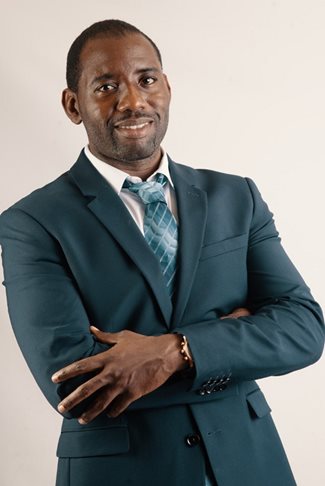
A management and behavioural specialist is echoing calls for stronger and more targeted policing in hotspot areas, as concerns increase about the economic and social impact of crime.
University of the West Indies Cave Hill lecturer, Professor Dwayne Devonish, raised the suggestion following the latest two shootings, which left a 22-year-old father of two from Gall Hill, Christ Church, and a 50-year-old from St John dead. Their slayings bring the murder count so far this year to 18.
Professor Devonish stressed the significant economic strain the shootings are having on Barbados, noting that several cases are contributing to a critical financial fallout from the crimes committed.
“Many of the persons who were either assaulted or were murdered, many of them, those have obviously, through their death, created a burden on the families now who have to take on the financial and economic implications of the injury or the death that resulted from the criminal offences. Some of them were breadwinners.”
He highlighted the impact these crimes are having on businesses, pointing to fear and anxiety that is resulting in an unwillingness for people to socialise outside of their homes:
“I can tell you now that one of the key concerns that is emanating now is the fact that many people will not go out and patronise as they did in the past, because of the anxieties and fears surrounding those recent criminal offences, so you’re gonna see again a financial fallout happening at the commercial sector level.”
The recent shootings all occurred in public spaces — one in a residential area at St Stephen’s Hill, St Michael; the other two in social settings, one following the popular Oistins Fish Festival in Christ Church, and the other near a well-known bar and restaurant, Lazy Lizard, on Brownes Beach.
Professor Devonish noted that there has been a drastic increase in the number of people who may avoid public spaces due to fear of being in the wrong place at the wrong time.
“I call it the public fear or societal fear that is a result, a direct result of these brazen and open attacks in the public sphere because if you think about it, if I decide to go down the road and talk to a friend of mine, it could be on the block, it could be by a shop; I could run the risk of being a victim of a particular assault or a particular offense, I might be in the wrong place at the wrong time.”
He predicted a drastic reduction in footfall in several public spaces: “People are going to be under this heightened anxiety going out. And as a result, a lot of people might stay at home. You’ll find that there’s less patronage, probably in particular commercial spaces where there’s a lot of public, a lot of foot traffic. You’re gonna see people shying away from those arenas.”
There has also been a noted increase in spending on security costs at both households and businesses in an attempt to protect themselves and their livelihoods.
“Whether it be surveillance cameras, alarm systems, you know, the physical guard rails and electronic gates and those types of things. You’re going to see a lot of money probably being spent on these, both the commercial and the residential quarters.”
Professor Devonish also pointed to a lack of trust in the police service, saying more needs to be done to rebuild public confidence.
“I think we still have many fractured relationships between the police services, The Barbados Police Service, and the communities, and I think we have to strengthen those relationships and allow people to feel comfortable reporting crime because I think there’s still that level of withdrawal from the public from reporting cases of crime.”
He proposed increased police presence in certain areas and a stronger overall strategy.
“The police services and other architecture of law enforcement have to be a lot more aggressive in these hard hit areas, especially the red areas or hotspots where crime is quite prevalent. We need to kind of buckle down stronger in a stronger way in protecting our communities. I think policing has to foster better relationships with the communities themselves.”
The behavioural scientist called for stronger anonymous reporting systems to reduce fears associated with reporting crimes.
“We have to really strengthen our anonymous reporting systems to allow members of the public to feel safer and more comfortable in reporting crimes when they are observed.”
Devonish also called on the media to play its part in rebuilding public trust:
“The media has dropped the ball in the past. Some organs of the media have not done right by many people when it came to protecting their identities, even when it comes to children. So that is something that the media now has to work on in terms of rebuilding that trust and confidence and ensuring those anonymous systems and protocols are in place.”
(LG)
The post Fear, security costs rise as murder numbers increase appeared first on Barbados Today.