Businesses could gain wider access to financing and new regional markets under a government-backed push to accelerate an export-led economy, as CAF – Development Bank of Latin America and the Caribbean signals readiness to expand support for private sector growth and public-private partnerships.
The issue took centre stage during a high-level private sector dialogue hosted by CAF and the Ministry of Finance, where business leaders, financial institutions and government officials discussed how new financing tools could help companies scale up production, enter new markets and drive economic growth.
The discussions come just weeks after Prime Minister Mia Mottley warned that Barbados was at a “critical historical crossroads” and needed to urgently shift towards an export-led model, stressing that businesses must expand beyond the domestic market if the country is to sustain long-term growth.
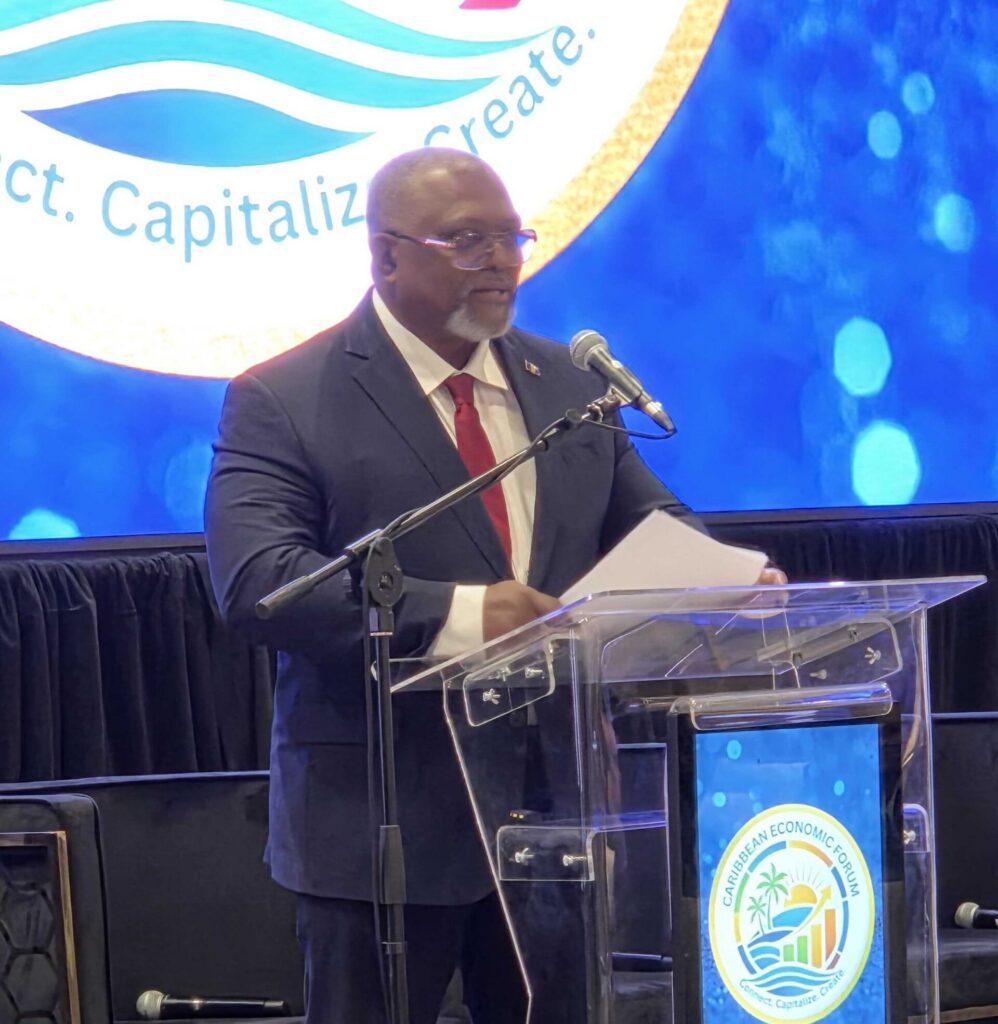
Minister of Finance Ryan Straughn said the private sector would have to play a central role in that transformation.
“Export-led growth is not a government project with the private sector as cheerleaders on the sideline. It requires investment, risk and the kind of bold commercial decision-making that only you in this room can make,” Straughn said.
“We spent eight years making Barbados fiscally sound. What we are asking now is for the private sector to help make Barbados economically formidable.”
He said Barbados must continue to earn more foreign exchange, compete more aggressively in external markets and create businesses capable of generating wealth across the region.
Straughn added that CAF’s value extends beyond funding, noting that the institution’s networks across the Caribbean and Latin America can help connect Barbadian firms with new markets, investment opportunities and strategic partners.
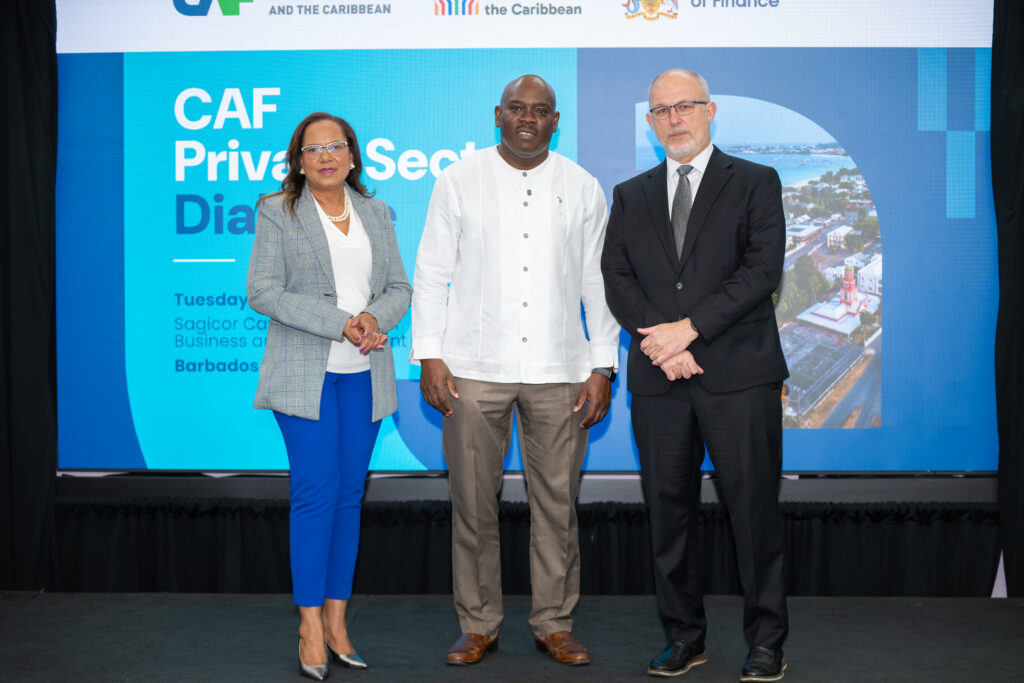
CAF regional manager for the Caribbean and representative in Barbados, Dr Stacy Richards-Kennedy, said the discussion was designed to focus on practical ways of unlocking private sector growth.
“If we are serious about economic growth, jobs, exports and resilience, then the private sector cannot be on the margins of development. It has to be at the centre,” she said.
“The question before us is how do we work together to unlock more of its potential.”
Richards-Kennedy noted that Barbados’ economic outlook continues to point to opportunities in infrastructure, renewable energy and tourism-related investments, areas expected to support employment and strengthen productive capacity.
She also stressed the importance of public-private partnerships for small island developing states, saying such arrangements can help align public priorities with private capital and move projects into sectors critical to national development.
CAF vice-president for private sector Antonio Silveira outlined a range of financing instruments available to support private companies and PPP projects, including non-sovereign loans, lines of credit, structured finance, guarantees, equity investments and technical assistance.
“CAF’s work with the private sector is directly aligned with what Minister Straughn outlined under BERT 3.0, placing the private sector as a leader in the development process.
“We are keen to engage with Barbados on initiatives that can be developed in a sustainable way.”
According to CAF, its private sector division approved US$10.3bn in operations in 2025, representing 55 per cent of the institution’s total approvals for the year.
The bank is already expanding support for businesses across the Caribbean and is working with regional partners to unlock additional financing tools that could help companies grow, export and compete in new markets, it said.
(SM)
The post Firms eye expanded CAF financing as government pushes export-led growth appeared first on Barbados Today.