
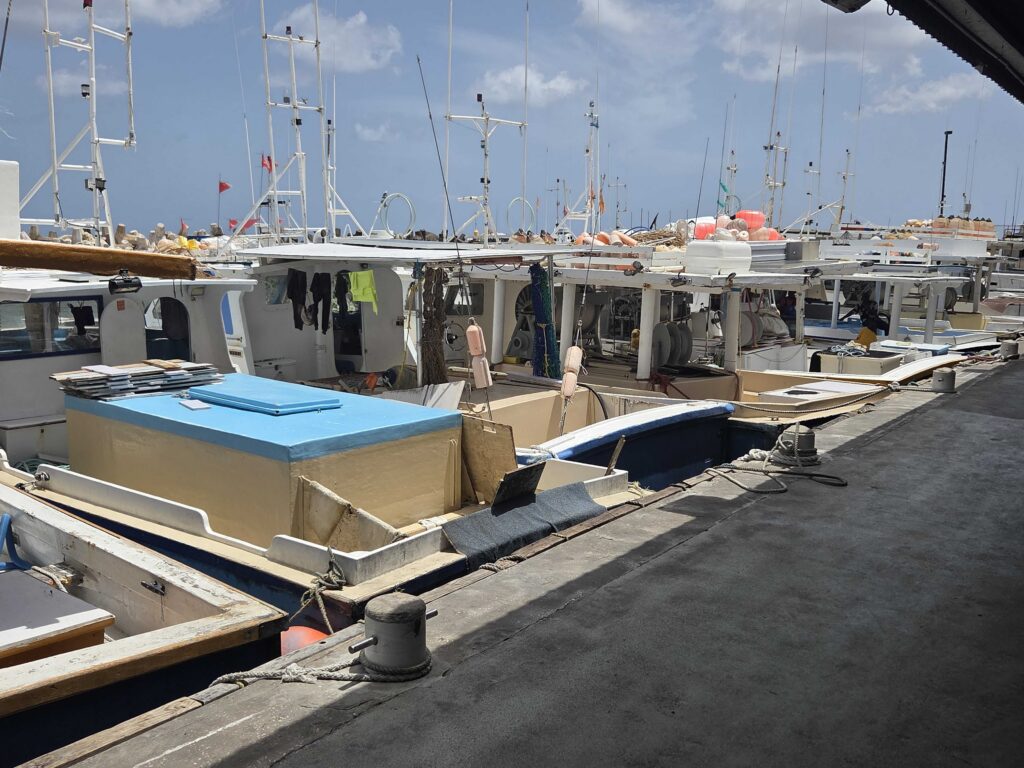
A single trip to sea now demands thousands of dollars in fuel, and fishers say the burden is pushing their livelihoods to the brink as regional plans for greener fleets take shape.
At sea, fishers are battling a relentless economic tide. As regional authorities launch a major push to decarbonise the Caribbean’s fishing fleets, operators say the crushing cost of traditional diesel is swallowing up to 40 per cent of their revenue.
While they welcome any technological lifeline that puts money back in their pockets, they warn that a lack of clear government support could stall any green transition before it even leaves the harbour.
The debate over the industry’s future has been brought to the fore by the Caribbean Regional Fisheries Mechanism (CRFM). The regional body is currently seeking consultants to conduct fishing fleet decarbonisation assessments and develop a comprehensive regional strategy and action plan.
This initiative responds to mounting global pressure to reduce carbon emissions across all areas, including maritime operations.
For the men working the Bridgetown fisheries complex, the economic argument for moving away from fossil fuels is already clear, even if the practicalities remain hazy.
“Fuel hard, fish not catching, fuel hard… tight,” explained one fisherman, summing up the precarious balance of modern fishing where high expenses do not guarantee a catch. “Every day you just go out there on your fuel and catch fish, you know. So your fuel can always burn. It don’t mean you’re gonna catch fish.”
The financial risk is starkly illustrated by the rising cost of individual fishing expeditions. For many, a single trip out to sea now requires thousands of dollars in upfront fuel investment, creating a cycle of debt and high retail prices.
Another veteran fisher, Percy, echoed these concerns, noting that his fuel expenses have climbed dramatically year-on-year. “Last year I put in $6 782 in diesel alone and that’s a very high thing, and before that I put in $8 200,” he said, highlighting the volatile but consistently high overheads that plague operators.
While the CRFM eyes a sustainable, low-carbon future utilising alternative fuels or energy-efficient technologies, fishermen express deep scepticism about whether policy discussions in boardrooms will translate into reality on the waves.
Another fisherman, Donville Brathwaite — known as “Dox” — fixed on the cost of fuel for his fishing trips.
“Right now I got a diesel bill, about $7 000,” said the veteran fisher. “My diesel bill is now for this trip to return back to sea. So the fuel costs is that a good chunk of them might, might catch when the trade come. … The fuel is high. It’s as simple as that.”
While he remains uncertain whether regional authorities can successfully deliver a functional transition, he views technology as vital for survival.
“This is the age of technology,” Brathwaite said. “Once there’s technology available, I want technology to reduce any cost of my expenses. … Once anything comes out, I want it… to ease my brain and I will function easier to catch the fish because I worry about calculating stuff in my head.”
The critical hurdle for the CRFM’s upcoming decarbonisation strategy will be determining how to fund and manage the transition for small-scale independent operations. Transitioning to alternative propulsion methods, such as hybrid engines, requires capital and training that fishers currently lack.
When questioned about the specific frameworks, subsidies, or infrastructure needed to adopt greener technologies, fishers admitted the road map remains unclear.
“We want all the support we could get right now. We ain’t getting the support right now,” Brathwaite remarked, noting that the industry feels abandoned by both public and private entities regarding rising operational costs. “Any support we could get from government, from private sector, any support we want.”
(RR)
The post Fishers face rising fuel costs as region explores fleet decarbonisation appeared first on Barbados Today.