
More than 400 beds at the Queen Elizabeth Hospital are being occupied by elderly patients who have no medical reason to be there, some for more than 100 days, as the government pushed new legislation to protect older people and the elder care minister denounced a culture of “granny dumping” that he said was alien to the island.
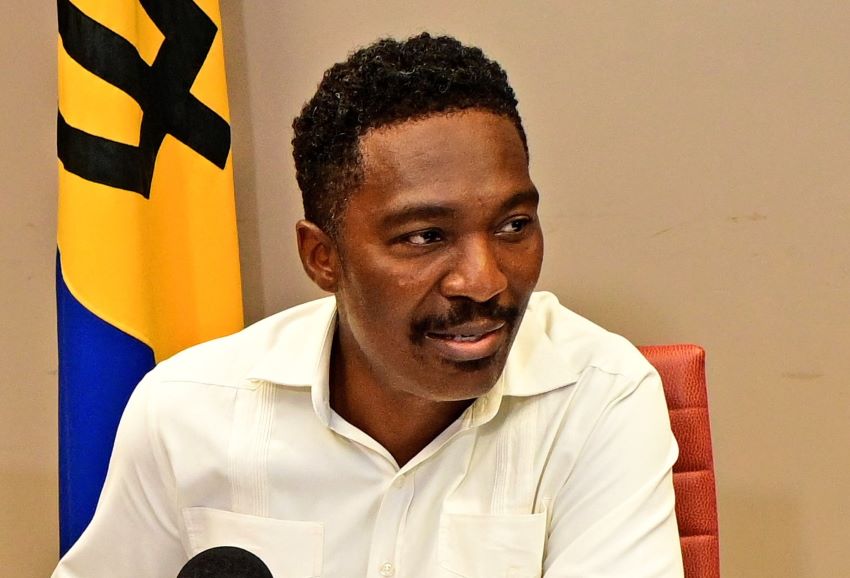
Minister of People Empowerment and Elder Affairs Adrian Forde, strongly condemned reports of elder abandonment highlighted by the Minister of Health Senator Lisa Cummins, as the government moves to strengthen systems and expand facilities to care for older people.
On Tuesday, the House of Assembly introduced the Older Persons (Care and Protection) Bill after Senator Cummins disclosed that more than 400 beds at the Queen Elizabeth Hospital were occupied by people who no longer required medical care.
She said: “They’re persons in the hospital who’ve been there for over 100 days, and there’s nothing clinically or medically wrong with them but they just have nowhere else to go. Those persons who we may call anecdotally abandoned, but there may be any number of reasons why they’re there.”
Responding, Forde denounced the situation as uncharacteristic of Barbadian society: “Where abandonment, neglect, those words that tarnish. The good reputation of our country, the reputation of families in Barbados. This is not who we are as a country at all. This whole concept of granny dumping, I have never heard of a sound like something dropped out of the troposphere, never heard it, and all of a sudden it has become part of the Bajan vernacular and dialogue. This is not who we are as a country.”
The minister described the behaviour as both unacceptable and unfortunate, noting that in many cases families were capable of caring for their elderly relatives but failed to do so.
“We understand that sometimes, because of dementia, Alzheimer’s and other illnesses, it is a hard task to be able to care and some persons may not be equipped. But oftentimes, based on the conversations I’m having with the officers, these are families who are fit, who are able and who have the capacity to take care of their loved ones who are simply not doing it. The love, the care, the appreciation and the attention that would normally happen from building families just is not there.”
He argued that such cases pointed to a breakdown in family responsibility, placing increased pressure on the state to provide care.
Forde also linked the issue of elder neglect to wider societal challenges, including violence and a decline in respect for vulnerable groups.
“What we are seeing here is, unfortunately, a small microcosm because you’re speaking about the elderly but when you juxtapose that with what is happening in the wider society, we know that it’s not only the elderly that this is happening to. It’s happening to our children. It’s happening to those persons with disabilities, and unfortunately, this illness — I will call it that — has permeated the length and breadth of Barbados.”
He called for a renewed focus on family values and greater integration between generations, pointing to planned initiatives aimed at strengthening those connections.
“I said earlier that one of the programs that we have is to have an intergenerational linkage program between those who are in the twilight of their years, over 65, and those young people who are impressionable, who would require that they are called big brother, big sister and big uncle and big mommy, the love and affection and care and guidance because I think that that is what is sadly lacking in this country, so the elderly, albeit that we are having problems with abuse and neglect and abandonment. I think that they have tremendous value to add to the whole upliftment of our country.”
The post Forde: Families with means failing to care for older folk appeared first on Barbados Today.