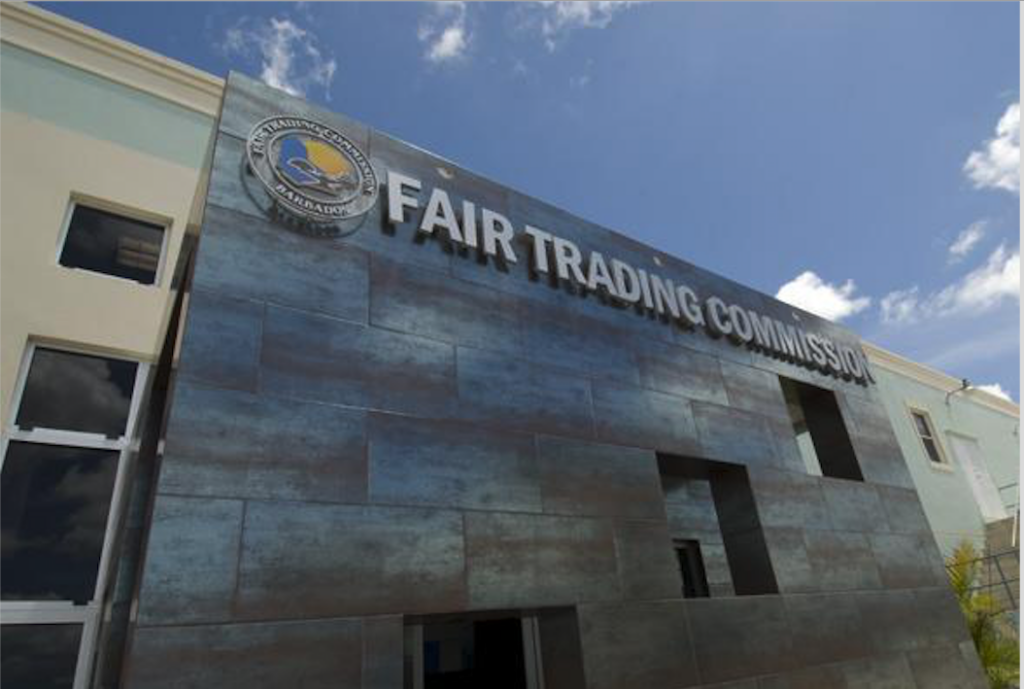
The Fair Trading Commission (FTC) said Monday it is aware of bill payment service SurePay (Barbados)’s plan to introduce a 30-cent charge on cash and cheque bill payments made over the counter from March 16. The move followed concerns raised by consumer advocate BCEN about fairness and rising costs for vulnerable customers.
But the watchdog agency’s chief would not be drawn on whether a formal review was underway, saying only the FTC would first need to gather the facts and take legal advice.
In an advertisement published over the weekend, SurePay said the VAT-inclusive nominal convenience fee is necessary due to additional imposed cash and cheque handling and related charges, which have “significantly” increased operational costs.
The company told consumers that the new charge would help to offset “the substantial charges now levied on large cash deposits and for cheque processing”.
But the Barbados Consumer Empowerment Network (BCEN) later called on the FTC to intervene and review the new fee for fairness, necessity, and proportionality.
“In effect, what looks like a minor fee becomes meaningful when multiplied,” BCEN’s Executive Chair, Maureen Holder, told Barbados TODAY on Monday.
“A household paying several bills per month over the counter could face an extra few dollars per year. That may not trouble high-income earners, but for people living close to the margin, small recurring charges accumulate into real financial pressure, especially when layered on top of VAT, utility increases, banking fees, and rising food prices.”
“This is why the Fair Trading Commission has an important role to play. Any new consumer-facing fee, however small, should be examined for fairness, necessity, and proportionality. The public deserves to know what costs are being recovered, whether alternatives were explored, and whether these costs could be shared with service providers or absorbed through efficiency gains, rather than passed directly to consumers.”
Introducing new fees at the counter effectively penalises people for not being digitally connected, the consumer advocate said.
Holder said: “Barbadians are already grappling with rising food prices, utility bills, transport costs, and everyday fees that quietly eat away at household budgets. The proposed new over-the-counter (face-to-face) transaction fee by SurePay may appear small in isolation, but it represents another cost placed directly on people who often have the fewest alternatives. BCEN recognised that some may dismiss the 30 cents as ‘small change.’”
“But when applied to routine, unavoidable, face-to-face bill payments, it becomes another quiet increase in the cost of living for ordinary Barbadians. This fee affects people who use in-person services because they must; seniors, persons without smartphones or stable internet access, those who are less digitally literate, and individuals who rely on cash. These are not convenience users choosing a premium service. They are people accessing a basic payment channel. For many, visiting a counter is the only realistic way to pay essential bills.”
When contacted on Monday, the FTC said that while it is aware of the decision by SurePay to charge the fee, it is too early to make any determination on its merits or demerits.
“We have been made aware of this emerging matter as well,” Chief Executive Officer Brian Reece told Barbados TODAY.
“However, at this inchoate stage, we would not comment on whether it creates any issues related to areas under our statutory mandate for consumer protection and therefore requires any regulatory review.”
Reece explained that the commission “needs to be guided by properly grounded facts and legal principles”.
BCEN argued that digital payments are being promoted as the future, but that transition has not been equal for everyone.
“BCEN believes that until Barbados has a truly inclusive digital access system then in-person service points have to remain essential public-facing infrastructure,” Holder said. “Charging extra to use them risks deepening inequality by making access to basic bill payments more expensive for those already facing barriers.”
She suggested that there is also a policy contradiction at work.
“Barbados has encouraged digitalisation and financial inclusion, yet imposing new fees on in-person transactions risks creating a two-tier system: one group that can avoid fees by going digital, and another that must pay more, simply because they cannot. This undermines both social inclusion goals and consumer protection principles.”
She stressed that transparency is critical, pointing out that Barbadians deserve clear answers: Why is this fee necessary now? What costs justify it? What protections exist for vulnerable users? And how will consumers be protected from a gradual escalation of ‘small’ charges that quietly raise the cost of living?
“BCEN is not arguing that businesses should operate at a loss,” said Holder. “We are arguing that where services function as essential consumer access points, pricing decisions should be fair, proportionate, transparent, and publicly accountable. Small fees, multiplied across thousands of transactions and layered onto other rising costs, translate into real pressure on households already stretched thin.”
emmanueljoseph@barbadostoday.bb
The post FTC alerted to SurePay’s new 30-cent over-the-counter payment fee appeared first on Barbados Today.