
The Mottley administration on Tuesday tabled legislation requiring every registered company in Barbados to disclose its ultimate human owners or face regulatory penalties, in a sweeping expansion of corporate transparency rules aimed at safeguarding the island’s financial reputation and access to global banking.
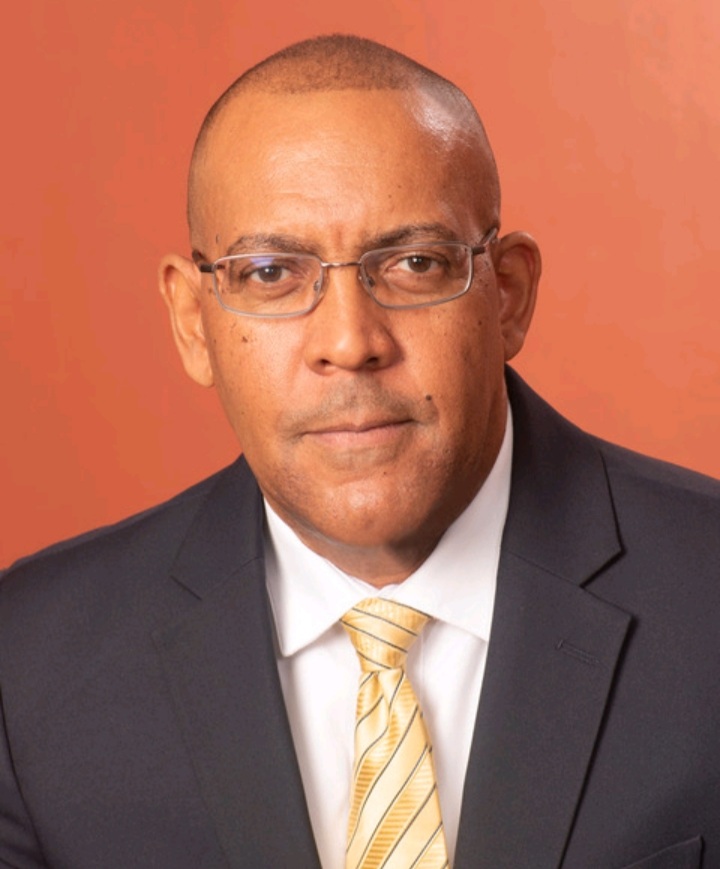
Moving the second reading of the Beneficial Ownership, Transparency and Register Bill in the House of Assembly, Senior Minister and Minister of Energy, Business Development and Commerce Kerrie Symmonds said the measure marks a shift from past international business compliance to universal domestic enforcement.
While previous reforms focused primarily on foreign investors, the new framework applies to every enterprise to protect the country’s financial standing and ensure compliance with global anti-money laundering regulations, he said.
He told the House: “Under the old international business regime when we spoke of these matters of transparency and facilitation and economic substance… we were talking about large corporations, largely foreign investors, and related types of businesses.
“We’ve come to a point in time now, where that is no longer the case. And so what we are proposing to do today, sir, is a significant enhancement of the beneficial ownership regime in Barbados… to ensure that Barbados has continued compliance with evolving international standards of doing business.”
The bill closes loopholes that allow individuals to hide behind nominee shareholders, front executives, or complex corporate structures, in a bid to unmask illicit actors who use corporate arrangements to conceal criminal activity and shield the true sources of wealth.
“The beneficial ownership in essence is really that living, breathing flesh and blood human being who is the ultimate owner of a business,” Symmonds said. “In other words, that individual who stands sometimes in the shadows, but is the person who actually exercises substantive control over the business. So it is not a matter of what is the name on the letterhead… but it is really a question of who is behind the company.”
Drawing on historical examples of how international commerce can be manipulated by straw figures, Symmonds said simple checks on corporate directors are no longer adequate.
“The mechanism that many criminals now use internationally is the corporate structure, and that is the way in which they hide the illicit fruits of their enterprise. The challenge for authorities is really the question of who is behind the corporate structure, who are the real actual beneficiaries of the money, and who are calling the shots.”
Clause 2 of the bill defines a beneficial owner as any individual who directly or indirectly owns or controls at least 20 per cent of the shares, voting rights, or ownership interests in an enterprise, or who exercises control through contractual arrangements.
The legislation mandates the creation of a centralised Beneficial Ownership Register alongside a specialised Business Compliance Team tasked with verifying corporate data and enforcing accuracy.
Corporate trust service providers and legal entities must maintain comprehensive details including full names, dates of birth, nationalities, and the exact mechanisms of control.
Additionally, any changes involving corporate directors, nominee shareholders, or ultimate owners must be reported to the central registry within 14 days to avoid penalties.
Businesses are also required to reconfirm their beneficial ownership records annually to ensure corporate registries remain up to date.
“Faulty information does not protect anybody in this jurisdiction, and it certainly does not protect the jurisdiction,” Symmonds said. “Directors may change, but nobody got around to telling the corporate registry… and that level of inefficiency, that level of inadequacy of information, those are things, sir, that the legislation is now trying to stamp out once and for all.”
Symmonds acknowledged that while small island states face heavy administrative burdens amid mounting international pressure, non-compliance poses a direct threat to Barbadians. He pointed to the risks of losing correspondent banking relationships, which can disrupt remittances, international transactions, and online card payments.
“If the foreign authorities lose confidence in our ability to properly regulate the Barbadian market and the Barbadian jurisdiction, then the foreign authorities do what we call de-risk themselves,” he said. “Basically, it all results in financial exclusion, which must be avoided, and that the ordinary people of the country feel pain as a result of our failure to properly police and regulate the financial sector.”
While Barbados has approximately 30 000 registered entities, weak filing practices among some businesses require system-wide reform, he said.
“Above and beyond the advice issued by the Global Forum of the Financial Action Task Force… we also have to recognise that on the ground in Barbados there are things that we must do and could have done and must do of our own volition.
“It isn’t about one business or a few businesses within the country. It is about the reputational damage that can be done to the island and the jurisdiction called Barbados as a whole.”
(RR)
The post Govt moves to tighten biz ownership disclosure rules appeared first on Barbados Today.