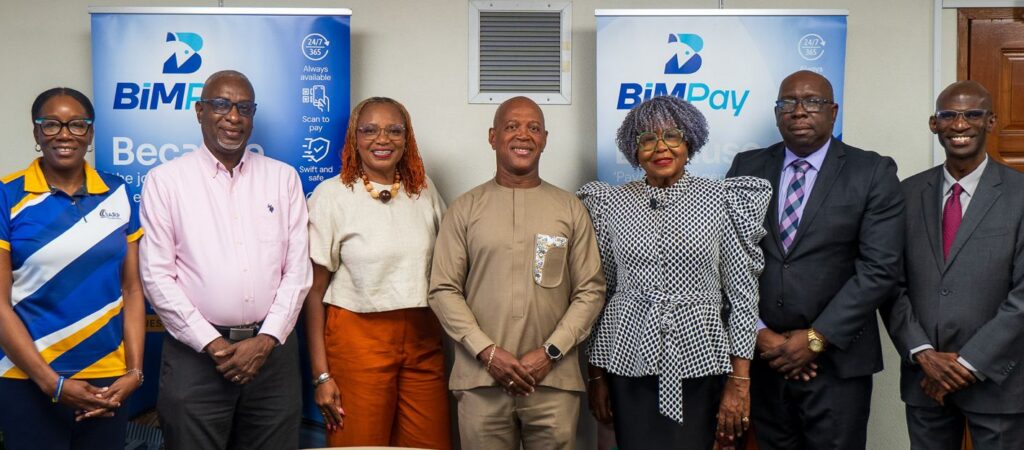
The government is reviewing a rule that automatically withdraws disability benefits as soon as recipients begin earning, in a move aimed at allowing people with disabilities to earn modest incomes without immediately losing state support, Minister of Labour Colin Jordan told Barbados TODAY on Wednesday.
The review is intended to address concerns that the current system discourages people with disabilities from seeking employment or participating more fully in economic life, even where they are only able to work part-time or earn a modest income, he said.
Speaking on the sidelines of a disability sensitivity training session for employers, Jordan said that under the existing framework, once a person with a disability starts to earn, their benefit is withdrawn on the assumption that employment removes the need for state support.
“What we’re working through now is trying to set a threshold where they don’t lose their benefit immediately,” the minister said. “But that we make a determination, if they’re earning above a certain level, then they would lose [the benefit].”
Jordan noted that while individuals earning regular, full-time income may no longer require additional assistance, that scenario does not reflect the lived reality of many people with disabilities.
“There are some people with disabilities who can’t work full time every day,” he said. “They may be working three or four half days a week.
That’s good for them… that’s what they can handle but it may not be enough to keep them without assistance.”
The issue is being examined through the National Insurance and Social Security Service (NISSS), which administers the special needs benefit on behalf of the central government.
Jordan stressed that the benefit is not paid from the National Insurance Fund but is funded directly out of the Consolidated Fund, the government’s coffers, recognising that many recipients are unable to make consistent contributions.
The special needs benefit exists to support people with disabilities who are unable to work, or whose earning capacity is limited, allowing them to meet basic living needs such as transport, personal care items and access to healthcare.
“Some of those persons are not going to benefit from the minimum wage,” the social security minister said. “But they still need to get to a hospital, they still need to get to church, they still need to live, and they have recurring needs [including] sanitary products.”
The review seeks to strike a balance between encouraging participation in the workforce and ensuring that vulnerable individuals are not penalised for attempting to earn, he suggested.
Jordan also pointed to recent changes that expanded eligibility for the special needs benefit, noting that earlier legislation was narrowly framed and excluded many people with disabilities.
“In the legislation before, only persons who were deaf mute, that is, deaf and unable to speak, were assisted,” he said. “So we have now added autism, cerebral palsy, advanced multiple sclerosis, Down syndrome.”
As a result of those changes, more individuals are now receiving support through the programme, said the minister, as part of a broader effort to ensure people with disabilities can live with dignity.
The review of the income disqualification rule comes as the government continues to promote inclusion through policy and employer engagement, including encouraging workplaces to better accommodate people with disabilities who wish to work within their capacity.
Jordan said no firm timeline has been set for the introduction of an earnings threshold, but he indicated that progress is expected.
“I can’t give a time on that,” he said, “but it is something that we are actively working on. I would hope that before midyear next year.”
He added that any changes would be designed to reflect fairness and practicality, particularly for those whose ability to work fluctuates due to health or mobility challenges.
shannamoore@barbadostoday.bb
The post Govt mulls income threshold to avoid cutting benefits for disabled workers appeared first on Barbados Today.