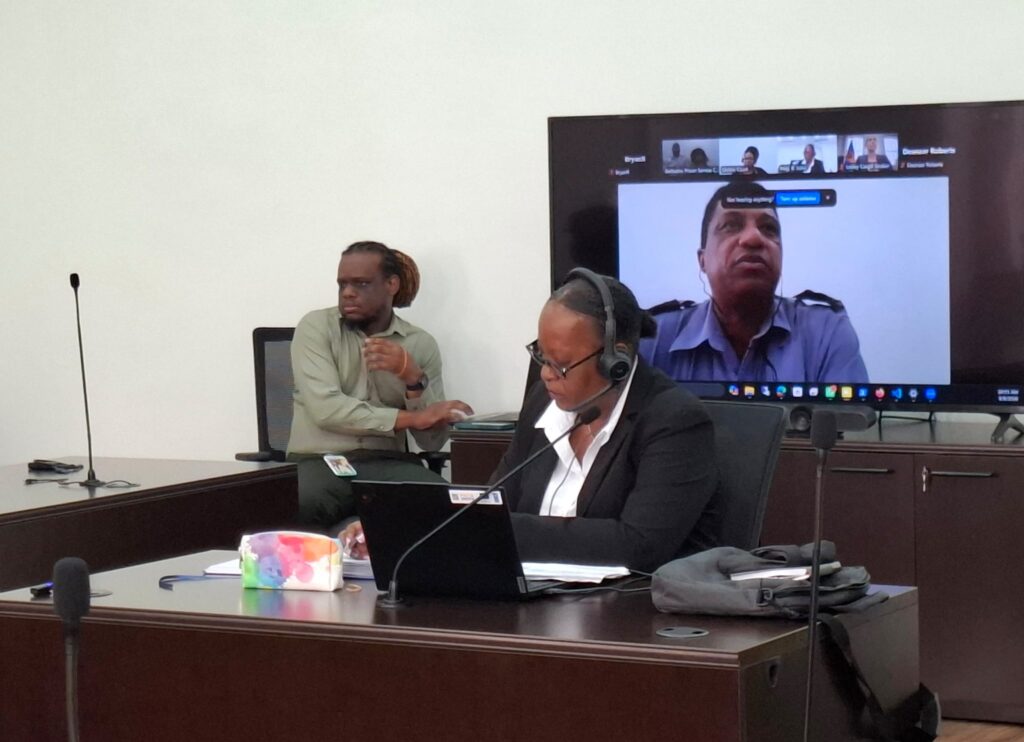
Virtual hearings began at the District ‘C’ Magistrates’ Court on Tuesday, in a move officials said would help reduce delays, limit the transport of remand prisoners and allow routine cases to be heard before physical courtrooms open.
The District ‘C’ magistrate sat at the David Simmons and Henry Forde Legal and Judicial Complex on Coleridge Street, as the criminal justice system moved to reduce court backlogs, ease prison transport logistics and enhance overall operational efficiency.
Reporters were allowed to witness the first virtual hearing in which Magistrate Bernadeth John presided over a case where the accused, his defence attorney and the prosecutor all appeared online without a hitch.
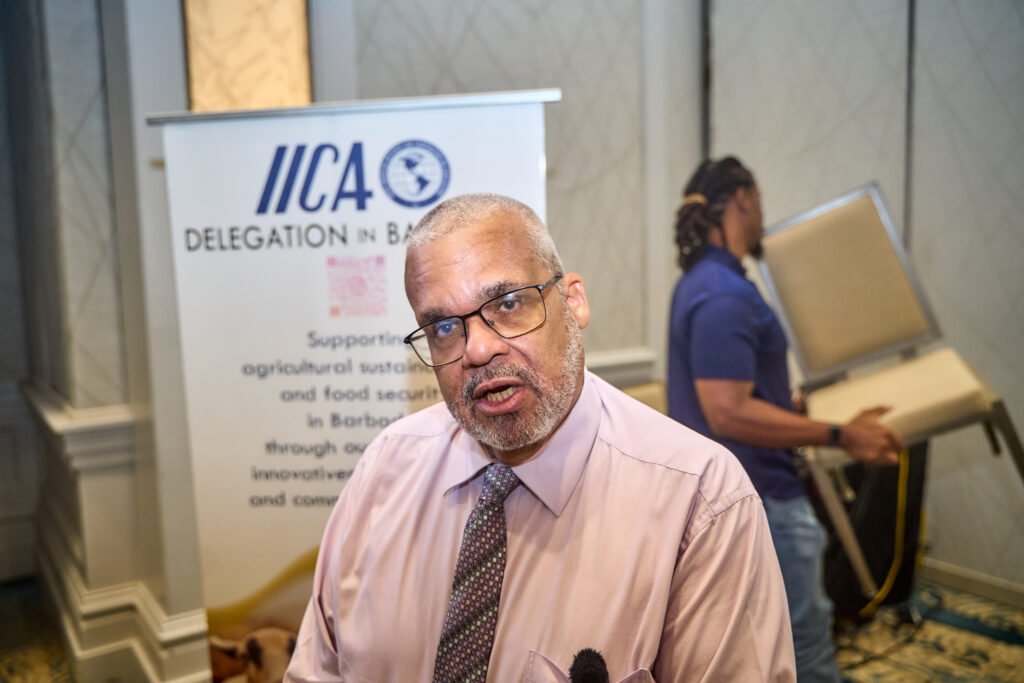
Speaking after the inaugural virtual session, Minister of Legal Affairs and Criminal Justice Michael Lashley hailed the initiative as an historic moment for the judiciary. He stressed that bringing digital infrastructure into the Magistrates’ Courts is essential for addressing long-standing structural challenges.

Minister of Legal Affairs and Criminal Justice Michael Lashley. (Photo credit: Ricardo Roberts / Barbados TODAY)
He said: “Moving forward, you must place the Magistrates’ Court on a digital platform. This virtual hearing saves time, it makes the systems more efficient, and of course, when you have prisoners where there are security concerns, I think it makes it a lot easier for all the stakeholders to be involved.”
The minister highlighted the operational friction caused by routine administrative appearances, noting that virtual platforms eliminate the need to transport remand prisoners across the island or require busy defence attorneys to travel between multiple jurisdictions just to receive an adjournment date.
He continued: “The fact that even a prisoner who comes down for 28 days on remand, there’s no disclosure, there’s no submissions to be made — why then are we bringing down these prisoners just to get a 28-day remand?
“You can just appear virtually, have the matter adjourned, and set the date. If a magistrate believes a submission can be made physically or virtually, it can be done. I think this is a significant step in terms of making the court system more efficient.”
The integration of virtual sessions is expected to directly tackle the chronic court backlog stemming from shared physical spaces. District ‘C’ currently sits at the Oistins Magistrates’ Court, meaning its proceedings often follow Oistins’ at 12.30 pm. Under the new digital model, magistrates can address non-contentious matters early in the morning via teleconference, clearing up to ten routine remand cases before the physical courtrooms open.
Addressing broader legal reforms, Lashley noted that while virtual sessions currently operate under a practice direction, legislative updates will follow.
“During COVID we had about two hearings at the Magistrates’ Court level… but moving forward, we will have to make some amendments to the Magistrates’ Court Act.”
Future expansions will cover other jurisdictions, including District ‘A’, alongside improvements in digital court reporting, transcription and evidence handling, he added.
Beyond efficiency, the criminal justice minister advocated public access to digital court links to uphold principles of transparency and open justice. “If you’re speaking about access to justice, you’re speaking about having open court,” he said. “I don’t have a problem with the public getting the link and listening to what is going on in the court. We will also make sure that the link is available to the families of persons who are on remand so that they could know what is going on with their relatives.”
Responding to concerns regarding attorney-client privilege during remote proceedings, Lashley said procedures were already established to allow confidential consultations through private breakout rooms, mirroring practices currently used in the High Court.
On the subject of self-represented litigants or individuals lacking modern technology, he noted that those requiring physical accommodation, or those involved in complex trials and document filings, would still be facilitated in person.
Also commenting on the rollout, Lesley Cargill-Straker, convenor of the Criminal Law Committee, expressed strong support for the system’s potential to streamline daily schedules for legal practitioners and court staff.
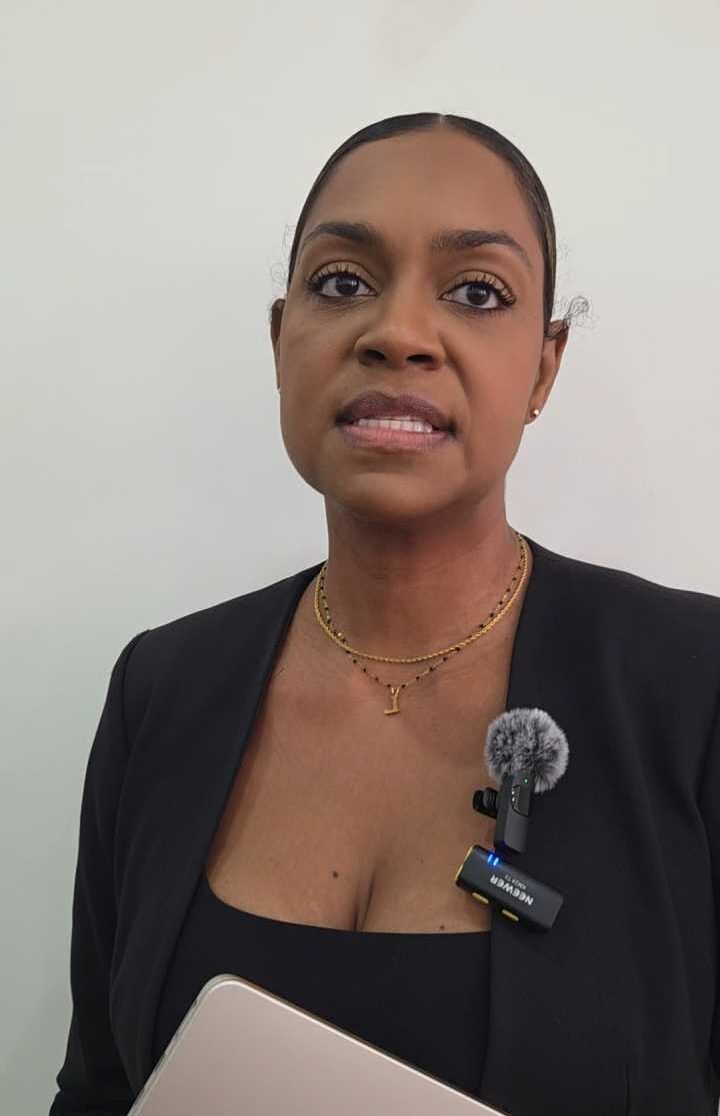
Convenor of the Criminal Law Committee Lesley Cargill-Straker. (Photo credit: Ricardo Roberts / Barbados TODAY)
“I think it’s going to streamline things a lot, particularly this court,” Cargill-Straker said. “District ‘C’ is currently sharing a court with Oistins, so they start at 12:30 each day. I think with the virtual system we can deal with some of the non-contentious things in the morning. We’re going to start with prisoners first, or persons on remand, persons who will just be getting a date — nothing too contentious — giving them updates on their matters.”
Reflecting on the experience of the first virtual session, Cargill-Straker observed that the process went smoothly for the remanded defendant.
“The prisoner seemed comfortable,” she said. “He was asked if he was comfortable doing it, he said ‘yes’, and he was able to put across his concerns with the file being ready, which was addressed by the magistrate adequately.”
Regarding public access to virtual links, Cargill-Straker offered a measured perspective, clarifying that while internal stakeholders, attorneys and family members are being integrated immediately, broader public broadcasting rules remain subject to ongoing judicial review.
“For now, any stakeholders — attorneys-at-law, the prisoners’ families, court clerks, marshals — will be facilitated, but public link distribution is something that still needs to be finalised,” she explained.
Where physical documentation, affidavits or live testimony are required, Cargill-Straker confirmed that hybrid arrangements remain in place. Matters requiring signed paperwork or physical evidence will be scheduled for the afternoon sessions, ensuring that the transition to digital tools enhances flexibility without compromising due process.
With further expansion planned across the Magistrates’ Courts in the coming days, officials remain optimistic that the shift towards a modern, digital judicial platform will deliver lasting benefits for magistrates, counsel, defendants and the wider public.
(RR)
The post Historic virtual hearings at District ‘C’ court appeared first on Barbados Today.